
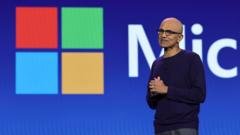
Microsoft Profits Soar to $36.6B Amid Massive AI Spending Pivot
When a corporation generates over $400 million in net cash every single day, the traditional playbook calls for quiet expansion, talent acquisition, and lavish corporate retreats. Microsoft just threw that playbook into the bonfire. In a single 72-hour window, the Redmond titan posted a staggering $36.6 billion net profit on quarterly revenues of $92.3 billion while quietly launching one of the largest talent offboarding maneuvers in corporate history.
Microsoft generated $36.6 billion in net profit on $92.3 billion in revenue for its recent quarter, driven by intelligent cloud growth. Simultaneously, the tech titan offered voluntary buyouts to roughly 60,000 employees—25% of its workforce—redirecting operational savings directly into artificial intelligence infrastructure and chip procurement.<\/p>
- Unprecedented Earnings Paradox: Net quarterly profits surged to $36.6 billion on $92.3 billion in revenue while 60,000 buyout offers were issued.
- Labor to Capital Shift: Microsoft is actively shrinking human headcount to offset tens of billions in capital expenditure for AI infrastructure.
- Cloud Engine Momentum: Enterprise Azure growth remains the primary driver of top-line cash generation, expanding hyper-scaler margins.
- Investor Reassurance: Wall Street rewarded the cost-cutting pivot with a nearly 2.9% rise in after-hours share prices.
Around 60,000 workers—roughly one out of every four employees in Microsoft’s global workforce—received voluntary buyout offers. The message inside the halls of Building 92 is unmistakable: human capital is taking a back seat. Silicon infrastructure is the new crown jewel. By rechanneling funds from wage obligations to server racks, Microsoft is setting an aggressive precedent for how enterprise software companies must re-tool for the synthetic age.
The Paradox of Record Income and Mass Exit
Wall Street did not hesitate. Shares jumped nearly 2.9% in extended trading on the New York Stock Exchange as investors absorbed the duality of the press releases. The market loves margin expansion. It loves ruthless efficiency even more.
For years, executive suites framed talent acquisition as an arms race. That paradigm is officially dead. Financial analysts at major investment banks note that Microsoft profits and AI spending are now tied directly to labor efficiency ratios. To fund unprecedented orders of liquid-cooled servers, custom silicon design, and long-term nuclear power purchase agreements for data hubs, corporate leadership is stripping cash out of payroll.
“We are witnessing an unprecedented capital reallocation cycle,” noted a senior tech equity strategist according to market commentary tracked by Bloomberg financial data. “Big tech isn’t cutting headcount because they are struggling. They are cutting headcount because compute power has a higher expected return on investment than human operations right now.”
The voluntary buyout structure offers long-tenured software engineers, mid-level product managers, and administrative teams generous severance packages to depart quietly. Unlike forced pink slips, voluntary departure minimizes public relations blowback and legal challenges. Yet, the underlying strategy remains identical to traditional corporate rightsizing: shrink the balance sheet’s operational expenses to clear space for heavy capital expenditures.
Trading Payroll for Processing Power
Building data centers isn’t cheap. Operating them is even worse. The hardware supporting advanced large language models degrades quickly, requires massive electricity grids, and demands constant hardware refreshes every three to four years.
To put this financial realignment into perspective, consider the sheer scale of the financial commitment Microsoft is making to its artificial intelligence supply chain. The company isn’t merely buying chips from Nvidia; it is acquiring land, constructing gigawatt-scale power infrastructure, laying subsea fiber cables, and funding multi-billion-dollar commitments with research outfits like OpenAI.
Compute is the new operational bottleneck. Every engineering team inside Microsoft is now expected to build, deploy, and scale tools with fewer human hands while leveraging automated code generation and internal copilot agents. Where ten software developers were once required to maintain legacy codebase infrastructure, teams are being asked to operate with six, filling the gaps with internal machine models.
The Financial Shift: Human Labor vs. Compute Infrastructure
The strategic shift within Microsoft’s capital balance sheet illustrates how radically priorities have altered over the last four quarters. Below is an operational breakdown reflecting the strategic priorities moving through Redmond’s finance department:
| Financial Metric / Operational Area | Legacy Capital Allocation Strategy | Current AI Infrastructure Epoch |
|---|---|---|
| Quarterly Net Profit | $22B – $26B range | $36.6 Billion (Record level) |
| Quarterly Top-Line Revenue | $65B – $75B range | $92.3 Billion |
| Primary Headcount Strategy | Aggressive talent acquisition | 25% workforce buyout option (60,000 seats) |
| CapEx Allocation Focus | Office spaces, core software engineering | Data centers, nuclear power deals, GPU clusters |
| Core Margin Engine | Windows licensing & legacy enterprise suites | Intelligent Cloud & Azure platform services |
Under the Hood of the Cloud Engine
Behind the headline-grabbing layoff figures lies an operational beast that continues to outpace expectations: Microsoft’s Intelligent Cloud segment. The cloud division continues to perform brilliantly, serving as the primary cash printer funding Satya Nadella’s long-term enterprise vision.
Enterprise migration to cloud-hosted environments is no longer just about offloading physical storage servers. It is about accessing synthetic intelligence engines directly inside existing enterprise database structures. Corporate clients are upgrading their subscription tiers to access secure, enterprise-grade AI instances that run seamlessly inside Microsoft Azure.
Satya Nadella, Microsoft’s chairman and chief executive officer, outlined this aggressive structural pivot during his remarks to shareholders:
“We are delivering greater capability, choice, control, and cost efficiency for customers across our entire stack. By helping organisations build and own their own intelligence, and earning trust through agent safety and security, we are translating our innovation into growing adoption and real-world impact across every industry.”
Nadella’s statement highlights a subtle but critical messaging pivot: agentic intelligence. The company isn’t simply selling passive cloud software or basic chatbots anymore. It is pitching autonomous digital agents capable of executing complex multi-step workflows across corporate operations. The internal logic is self-referential: if Microsoft can run its own business using autonomous digital workflows, its corporate clients will be forced to follow suit.
The Wall Street Treadmill and AI Monetization
Despite the blowout $36.6 billion profit figure, institutional investors remain insatiable. Across global capital markets, equity analysts are demanding clear evidence that the massive CapEx expansion will translate into sustainable long-term cash flow rather than compressed margins down the road.
Reporting from industry analysts at Reuters reporting indicates that institutional market participants are closely auditing the unit economics of AI software deployments. High compute costs mean that margins on generative features are naturally thinner than traditional, near-zero-marginal-cost software distribution. By slashing headcount costs via the voluntary buyout program, Microsoft is buying itself financial breathing room to shield its operating margins from the high operational costs of compute clusters.
Key Challenges Facing Big Tech’s Infrastructure Bet:
- Depreciation Schedules: AI chips age quickly, accelerating hardware write-downs compared to traditional server setups.
- Energy Bottlenecks: Securing reliable, zero-carbon baseload power for new hyperscale centers requires multi-decade power purchase agreements.
- Enterprise Adoption Rates: Corporate customers are scrutinizing the return on investment of enterprise copilots before agreeing to higher seat licenses.
- Supply Chain Friction: Silicon availability, specialized cooling systems, and high-voltage transformers face manufacturing delays.
Microsoft’s balance sheet allows it to absorb these operational pressures better than almost any company on earth. With tens of billions flowing into its coffers each quarter from legacy office software, security infrastructure, and database enterprise agreements, the company possesses a self-funding war chest that leaves smaller rivals gasping for air.
Redefining Enterprise Tech Strategy
What Microsoft does today, the rest of the enterprise technology landscape does tomorrow. The decision to offer voluntary exits to one-quarter of its global labor force signals the end of the hyper-growth software employment model that defined the 2010s. The mega-cap technology environment is shifting permanently from a human talent rat race to an industrial infrastructure race.
Software engineers are no longer being hired to build incremental utility features on desktop productivity software. Instead, small teams of high-efficiency systems architects are being tasked with managing massive clusters of neural nets that build software autonomously. The operational ratio of revenue-per-employee is poised to skyrocket across the technology sector.
For the 60,000 Microsoft workers considering whether to accept the buyout offer, the future of the technology industry looks vastly different from the era in which they entered it. For Wall Street, however, the math is simple. Fewer payroll liabilities plus unparalleled market control over enterprise AI equals a winning stock formula—at least until the next hardware refresh cycle comes due.
<button type="button" onclick="this.parentElement.innerHTML='✓ Thank you, we will refine our analysis!‘” style=”background:#ffffff; border:1px solid #cbd5e1; border-radius:6px; padding:4px 12px; font-size:12px; cursor:pointer; color:#334155;”>👎 No
Latest Analytical Follow-up: For continuous developments on this subject, read our full investigation on Google AI Spending Fears Trigger $500Bn Market Wipeout.
