
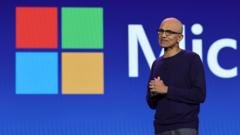
Microsoft Profits Soar Amid Sweeping Tech Layoffs
When Microsoft profits soar to an eye-watering $36.6 billion in a single quarter, Wall Street usually pops champagne. Yet, inside the company’s Redmond campus and across its global satellite offices, the atmosphere tells a starkly different story. Just days before reporting a 19% jump in quarterly revenue to $92.3 billion, executive leadership blindsided staff by offering voluntary buyouts to roughly 60,000 employees. That represents over a quarter of its global workforce.
Microsoft profits soar following a record-breaking fiscal quarter driven by enterprise cloud adoption and aggressive artificial intelligence monetization. Despite generating over $36.6 billion in net income, the company simultaneously announced voluntary redundancy buyouts affecting tens of thousands of workers to reallocate capital directly into AI infrastructure and custom semiconductor development.<\/p>
- Record Financials vs. Workforce Reductions: Microsoft posted $36.6 billion in net income alongside voluntary buyout offers for up to 60,000 employees.
- Enterprise Cloud Engine: Microsoft Cloud revenue surged by 30%, pushing total quarterly revenue to $92.3 billion.
- Massive AI Capex Commitments: Big Tech is on pace to deploy over $700 billion this year into AI data centers, chips, and energy grids.
- Divergent Market Reactions: Wall Street rewarded Microsoft with a 2.9% stock jump while battering Alphabet with a nearly 10% fall due to margin concerns.
This sharp divergence between corporate cash flow and human headcount highlights a pivotal reality in Silicon Valley. High-profile technology giants are no longer cutting costs merely to survive lean times. Instead, they are actively gutting traditional software teams to bankroll the most expensive capital expenditure cycle in tech history: the race for artificial intelligence supremacy.
The Cold Calculus Behind Big Tech Buyouts
For decades, enterprise software giants grew by adding headcount. More engineers meant more products, faster update cycles, and expanding market dominance. Today, generative AI has inverted that growth equation. Algorithms are increasingly automating code generation, internal workflows, and customer support, allowing tech executives to optimize labor costs while scaling server infrastructure.
Microsoft’s recent severance package offer target teams across Canada, India, the UK, and the US. Management framed the move as creating ‘greater flexibility’ to adapt to rapidly evolving market demands. Behind the polished corporate communications lies a calculated trade-off. A senior software architect with an expensive salary, equity vest, and benefits package is being swapped out on the balance sheet for racks of modern graphics processing units (GPUs).
‘We are witnessing a fundamental structural pivot,’ notes a senior tech equity analyst. ‘Software companies are transitioning from labor-intensive development models to capital-intensive infrastructure models. Cash flow isn’t being saved—it is being redirected into server halls, cooling infrastructure, and power purchase agreements.’
The scale of this labor transition is unprecedented. Microsoft currently employs more than 220,000 people globally. Shaving off tens of thousands of roles through voluntary buyouts gives the company the liquidity needed to fund its share of the estimated $700 billion AI infrastructure spending spree currently underway across hyperscalers like Amazon, Meta, and Alphabet.
Inside the Numbers: Microsoft Cloud Revenue Leads the Charge
Wall Street’s enthusiastic reaction—sending Microsoft shares up nearly 2.9% in after-hours trading—was anchored entirely by the explosive performance of its cloud division. Microsoft cloud revenue jumped 30% year-over-year, demonstrating that corporate clients are actively buying into CEO Satya Nadella’s vision of AI-integrated enterprise software.
While legacy divisions experienced muted growth, services like Azure, Copilot enterprise subscriptions, and commercial cloud infrastructure carried the top line. Nadella emphasized during the earnings call that AI tools are delivering ‘real-world impact across every industry,’ moving past experimental pilot projects into mission-critical corporate operations.
| Metric | Microsoft (Q3) | Alphabet (Q3) | Market Interpretation |
|---|---|---|---|
| Quarterly Revenue | $92.3 Billion (+19%) | $88.2 Billion (+15%) | Microsoft outpaced expectations; Alphabet met baseline growth. |
| Net Profit | $36.6 Billion (+21%) | $23.6 Billion (-25%) | Microsoft demonstrated operating leverage; Alphabet hit by margins. |
| Core Growth Engine | Cloud (+30%) | Search / YouTube (+12%) | Enterprise AI integration generating immediate monetizable returns. |
| Post-Earnings Stock Move | +2.9% (After-hours) | -9.75% (Trading floor) | Investors heavily rewarded Microsoft’s margin expansion. |
As detailed by financial reports from Reuters, enterprise adoption of Microsoft Copilot across Fortune 500 workflows has accelerated, providing recurring subscription revenues that offset the astronomical energy and hardware costs associated with operating large language models.
Wall Street’s Double Standard: Microsoft vs. Alphabet
The contrast between Microsoft’s post-earnings rally and Alphabet’s crushing 9.75% stock decline on the same day offers a masterclass in modern investor sentiment. Alphabet reported a 25% drop in quarterly net profit, largely due to escalating capital expenses tied to AI infrastructure. Wall Street punished Google’s parent company mercilessly, wiping away tens of billions in market capitalization overnight.
Why did investors applaud Microsoft while hammering Alphabet for the exact same spending behavior? The answer lies in visibility and execution.
- Clear Enterprise Monetization: Microsoft directly links AI investments to seats sold in Office 365, Dynamics, and Azure consumption tiers.
- Proactive Cost Discipline: By announcing tech workforce buyouts before reporting earnings, Microsoft signaled to institutional investors that management would defend profit margins at all costs.
- First-Mover Partnership Advantage: Microsoft’s early stake in OpenAI and rapid integration of models into existing enterprise software suite built trust that capital outlays would deliver cash flow.
Alphabet, conversely, faces structural threats to its core search monopoly from conversational AI interfaces, leaving investors anxious that its elevated Silicon Valley capital expenditures are defensive rather than offensive.
The AI Infrastructure Trap: Is the Spending Sustainable?
Despite the soaring profits, internal corporate filings revealed that Microsoft flagged significant operational and financial risks associated with its massive capital outlays. Building modern data centers requires more than just buying Nvidia chips. It requires negotiating nuclear and renewable energy contracts, securing scarce industrial land, and constructing specialized liquid-cooling systems capable of handling unprecedented thermal loads.
The $700 Billion Megaproject
Industry experts warn that the broad tech sector may be overbuilding infrastructure ahead of actual software demand. If enterprise clients slow down their AI adoption or find cheaper open-source alternatives, the depreciation costs on these hyper-expensive data centers could severely drag down earnings over the next three to five years.
According to research highlighted by Bloomberg, technology giants are spending cash at rates reminiscent of the late-1990s telecom buildout. Back then, fiber-optic cable was laid at astronomical expense long before bandwidth demand caught up, resulting in corporate restructuring across the sector.
‘The difference today,’ counters a Silicon Valley venture capitalist, ‘is that the companies building this infrastructure are sitting on existing oligopolies that generate tens of billions in free cash flow every single quarter. Microsoft isn’t borrowing to build the future—it’s using current cash reserves and payroll reductions to self-fund the buildout.’
The Human Reality: Life Inside a Transforming Tech Giant
For the thousands of employees reviewing voluntary redundancy options across North America and Europe, the financial headlines feel surreal. Employees who helped build Microsoft’s dominant enterprise footprint over the last decade are now receiving severance calculators while reading news reports of record-breaking $36.6 billion profits.
Voluntary buyout offers typically include structured financial packages, extended health benefits, and career transition resources. For many mid-level managers and legacy engineers, the writing is on the wall: skill sets centered around traditional software maintenance are being deprioritized in favor of machine learning specialization, prompt engineering, and hardware acceleration.
A Shift in Technical Talent Demand
- Legacy Roles Sunsetted: Quality assurance, mid-tier management, and legacy code maintenance roles are systematically trimmed.
- AI-Native Hiring Prioritized: Capital saved on traditional payroll is reallocated toward specialized AI researchers, systems engineers, and energy procurement strategists.
- Global Labor Arbitrage: Operations are shifting toward specialized hubs where software talent costs a fraction of Silicon Valley rates.
Looking Ahead: The New Template for Corporate Profits
Microsoft’s stunning earnings report has established a bold template for the rest of corporate America. A company no longer needs to choose between record profitability and aggressive downsizing. In the era of artificial intelligence, achieving one often requires executing the other.
As long as enterprise cloud adoption continues to post 30% growth rates, investors will enthusiastically support management’s willingness to trade human payroll for server racks. But as capital expenditures climb toward unprecedented levels, the margin for error narrows. Satya Nadella and his executive team have proven they can build the infrastructure and drive the short-term profits. Now, they must prove that the AI-driven productivity transformation can permanently sustain the very earnings that fueled its rise.
<button type="button" onclick="this.parentElement.innerHTML='✓ Thank you, we will refine our analysis!‘” style=”background:#ffffff; border:1px solid #cbd5e1; border-radius:6px; padding:4px 12px; font-size:12px; cursor:pointer; color:#334155;”>👎 No
