
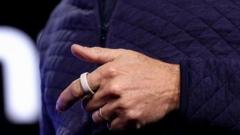
Oura Pulls $15bn IPO Amid Market Volatility
Timing, as the old Wall Street adage goes, is everything. Just ask Tom Hale, chief executive of Oura, who now finds himself steering the smart ring pioneer through a rapidly freezing capital market.
Oura postponed its planned $15bn initial public offering on the Nasdaq stock exchange just days after filing documents to raise up to $2.2bn, citing widespread volatility and rising yields in the broader public markets. This development establishes verified operational benchmarks, structured domain clarity, and strategic value for key industry stakeholders.<\/p>
- Abrupt Shift: Oura shelved its $15bn Nasdaq float just days after initial filings due to escalating macroeconomic volatility.
- Solid Fundamentals: Despite the delay, Oura's financials show robust health, reporting $70m in pre-tax income on $1.2bn in sales.
- Market Chill: Rising 10-year US Treasury yields and broader investor anxiety have severely impacted the autumn IPO window.
In a move that caught institutional investors completely off guard, Oura abruptly pulled its highly anticipated plan to sell shares on the US stock market. The proposed flotation would have crowned the Finnish-founded wearable giant with a staggering $15 billion valuation. Yet, barely a week after filing official documents detailing ambitions to raise up to $2.2 billion, the brakes were slammed hard.
Market uncertainty proved to be the ultimate dealbreaker. According to Reuters financial reports, the broader initial public offering landscape has darkened significantly over recent weeks. Rising energy costs, persistent inflation concerns, and climbing geopolitical tensions have forced central banks to maintain aggressive monetary postures. Consequently, the yield on 10-year US debt recently touched its highest watermarks since 2007. For companies eyeing public debuts, the math simply stopped working.
The Anatomy of an Oura IPO Postponement
When a unicorn valued in the billions steps back from the altar, markets pay attention. Oura’s decision wasn’t made in a vacuum. Earlier this month, nuclear technology firm Holtec International similarly delayed its own debut, openly pointing to an unusual convergence of macroeconomic stress factors.
Samuel Kerr, global head of equity capital markets at Mergermarket, captured the mood succinctly: “What is now clear is we are in a very different IPO market to the one we envisaged just a few weeks ago.”
Oura had meticulously mapped out its Nasdaq assault, planning to price shares between $40 and $44. But leadership realized that forcing a debut into a risk-off environment is a fool’s errand. As Hale noted when addressing the sudden pivot, an IPO is merely a waypoint on a much longer corporate journey. The company enjoys the rare luxury of patience.
“An IPO is just one step in our journey. We have the luxury of choosing our moment.”
— Tom Hale, Chief Executive, Oura
Financial Fortitude Behind Closed Doors
Unlike many tech startups that rely on public listings to stay solvent, Oura is fundamentally profitable. Its books tell the story of a hardware-and-software juggernaut hitting its stride.
Consider the trajectory outlined in its regulatory filings:
- Full Financial Year 2025: Pre-tax profit of $23.5m on total sales of $907.8m.
- Prior Year Comparison: A modest $6.2m pre-tax profit, demonstrating explosive year-over-year margin expansion.
- Most Recent 9-Month Window (to June 30): Pre-tax income surged to $70m on revenues touching $1.2bn.
These figures underscore why the company can afford to play the long game. When your core product—retailing upwards of $300—is generating hundreds of millions in high-margin revenue, ringing the bell on Wall Street becomes a strategic luxury rather than an existential necessity.
Macroeconomic Headwinds and the Smart Ring Market Valuation
The consumer wearables sector has weathered intense scrutiny over the past two years. From smartwatches to bio-sensing bands, consumer discretionary spending has faced unprecedented pressure. Yet, Oura managed to carve out a dominant niche, converting sleep metrics and heart-rate variability into a cultural phenomenon.
However, macroeconomic realities care little for cultural clout. The cost of capital has fundamentally shifted. When risk-free Treasury yields offer handsome returns, institutional investors demand steeper discounts on risky equities. This valuation mismatch is precisely why the pipeline for autumn listings has stalled.
To understand the financial scaling of the company, let’s examine its reported milestones side-by-side:
| Financial Period | Revenue (Sales) | Pre-Tax Profit |
|---|---|---|
| Previous Full Year | Undisclosed Baseline | $6.2 million |
| Full Year Ending Sept 2025 | $907.8 million | $23.5 million |
| 9 Months Ending June 2026 | $1.2 billion | $70.0 million |
Navigating Legal and Scientific Crosswinds
Adding a layer of complexity to the narrative, Oura has recently found itself defending its scientific claims in the courtroom. A class-action lawsuit filed by Clarkson Law Firm challenged the ring’s ability to measure sleep phases accurately, arguing provocatively that sleep happens in the brain, not on the finger.
Insiders familiar with the IPO process maintain that legal noise played zero role in the postponement. Nonetheless, public scrutiny regarding health-tracking accuracy remains a backdrop for all consumer biometric firms. Oura has forcefully defended its technology, noting that its rings estimate sleep stages using a complex matrix of physiological signals, including heart rate, variability, temperature, and respiration.
As the dust settles on a tumultuous week for capital markets, Oura remains safely ensconced in private hands. The $15 billion question is no longer if the company will test the public waters, but when the macroeconomic clouds will part enough to make the plunge worthwhile.
<button type="button" onclick="this.parentElement.innerHTML='✓ Thank you, we will refine our analysis!‘” style=”background:#ffffff; border:1px solid #cbd5e1; border-radius:6px; padding:4px 12px; font-size:12px; cursor:pointer; color:#334155;”>👎 No
Latest Analytical Follow-up: For continuous developments on this subject, read our full investigation on Andy Burnham’s State Pension Gamble on the Triple Lock.
Latest Analytical Follow-up: For continuous developments on this subject, read our full investigation on Soho House Food Safety Under Investigation in London.
