
Ending Violence Against Women in South Africa: Men Step Up
The dusty, narrow corridors of the Organic Market informal settlement near Johannesburg are currently hosting an uncomfortable but necessary conversation about the epidemic of violence against women in South Africa. Here, amid a maze of corrugated metal shacks and unpaved roads close to Alexandra township, a group of men are gathering to confront a harsh truth: the call to end abuse cannot be answered without reforming the very men who perpetrate it.
Addressing violence against women in South Africa requires a dual approach: urgent criminal justice reform to prosecute offenders and targeted community-led interventions, such as Father A Nation, that dismantle toxic behavioral patterns among men and boys to prevent abuse before it starts.<\/p>
- Grassroots Mobilization: Local initiatives like Father A Nation are targeting the root causes of abuse by engaging men directly in informal settlements.
- Systemic Failures: Government measures, such as improved street lighting, are criticized as superficial fixes for a deeply entrenched social crisis.
- Generational Trauma: The absence of positive male role models and the normalization of violence in marginalized communities fuel the ongoing cycle of abuse.
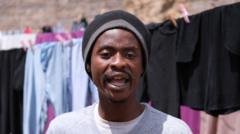
“I witness men hitting women all the time,” says Kgomotso Mathekga, 30, speaking with a raw, unsettling honesty. “Especially when they are both drunk.” Mathekga is not merely an observer of this crisis; he is a participant seeking redemption. “I once had an argument with my girlfriend,” he admits, “and I grabbed and slapped her.” The admission hangs heavy in the air, a localized symptom of a national pathology.
Dismantling the Roots of Violence Against Women in South Africa
For decades, the global community has watched South Africa struggle with some of the highest rates of interpersonal violence on earth. To understand the scale of the issue, one must look at the official gender-based violence statistics. Between April and June of this year alone, 569 women were murdered across the country—an average of six women every single day. Another 1,052 women survived documented attempts on their lives. According to a landmark study by the Human Sciences Research Council, more than 35% of South African women have experienced physical or sexual violence, often at the hands of their intimate partners.
The recent discovery of the bodies of 12 women over a three-month period in the city of Ekurhuleni, near Johannesburg, has reignited public outrage. This grim sequence of events has forced a national reckoning over what many describe as an ongoing war on female bodies. The unfolding femicide crisis Johannesburg and its surrounding municipalities are experiencing has left local communities paralyzed by fear, wondering who will be next.
A Statistical Overview of the Crisis
The numbers paint a devastating picture of the security environment for women in South Africa. The table below outlines key safety and violence metrics recorded during recent reporting periods:
| Metric / Data Point | Reporting Period | Statistical Value | Source Agency | |
|---|---|---|---|---|
| Women Murdered | April – June (Quarterly) | 569 | SA Human Rights Commission | |
| Attempted Murders (Women) | April – June (Quarterly) | 1,052 | SA Human Rights Commission | |
| Total National Murders | April – June (Quarterly) | 5,427 | SAPS Crime Statistics | |
| Lifetime Physical/Sexual Abuse Rate | Cumulative (2022 Report) | Over 35% of Women | Human Sciences Research Council |
These figures represent more than just data; they represent shattered families, orphaned children, and communities trapped in a state of perpetual mourning. While police investigate potential links between the Ekurhuleni deaths, residents are left to navigate an environment where basic survival feels like a daily gamble.
The Father A Nation Initiative: Reconstructing Masculinity
In the face of state inaction, grassroots organizations are stepping into the vacuum. At the forefront of this movement is the Father A Nation initiative, a non-profit organization dedicated to mentoring men and boys to adopt healthy, non-violent expressions of masculinity. Founded by author and advocate Craig Wilkinson, the group operates on a simple but profound premise: hurt men hurt others, but healed men protect and build.
“We get men to talk, to process their feelings,” Wilkinson explains, standing in the center of a circle of men gathered outside a local tavern. “And as they do, this healing takes place. The second phase is teaching and training positive masculinity. We ultimately hope that this will eliminate the scourge of gender-based violence.”
The organization’s local coordinator, Itumeleng Stephen Tamaga—affectionately known as “Bra Steve”—leads these discussions in the heart of the Organic Market settlement. Surrounded by men sipping bottled beer in the afternoon heat, Bra Steve commands attention. “Listen guys,” he urges. “We must stand together to fight against gender-based violence and femicide. We must restore dignity to the men around here.”
By bringing these conversations directly to the spaces where men gather—such as local taverns and street corners—the initiative bypasses the clinical, detached nature of traditional social services. They meet men where they are, challenging them to confront their behaviors in the presence of their peers.
The Power of Healthy Masculinity Programs
The curriculum taught by Father A Nation is designed to dismantle generations of toxic conditioning. In many marginalized South African communities, masculinity is historically associated with dominance, emotional stoicism, and physical control. Through targeted healthy masculinity programs implemented in schools, colleges, and informal settlements, the organization seeks to replace these destructive paradigms with values of empathy, accountability, and emotional intelligence.
- Emotional Literacy: Teaching men to identify, articulate, and process anger, grief, and shame without resorting to physical outbursts.
- Accountability Circles: Creating safe, non-judgmental spaces where men can confess abusive behaviors and receive guidance on behavioral correction.
- Generational Mentorship: Training older men to act as positive role models for fatherless youth, breaking the cycle of abandonment and neglect.
- Community Protection: Mobilizing men to actively intervene when they witness harassment or abuse in their neighborhoods.
This approach addresses a critical structural vulnerability: the complete breakdown of the family unit. As Kgomotso Mathekga points out, the lack of positive male figures is a primary driver of the crisis. “Our fathers and our uncles, they are there in prison,” he says. “We must now become role models and help make this country better.”
Political Promises vs. Grassroots Reality
The anger on the ground is compounded by what many perceive as a sluggish, superficial response from the state. President Cyril Ramaphosa has repeatedly labeled gender-based violence a “second pandemic” and has announced various measures to combat it, including improved street lighting, the installation of CCTV cameras, and a systematic review of unsolved cold cases. However, critics argue these interventions fail to address the systemic rot within the criminal justice system.
According to a detailed Reuters analysis of South African crime data, high rates of police corruption, underfunded stations, and a severe backlog in forensic laboratories mean that the vast majority of sexual assault and domestic violence cases never result in a conviction. This culture of impunity leaves perpetrators emboldened and victims silent.
Zizipho Mtwesi, the project coordinator for Father A Nation, does not mince words when discussing the government’s latest promises. “When I think about all of these recent murders in Johannesburg, I get angry. Why do we have to wait for this to happen for us to act?” he asks, gesturing to the gathered crowd. “We are trying to reach men before things like these murders happen again. Streetlights are not going to change a man’s heart. We need to change the man.”
This sentiment is echoed by international observers. A recent Bloomberg report on state security measures highlighted that without comprehensive police reform and specialized courts dedicated to domestic abuse, infrastructural upgrades like streetlights do little to deter offenders who operate within the privacy of their own homes.
The Daily Reality of Fear for South African Women
While men debate reform at the local tavern, the women of Organic Market live in a state of constant vigilance. The fear is palpable, woven into the fabric of daily routines. Outside a nearby shack, a resident named Linkie scrubs clothes in a large metal bucket, her eyes darting toward the street as she speaks.
“We are not safe when we are outside our place,” Linkie says, her voice low. “We are afraid when we see a car behind us when we walk. We feel afraid. We feel scared. What if this guy’s going to kidnap me or do something to me?”
A few yards away, inside a bustling hair salon, Providence Maseko sports a vibrant mane of pink braids. She steps to the doorway to observe the men’s meeting, her expression a mix of skepticism and fatigue. “Safety here is very bad,” she says directly to Bra Steve. “Maybe you are the serial killer. How do I know who to trust?”
Though Bra Steve laughs and invites her to join the conversation to build mutual trust, Maseko’s question reveals the deep-seated paranoia that defines life for women in the settlement. Trust has been completely eroded. Maseko admits she now relies entirely on e-hailing taxis to travel even short distances, hoping the digital paper trail offers some small measure of protection.
A Path Forward: Why Every Man Must Play a Part
The work being done by Father A Nation is vital, but it remains a localized effort against a national tide of violence. For real, lasting change to take root, the philosophy of male accountability must scale up. It requires a coordinated effort that links grassroots activism with robust legislative enforcement and educational reform.
As the meeting at the tavern wraps up, the sun begins to set over the corrugated roofs of Organic Market, casting long shadows across the dirt road. The men stand in a circle, their faces serious as they digest the afternoon’s discussions. The path to reform is long, and for men like Kgomotso Mathekga, it begins with personal accountability and the painful acknowledgment of past wrongs.
“As we try to stop gender-based violence,” Zizipho Mtwesi says, addressing the group one final time, “each and every man needs to know that they need to play a part in this. If they wouldn’t allow these things to happen to their own daughters or their own mothers, they mustn’t allow it to be done to someone else’s daughter, who is their wife or their girlfriend.”
Ultimately, the crisis of violence against women in South Africa will not be solved by lockups and streetlights alone. It will be solved when the men of South Africa decide to change themselves, reclaiming their roles not as sources of fear, but as pillars of safety and support for the women in their communities.
<button type="button" onclick="this.parentElement.innerHTML='✓ Thank you, we will refine our analysis!‘” style=”background:#ffffff; border:1px solid #cbd5e1; border-radius:6px; padding:4px 12px; font-size:12px; cursor:pointer; color:#334155;”>👎 No
