Alstom Battery-Electric Trains: £1bn UK Fleet Deal
A sweeping £1 billion industrial agreement is set to fundamentally reshape public transportation across northern England, introducing the UK’s very first fleet of battery-electric trains for long-distance main line routes. Announced by the Department for Transport (DfT) and manufacturing giant Alstom, this multi-million-pound investment marks a critical milestone for British rail manufacturing, safeguarding high-skilled engineering jobs in the East Midlands while accelerating national decarbonisation targets.
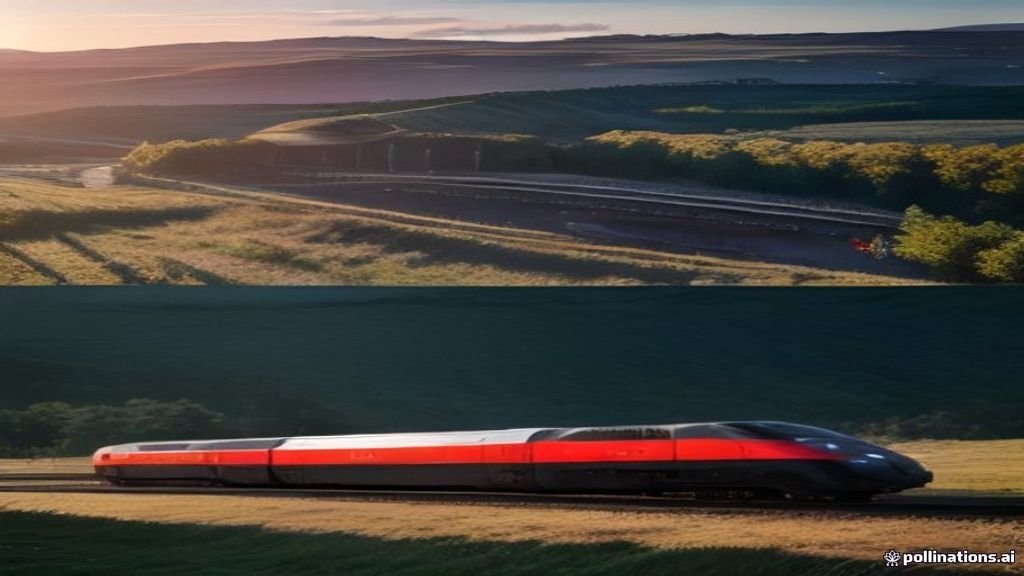
Alstom has secured a landmark nearly £1bn contract to manufacture the UK's first battery-electric trains for long-distance main line services. Built at Alstom's Litchurch Lane factory in Derby, the 29 new Adessia Stream trains will be purchased by Rock Rail, leased to TransPennine Express, and enter service by 2034.
- £1 Billion Investment: The massive contract secures manufacturing operations at Alstom's historic Derby facility and injects capital into the UK railway manufacturing supply chain.
- Decarbonisation Milestone: Introduction of the UK's first long-distance battery-electric trains eliminates diesel emissions on un-electrified sections of northern railway routes.
- Job Security: Directly preserves 350 skilled manufacturing jobs at Alstom alongside over 5,000 to 6,000 broader supply chain roles across the United Kingdom.
- Capacity & Speed Boosts: Supports the TransPennine Route Upgrade by increasing line capacity by 30% and cutting journey times between major northern hubs.
/
1:31
1. Executive Summary & Strategic Importance
The announcement centres on the procurement of 29 state-of-the-art Adessia Stream trains, engineered to provide cleaner, faster, and more reliable journeys across the north of England. Scheduled to enter passenger service by 2034, with manufacturing kickstarting in 2028, the project is designed to tackle persistent regional transport bottlenecks. By replacing polluting diesel engines with zero-emission battery systems on non-electrified stretches, the initiative aligns with broader national environmental strategies while revitalising industrial capacity in Derby.
The strategic importance of this order extends far beyond commuter convenience. Coming on the heels of previous redundancy anxieties at Alstom’s historic Litchurch Lane facility, the contract underpins thousands of domestic supply chain jobs. Industry stakeholders, including rolling stock lessor Rock Rail and train operator TransPennine Express, are coordinating closely to ensure the fleet integrates seamlessly into the upcoming TransPennine Route Upgrade, delivering a much-needed 30% surge in route capacity.
2. Historical Background & Contextual Evolution
To understand the magnitude of this contract, one must examine the turbulent recent history of Alstom’s Litchurch Lane plant in Derby. Established in 1876, the facility stands as the largest rolling stock manufacturing site outside of China, carrying a legendary legacy in British train building. However, cyclical ordering gaps and procurement lulls had previously exposed the workforce to severe vulnerability, exemplified by a major consultation in late 2023 that put over 1,000 jobs at risk.
Although Alstom secured a lifeline via a £370m contract in 2024 to construct London Elizabeth line trains, a looming manufacturing void threatened the long-term stability of the plant. The new TransPennine Express agreement successfully bridges this dangerous production gap. By diversifying into complex refurbishment projects for CrossCountry and ScotRail while preparing for the 2028 build phase, Alstom has secured a sustainable bridge toward next-generation green rolling stock, reassuring trade unions and regional leaders alike.
3. In-Depth Technical & Policy Breakdown
The technical architecture of the Adessia Stream fleet represents a paradigm shift for regional rail connectivity in the United Kingdom. Operating across complex terrain connecting key urban centres, these trains merge conventional electric multiple unit (EMU) capabilities with cutting-edge battery technology.
Operational Mechanics and Hybrid Switching
On electrified sections of the TransPennine network, the trains draw power directly from overhead lines. However, when transitioning to un-electrified branches—such as routes stretching toward Scarborough, Saltburn, and Hull—the onboard battery systems engage automatically. This eliminates the need for diesel locomotives, enabling seamless, zero-emission travel without requiring billions of pounds in total route electrification infrastructure.
Passenger Experience, Accessibility, and Timetable Impacts
Beyond propulsion chemistry, the DfT has mandated rigorous enhancements to passenger ergonomics and accessibility standards. Key integration targets include:
- Step-Free Boarding: Complete elimination of gaps between the train door threshold and station platforms to streamline boarding for mobility-impaired passengers.
- Onboard Capacity: Inclusion of three dedicated wheelchair spaces, two accessible toilets, family-friendly zones, and secure cycle and buggy storage areas.
- Journey Time Reductions: Accelerated acceleration curves and smoother braking profiles projected to shave up to 10 minutes off Manchester-to-Leeds commutes and 14 minutes between Manchester and York.
4. Comparative Industry Framework
Evaluating the Adessia Stream procurement against alternative rolling stock acquisitions highlights the unique engineering and financial parameters governing modern British rail policy. The table below outlines key comparative dimensions across recent major UK rolling stock investments.
| Fleet Project | Manufacturer & Site | Primary Technology | Target Route / Network | Strategic Objective |
|---|---|---|---|---|
| TransPennine Express Fleet | Alstom (Derby) | Battery-Electric (Adessia) | Northern England Main Lines | Decarbonisation & Capacity Growth |
| London Elizabeth Line | Alstom (Derby) | Electric Multiple Unit (EMU) | Central London & Suburbs | High-Density Metro Commuter Transit |
| HS2 Rolling Stock | Hitachi / Alstom Joint Venture | High-Speed Electric | London to West Midlands / North | Intercity Speed & Interoperability |
| Legacy Diesel Multiple Units | Various (Historical) | Diesel Hydraulic / Electric | Regional Un-electrified Routes | Legacy Inter-regional Transport |
SEEUY INTELLIGENCE
Battery-electric Trains – Analytical Overview
TransPennine Express Fleet
Alstom (Derby)
London Elizabeth Line
Alstom (Derby)
HS2 Rolling Stock
Hitachi / Alstom Joint Venture
Legacy Diesel Multiple Units
Various (Historical)
The analytical takeaway from this matrix is clear: while high-speed rail commands massive capital for dedicated greenfield tracks, hybrid and battery-electric applications provide a highly cost-effective retrofit strategy for existing brownfield networks. By avoiding the prohibitive capital expenditure of full overhead line electrification across every rural branch line, the UK government achieves immediate environmental gains at a fraction of the fiscal cost.
5. Socio-Economic, Enterprise & Global Ramifications
The wider economic footprint of the £1bn investment cannot be overstated. According to independent macroeconomic assessments of infrastructure projects tracked by organizations such as the World Bank, heavy manufacturing investments trigger profound multiplier effects across localized supply chains and regional labor markets.
Locally in Derby and the East Midlands, the agreement protects 350 direct engineering roles while creating 40 specialized apprenticeship positions, securing the next generation of technical talent. Nationally, over 5,000 to 6,000 supply chain jobs are bolstered, shielding component suppliers, software engineers, and raw material processors from market volatility. Transport Secretary Heidi Alexander emphasized that building high-skilled industrial capacity in regional heartlands remains central to fostering balanced economic growth across the country.
6. Strategic Outlook & What Comes Next
As the industry looks ahead to the 2028 production start and the 2034 service launch, stakeholders face several operational and logistical challenges. Managing the interim workflow at the Litchurch Lane factory is paramount; bridging the gap between current refurbishment contracts and the new build phase requires meticulous workforce planning.
Furthermore, rolling stock lessor Rock Rail and TransPennine Express must coordinate closely with Network Rail to ensure that depot charging facilities, platform interfaces, and signaling systems are fully optimized for battery-electric operations. If executed successfully, the Derby-built fleet will serve as a blueprint for secondary line decarbonisation across Europe, proving that regional rail can achieve net-zero ambitions without bankrupting public finances.
7. Frequently Asked Questions (FAQ)
Why are battery-electric trains being chosen instead of full electrification?
Full electrification of every rural and secondary rail line requires prohibitive capital expenditure and severe disruption to live networks. Battery-electric trains utilise existing overhead wires where available and store energy to autonomously traverse non-electrified sections.
What role does Rock Rail play in this transaction?
Rock Rail acts as the financial investor and rolling stock asset owner, purchasing the 29 trains from Alstom and leasing them out to train operator TransPennine Express for day-to-day service delivery.
How do these trains impact journey times in the north of England?
Thanks to improved acceleration, advanced regenerative braking, and optimized scheduling under the TransPennine Route Upgrade, journey times will decrease by up to 10 minutes between Manchester and Leeds, and up to 14 minutes between Manchester and York.
What measures are being taken to assist disabled passengers?
The new fleet incorporates step-free boarding solutions designed to eliminate gaps between the carriage door and station platforms, alongside three dedicated wheelchair spaces and two accessible onboard restrooms.
How many jobs are secured by this contract?
The agreement directly preserves 350 manufacturing jobs at Alstom’s Derby facility, includes 40 brand-new apprenticeships, and supports an estimated 5,000 to 6,000 additional jobs throughout the wider UK manufacturing supply chain.
<button type="button" onclick="this.parentElement.innerHTML='✓ Thank you, we will refine our analysis!‘” style=”background:#ffffff; border:1px solid #cbd5e1; border-radius:6px; padding:4px 12px; font-size:12px; cursor:pointer; color:#334155;”>👎 No
Latest Analytical Follow-up: For continuous developments on this subject, read our full investigation on Heating Oil Prices Surge: Winter Crisis Hits Rural Households.