
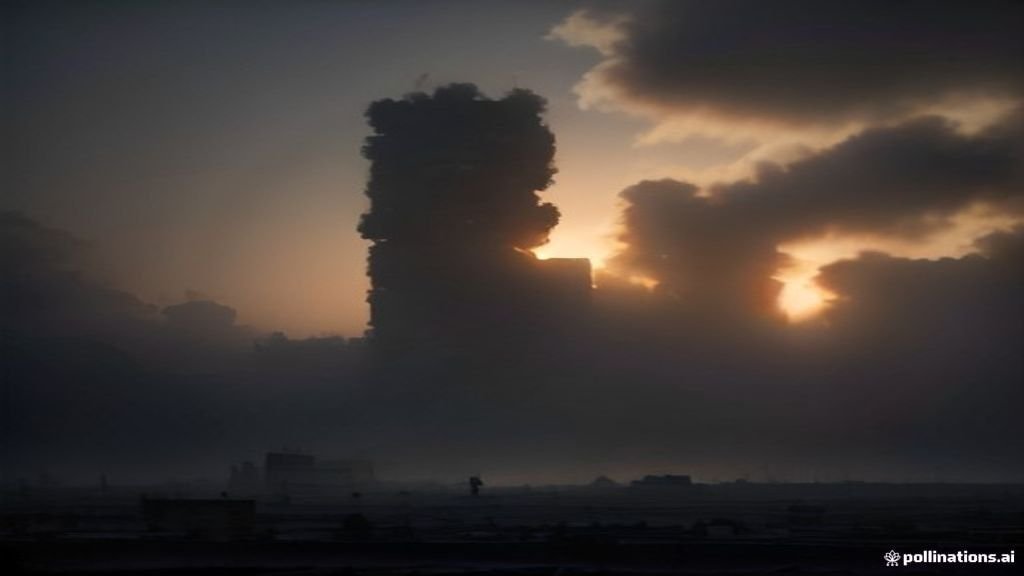
Gaza Building Collapse Kills 12 in War-Damaged District
The dust in Tal al-Hawa does not settle; it merely shifts. On a Tuesday morning, the inevitable happened. A sudden, catastrophic Gaza building collapse claimed the lives of at least 12 people, including young children, leaving a community to dig through pulverized concrete with their bare hands. The multi-story residential block, already structurally compromised by months of heavy bombardment, pancaked in seconds. It was a silent failure of physics, not a direct strike this time, but the end result was identical: more bodies pulled from the gray debris.
The recent Gaza building collapse in the Tal al-Hawa neighborhood of Gaza City resulted in at least 12 confirmed deaths, including children, with dozens more missing. The multi-story structure, previously compromised by military strikes, was housing approximately ten displaced families who had ignored safety warnings due to a lack of alternative shelter.<\/p>
- Structural Failure: A severely compromised multi-story residential building in Tal al-Hawa collapsed, killing at least 12 people and leaving dozens missing under the rubble.
- Desperate Sheltering: Despite explicit warnings that the structure was highly unstable, ten displaced families were living inside due to the acute shortage of safe housing options in Gaza.
- Equipment Shortages: Local civil defence rescue teams initially had to dig with their bare hands due to severe restrictions on importing heavy machinery and rescue gear.
- Simultaneous Military Activity: The collapse occurred alongside ongoing Israeli airstrikes Gaza, which claimed additional civilian and militant lives across the territory.
/
1:28
For weeks, the building had stood as a monument to desperation. Local authorities had warned that the structure was highly unstable, its load-bearing columns fractured and its rebar rusted and exposed. Yet, ten displaced families—numbering dozens of individuals—had moved back into the hollowed-out apartments. In a territory where safe ground is a myth, a roof that might fall is still preferred by some to a plastic tent in the mud. This tragedy highlights the compounding dangers of sheltering in war-torn urban landscapes.
“We knew the walls were cracked, and we knew the ceiling could give way at any moment,” said one neighbor who survived the collapse. “But where else were we supposed to go? The street is not an option when the drones are overhead. We chose the risk we could see over the risk we couldn’t.”
The Anatomy of a Predictable Disaster in Tal al-Hawa
The collapse occurred in the southern district of Gaza City, an area that has seen some of the most intense urban combat of the conflict. The building, once a bustling middle-class apartment complex, had been hollowed out by previous nearby blasts. When it finally gave way, the floors sandwiched together, trapping those inside in tight pockets of air and concrete. The Tal al-Hawa casualties began mounting immediately as neighbors rushed to the scene, clawing at the rubble before emergency services could even arrive.
According to local rescue workers, the dead included several children who were sleeping when the structure failed. Dozens of others remain missing, their fates sealed beneath tons of reinforced concrete. The search is agonizingly slow. Without the necessary heavy machinery, rescuers are forced to use hammers, shovels, and their own hands to move blocks of stone that weigh tons.
This incident is not an isolated tragedy. It is a stark symptom of the broader decay of Gaza humanitarian infrastructure. Across the Gaza Strip, thousands of buildings stand in a state of structural limbo. They are cracked, tilted, and structurally dead, yet they remain occupied by desperate families who have nowhere else to turn. The risk of spontaneous collapse is a ticking time bomb that threatens to claim hundreds more lives as winter rains and seismic vibrations from ongoing military operations continue to stress these fragile ruins.
Rescue Operations Under Siege: Digging with “Empty Hands”
The response to the disaster has laid bare the crippling limitations faced by local emergency services. Members of the Hamas-run Civil Defence rescue service reported that they arrived at the scene with virtually no heavy equipment. For the first critical hours of the rescue operation, they worked with “empty hands,” attempting to lift massive concrete slabs manually while listening to the faint cries of survivors trapped deep below.
The lack of equipment is a direct consequence of the tight restrictions on goods entering the enclave. According to reports from international observers, including Reuters, heavy machinery, excavators, and even basic search-and-rescue tools are classified as “dual-use” items by Israeli authorities, severely limiting their import. While the civil defence rescue teams were eventually able to borrow a single piece of heavy machinery from a private contractor, the delay undoubtedly cost lives.
The Logistics of Survival in a Ruined City
To understand the scale of the rescue challenge, one must look at the sheer volume of debris. The United Nations estimates that there are over 40 million tons of rubble in Gaza, much of it contaminated with unexploded ordnance and industrial hazards. Clearing this debris requires specialized equipment that simply does not exist within the strip. The table below illustrates the stark disparity between the required rescue infrastructure and the reality on the ground:
| Resource Category | Estimated Requirement for Effective Rescue | Current Operational Availability (Est.) | Primary Bottleneck |
|---|---|---|---|
| Heavy Excavators | 150+ units | Less than 15 functional units | Import restrictions & fuel shortages |
| Seismic Listening Devices | 80 units | 0 units | Strict import bans on electronic gear |
| Trained K9 Search Units | 20 teams | 0 teams | Lack of access and training facilities |
| Structural Shoring Equipment | Abundant steel/timber beams | Extremely scarce (repurposed debris) | Blockade on construction materials |
SEEUY INTELLIGENCE
Gaza Building Collapse – Analytical Overview
Heavy Excavators
150+ units
Seismic Listening Devices
80 units
Trained K9 Search Units
20 teams
Structural Shoring Equipment
Abundant steel/timber beams
Without these essential tools, every rescue operation is a race against time that is lost before it even begins. The dust inhalation, dehydration, and crush injuries suffered by those trapped under the concrete mean that the survival window closes within 48 hours. For the victims of the Tal al-Hawa collapse, those hours slipped away in a desperate scramble for functional tools.
A Backdrop of Continuous Violence
The tragedy in Tal al-Hawa did not occur in a vacuum. It unfolded against a backdrop of relentless military activity. On the same day as the collapse, a series of Israeli airstrikes Gaza killed at least five Palestinians, including two children and a local Hamas commander, according to health officials and military sources. The strikes, which targeted locations in both the north and south of the strip, serve as a constant reminder of the active threat environment that complicates any humanitarian response.
The Israeli military confirmed it had targeted and killed a Hamas commander in southern Gaza, as well as another operative in the north. However, in both instances, civilian casualties—specifically children—were reported alongside the intended targets. This pattern of high civilian collateral damage has drawn sharp criticism from international human rights organizations, who argue that the density of the population makes the use of heavy explosive weapons inherently disproportionate.
Further complicating the humanitarian landscape, the British charity Medical Aid for Palestinians reported that a patient was killed by an Israeli drone strike at a health center it supports in Jabalia, located in northern Gaza. The incident highlights the extreme vulnerability of even designated medical and humanitarian spaces, which are increasingly caught in the crossfire of the intense urban warfare.
“The targeting of healthcare facilities, whether direct or indirect, is a flagrant violation of international humanitarian law,” a representative from an international medical NGO stated. “When patients cannot feel safe inside a clinic, the entire system of humanitarian protection has broken down.”
The Silent Threat of Compromised Concrete
While the immediate focus remains on the search for survivors in Tal al-Hawa, structural engineers warn that the region is facing an unprecedented crisis of structural integrity. When a building is subjected to the shockwaves of nearby explosions, its internal skeleton is permanently damaged. Micro-fissures develop in the concrete, and the internal steel rebar can shear or lose its bond with the surrounding material.
Even if a building remains standing after a nearby blast, its load-bearing capacity is severely reduced. Environmental factors such as thermal expansion, moisture penetration, and the added weight of hundreds of displaced people sheltering inside can trigger a sudden, catastrophic failure without warning. This is the silent threat that hangs over Gaza’s remaining urban centers.
The problem is compounded by the total lack of building materials. For years, the import of cement, gravel, and structural steel has been tightly regulated under the guise of preventing military fortification. Consequently, residents cannot repair their damaged homes, and municipal engineers cannot shore up public buildings. The result is a landscape of standing ruins, occupied by a population that has no other choice but to live beneath cracked ceilings.
The Human Cost of Displacement
The families who lived in the collapsed Tal al-Hawa building were not ignorant of the dangers. They had been warned by local civil defense officials that the structure was on the verge of collapse. But in a territory where over 85% of the population has been displaced, often multiple times, the concept of choice is an illusion.
Many of these families had previously fled shelters in schools, hospitals, and makeshift tent camps that were either overcrowded, unsanitary, or targeted by military strikes. To them, a damaged concrete apartment offered a semblance of privacy, dignity, and protection from the elements that a plastic tent simply could not provide. The tragedy of the Gaza building collapse is that it was a disaster born of desperation, a direct consequence of a population being pushed into uninhabitable spaces with no viable alternatives.
As the search continues in Tal al-Hawa, the death toll is expected to rise. Each body recovered is a testament to a systemic failure that extends far beyond the immediate structural collapse. It is a failure of international humanitarian access, a failure of civilian protection, and a grim preview of the long-term, silent hazards that will continue to plague the Gaza Strip for decades to come, long after the active fighting eventually stops.
<button type="button" onclick="this.parentElement.innerHTML='✓ Thank you, we will refine our analysis!‘” style=”background:#ffffff; border:1px solid #cbd5e1; border-radius:6px; padding:4px 12px; font-size:12px; cursor:pointer; color:#334155;”>👎 No
