
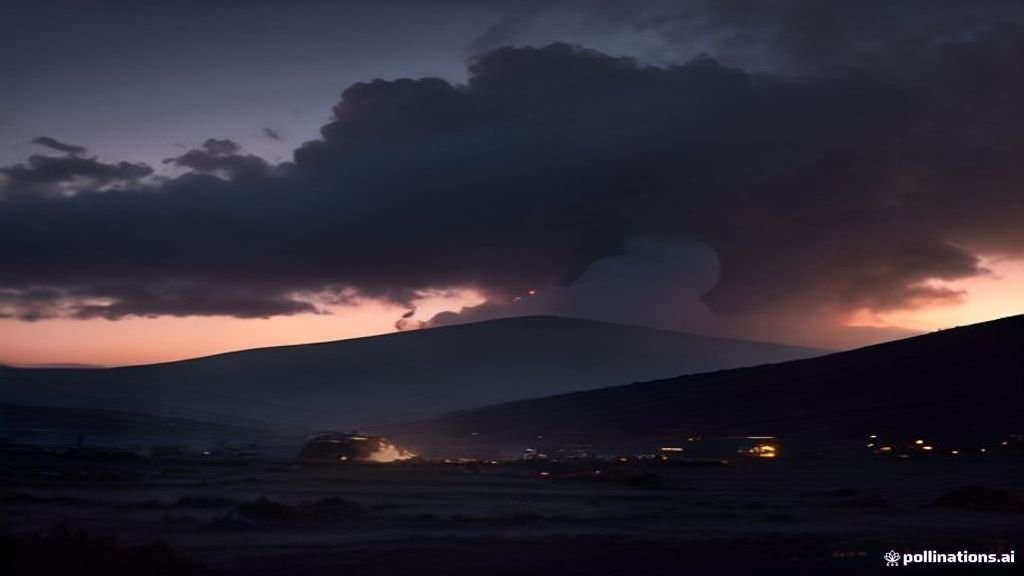
Tragic Los Angeles Helicopter Crash Claims Three Lives in Chatsworth
On a warm Tuesday evening in the San Fernando Valley, a routine news assignment transformed into an unfathomable double tragedy. The devastating Los Angeles helicopter crash that claimed three lives in Chatsworth has sent shockwaves through the global media landscape, raising urgent questions about the safety of low-altitude electronic news gathering (ENG) operations in congested urban airspaces. For decades, the drone of helicopter blades has served as the background soundtrack to Southern California’s breaking news cycle. Tuesday’s disaster has forced an immediate, painful pause.
The recent Los Angeles helicopter crash in Chatsworth resulted in three fatalities, including NBC4 crew members Eliana Moreno and George Marciniw, and one individual on the ground. The crash occurred while NewsChopper4 was covering a fatal Metro bus collision, prompting a federal investigation into local news aviation safety.<\/p>
- Double Tragedy in Chatsworth: The helicopter crash occurred directly while covering an earlier, fatal collision between an SUV and a city bus.
- Loss of Veteran Journalists: NBC Los Angeles confirmed the deaths of beloved crew members Eliana Moreno and George Marciniw.
- Ground Fatality and Injuries: A third victim was killed on the ground, and two others were hospitalized as fire spread to nearby vehicles.
- Federal Investigation Underway: The NTSB is leading a comprehensive probe into the mechanical and environmental factors of the crash.
/
1:34
The sequence of events began with a violent collision on the ground. Earlier in the afternoon, an SUV collided with a Los Angeles Metro bus in Chatsworth, leaving two people dead and six others injured. As emergency crews worked the scene, local news stations scrambled their airborne assets to capture the unfolding drama. It was a standard operational response in a city defined by its sprawling geography and car-centric culture. But within hours, the media coverage itself would become the headline.
The Fatal Descent of NewsChopper4
Just before 19:00 local time, NewsChopper4—a helicopter operated by NBC Los Angeles and shared with Telemundo 52—plunged from the sky. The aircraft came down violently between two commercial buildings in the industrial heart of Chatsworth. The impact was catastrophic. A massive fireball erupted instantly, sending thick plumes of black smoke into the twilight sky and triggering a rapid response from local emergency services.
More than 70 firefighters from the Los Angeles Fire Department (LAFD) rushed to the scene. They faced a chaotic environment. The fire from the shattered fuselage quickly spread, engulfing four nearby vehicles and two large storage containers. Amid the flames, first responders made a grim discovery. Both individuals aboard the helicopter had perished in the impact. On the ground, a third victim, caught in the immediate path of the falling debris, was also pronounced dead.
“We knew it was a news chopper. We knew we’d lost contact with our people out there, and we’ve just received confirmation,” said a visibly shaken Colleen Williams, a veteran anchor for NBC4, during an emotional live broadcast.
The victims inside the aircraft were later identified as Eliana Moreno and George Marciniw. Both were widely respected professionals, described by their colleagues as “valued friends and dedicated journalists” who had spent years capturing the triumphs and tragedies of Southern California from the sky. The identity of the third victim, who was on the ground at the time of the impact, has not yet been released pending family notification.
A Community and Industry in Mourning
The emotional fallout from the NewsChopper4 accident was immediate. In the tight-knit world of local broadcast journalism, where camera operators and pilots from competing stations often share the same airspace and hangars, the loss felt deeply personal. On social media, tributes poured in from rival networks, local officials, and viewers who had welcomed Moreno and Marciniw into their living rooms for years.
Los Angeles Mayor Karen Bass expressed her profound grief on X (formerly Twitter), stating she was “absolutely devastated by the loss of life in Chatsworth tonight.” California Governor Gavin Newsom echoed those sentiments, offering his condolences to the families of the victims and the entire NBC4 organization. The Los Angeles Police Department’s Central Division also extended its thoughts and prayers to the grieving newsroom.
To understand the scale of the twin disasters that struck Chatsworth on Tuesday, it is helpful to examine the timeline and impact of both incidents side by side:
| Event Details | The Ground Collision (Metro Bus) | The Aerial Disaster (NewsChopper4) |
|---|---|---|
| Time of Incident | Afternoon, Tuesday | 18:58 Local Time |
| Location | Chatsworth, Los Angeles | Between commercial buildings, Chatsworth |
| Fatalities | 2 | 3 (2 in air, 1 on ground) |
| Injuries / Hospitalizations | 6 injured | 2 hospitalized from ground area |
| Primary Agencies Responding | LAPD, LAFD, Metro Transit | LAFD (70+ firefighters), NTSB, FAA |
| Property Damage | Severe damage to SUV and bus | 4 vehicles destroyed, 2 storage units burned |
SEEUY INTELLIGENCE
Los Angeles Helicopter Crash – Analytical Overview
Time of Incident
Afternoon, Tuesday
Location
Chatsworth, Los Angeles
Fatalities
2
Injuries / Hospitalizations
6 injured
Primary Agencies Responding
LAPD, LAFD, Metro Transit
The Mechanics of Risk: Why News Helicopters Face Unique Dangers
While commercial aviation remains incredibly safe, the specific nature of news gathering flights introduces a unique set of operational hazards. Unlike commercial airliners flying on highly regulated, instrument-guided routes at high altitudes, news helicopters operate in the complex, low-altitude environment of the visual flight rules (VFR) corridor. This is a space shared with police helicopters, private pilots, and increasingly, commercial drones.
During major breaking news events, multiple news choppers will often hover in close proximity to one another. Pilots must maintain constant visual contact with other aircraft while simultaneously positioning their helicopter to give the camera operator the best possible angle. It is a high-stress, high-workload environment that demands absolute concentration. A single moment of distraction, a sudden mechanical failure, or an unexpected gust of wind can have catastrophic consequences.
According to historical aviation safety records compiled by Reuters, the helicopter industry has faced ongoing scrutiny over the safety of light turbine helicopters used in utility and media roles. While modern news helicopters are equipped with advanced collision avoidance systems and terrain awareness technology, the margin for error at 800 feet above a dense urban landscape is razor-thin.
Inside the NTSB Helicopter Investigation
The task of determining exactly what went wrong in the skies over Chatsworth now falls to the National Transportation Safety Board (NTSB). A team of investigators has already been dispatched to the crash site to begin the painstaking process of documenting the wreckage, recovering flight data, and interviewing witnesses.
The NTSB helicopter investigation will likely focus on three primary areas: mechanical integrity, human factors, and environmental conditions. Investigators will recover the helicopter’s engine and rotor systems to look for signs of pre-impact mechanical failure. They will also analyze the maintenance history of the aircraft, looking for any recurring issues or recent repairs that could have contributed to the crash.
Analyzing the Flight Path and Telemetry
Modern news helicopters are equipped with sophisticated GPS tracking and telemetry systems that transmit real-time data back to ground stations. Investigators will use this data to reconstruct the final moments of the flight. They will look at the aircraft’s altitude, airspeed, and rate of descent to determine if the pilot was attempting an emergency autorotation—a maneuver that allows a helicopter to land safely without engine power.
The Role of Air Traffic Control and Communication
Another critical element of the probe will be the communication between NewsChopper4 and local air traffic control, as well as communications with other news helicopters in the area. Investigators will review audio recordings to see if the pilot reported any mechanical issues or if there were any warnings of immediate danger before the aircraft went down.
Rethinking News Helicopter Safety Standards
This tragedy is bound to reignite a long-standing debate within the broadcast industry: Is the risk of operating manned news helicopters still justified in the digital age? Over the past decade, rapid advancements in drone technology and high-definition ground cameras have changed the economics and logistics of local news gathering.
Many media companies have faced pressure to reduce their reliance on expensive, high-maintenance helicopter fleets. According to industry reports from Bloomberg, the cost of operating a single twin-engine news helicopter can exceed several thousand dollars per hour, prompting some station groups to transition to shared-aircraft agreements or drone networks. However, proponents of manned helicopters argue that drones lack the range, speed, and endurance required to cover a massive metropolitan area like the Los Angeles basin effectively.
If the NTSB investigation reveals systemic issues with the aircraft type or operational procedures, it could lead to sweeping changes in news helicopter safety standards. This might include mandatory dual-pilot operations for certain types of missions, stricter altitude minimums over congested areas, or enhanced training requirements for pilots operating in multi-aircraft environments.
A Legacy of Service in the Skies
As the investigation begins and the physical debris is cleared from the Chatsworth industrial park, the focus remains on the human cost of this disaster. Eliana Moreno and George Marciniw were not just eyes in the sky; they were the chroniclers of Los Angeles’s daily history. They flew into wildfires, tracked high-speed pursuits, and documented the moments that defined the city, always working to keep the public informed.
Their loss is a stark reminder of the hidden risks of the journalism profession. While war correspondents and investigative reporters often dominate the conversation about journalistic danger, the local news crews who take to the air every day face a quiet, persistent risk of their own. The skies over Los Angeles will eventually fill with news helicopters once again, but the memory of those lost in the Chatsworth aviation incident will undoubtedly linger in the minds of every pilot and camera operator who straps into a cockpit to cover the news.
<button type="button" onclick="this.parentElement.innerHTML='✓ Thank you, we will refine our analysis!‘” style=”background:#ffffff; border:1px solid #cbd5e1; border-radius:6px; padding:4px 12px; font-size:12px; cursor:pointer; color:#334155;”>👎 No
