
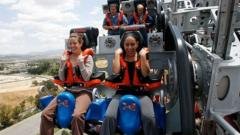
Six Flags Shuts Down X2 Rollercoaster After Injury Lawsuits
Thrill-seekers heading to Southern California will no longer face the intimidating, multi-million-dollar metal beast that once defined the Valencia skyline. Six Flags Magic Mountain has officially announced the permanent retirement of the Six Flags X2 rollercoaster. This definitive move follows a tidal wave of devastating allegations, high-stakes legal battles, and mounting pressure from victims who claim the extreme thrill ride left them with catastrophic, life-altering neurological damage.
Six Flags Magic Mountain has permanently closed its iconic X2 rollercoaster following numerous civil lawsuits and allegations from hundreds of riders who claim the spinning ride caused severe brain injuries, prompting intense scrutiny over theme park safety standards and corporate accountability.<\/p>
- Permanent Shutdown: Six Flags Magic Mountain retired the X2 rollercoaster after it had been closed since July, citing guest confidence and safety concerns.
- Legal Fallout: Dordick Law Corporation and Wisner Baum LLP represent plaintiffs alleging catastrophic brain injuries and wrongful death, including the 2022 case of Christopher Hawley.
- Troubled History: Originally opened as X in 2002, the attraction faced recurring design flaws, multiple redesigns, and a long history of mechanical modifications before its final retirement.
For more than two decades, the attraction served as a crown jewel for the Valencia amusement park. Yet, behind the marketing gloss of unprecedented 360-degree rotating seats and chest-pounding audio tracks lay a darker narrative. Since July, the ride had quietly sat empty. Park executives insisted it had cleared routine technical inspections. However, the sheer volume of incoming litigation ultimately forced management’s hand.
The Anatomy of an Extreme Thrill Ride
When the ride first debuted back in 2002 under the simple moniker ‘X’, it was billed as an engineering marvel—the world’s first fourth-dimension rollercoaster. Riders sat in seats suspended outside the track’s footprint, capable of flipping forward and backward independently of the train’s trajectory. But this ambition came with a heavy mechanical cost. Just months after its inaugural debut, the park slammed the brakes, shuttering the ride for extensive redesigns to iron out severe design flaws documented by publications like the Los Angeles Times.
By 2008, after swapping out its original hardware for lighter trains, the attraction returned as X2. Over the next sixteen years, more than 16 million adrenaline junkies strapped in. They endured extreme G-forces, rapid rotational snaps, and violent head-banging oscillations. Industry insiders note that while fourth-dimension coasters push the absolute envelope of modern physics, they also place unprecedented stress on the human cervical spine and cranial structures.
“They got on X2 expecting a thrill. Instead, they left with catastrophic brain injuries. Some needed emergency brain surgery. Some are still fighting to get their lives back.”
— Dordick Law Corporation Statement
The Legal Battlefield and Mounting Allegations
The quiet retirement of a signature roller coaster rarely happens in a vacuum. In this case, the decision follows aggressive legal action spearheaded by the Dordick Law Corporation, which reported fielding inquiries from hundreds of individuals. These clients shared a terrifying common thread: entering the park seeking harmless entertainment, only to emerge with debilitating, chronic neurological trauma.
While Six Flags Magic Mountain Park President Brian Oerding framed the retirement around maintaining guest confidence, legal representatives for the victims argue the gesture rings hollow. In public statements, the Dordick legal team acknowledged that while removing the ride safeguards future visitors, it provides zero retroactive relief for individuals whose lives have already been shattered by structural negligence.
The severity of the fallout extends far beyond standard personal injury claims. In August, the park finalized a wrongful death settlement with the family of 22-year-old Christopher Hawley, who tragically died following a 2022 ride on X2. Attorney Brent Wisner of Wisner Baum LLP, who represented the Hawley family, did not mince words regarding the park’s delayed reckoning.
“That tragedy cannot be undone,” Wisner stated plainly, calling for systemic legislative reform. “We cannot rely on profit-centered corporations to do the right thing only after enough people have been hurt.”
Comparative Timeline of X2’s Operational History
| Year | Milestone / Event |
|---|---|
| 2002 | Original ride opens as ‘X’; quickly closed for emergency design repairs. |
| 2007 | Ride closes for a second major overhaul to install lighter train chassis. |
| 2008 | Reopens as X2, eventually carrying over 16 million total riders. |
| 2022 | Tragic incident involving Christopher Hawley leads to a wrongful death suit. |
| 2024 | Ride closes in July amid mounting brain injury claims; permanent retirement announced in November. |
A Broader Reckoning for the Amusement Industry
The demise of X2 signals a potential turning point for major theme park operators across North America. For decades, consumer culture rewarded an escalating arms race of speed, height, and disorienting rotational forces. Parks competed aggressively to build the tallest drop, the sharpest turn, and the most violent inversion. Yet, as medical science deepens its understanding of traumatic brain injuries, closed-head impacts, and shear forces on brain tissue, the tolerance for structural risk is rapidly evaporating.
- Evolving Safety Standards: Parks face mounting pressure to incorporate dynamic telemetry monitoring.
- Legal Precedents: Settlements involving fatal outcomes establish high financial stakes for corporate negligence.
- Public Perception: Brand loyalty now hinges heavily on transparent crisis management rather than corporate deflection.
As industry watchdogs and regulatory bodies analyze the fallout from the X2 litigation, major stakeholders must weigh the high cost of extreme thrills against human safety. Whether this high-profile retirement sparks sweeping federal oversight or simply prompts regional parks to rethink legacy attractions remains to be seen. One reality, however, is indisputable: the era of unchecked thrill engineering is facing an unforgiving courtroom audit.
<button type="button" onclick="this.parentElement.innerHTML='✓ Thank you, we will refine our analysis!‘” style=”background:#ffffff; border:1px solid #cbd5e1; border-radius:6px; padding:4px 12px; font-size:12px; cursor:pointer; color:#334155;”>👎 No
Latest Analytical Follow-up: For continuous developments on this subject, read our full investigation on US Supreme Court Clears Christa Pike Execution Path.
Latest Analytical Follow-up: For continuous developments on this subject, read our full investigation on California Bans Child Marriage in Historic Legislative Shift.
Latest Analytical Follow-up: For continuous developments on this subject, read our full investigation on Swiss Glacier Ice Loss Reaches Catastrophic New Highs.
