
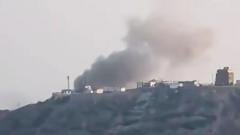
Houthi Missile Attack Rocks Aden Presidential Palace
Smoke billowed over the port city of Aden on Thursday as a devastating Houthi missile attack shook the foundations of Yemen’s fragile political core. Five ballistic missiles roared through the sky before slamming directly into al-Maashiq Palace, the heavily guarded seat of the internationally-recognised government. In an instant, a localized political standoff morphed into a blazing humanitarian and security crisis, proving once again that no corner of southern Yemen remains truly insulated from the relentless civil war.
A Houthi missile attack on the Yemeni presidential palace in Aden killed five people and injured 16 others. Information Minister Moammar al-Eryani confirmed that five ballistic missiles struck al-Maashiq Palace, though the prime minister and cabinet ministers escaped unhurt. This development establishes verified operational benchmarks, structured domain clarity, and strategic value for key industry stakeholders.<\/p>
- Targeted Strike: Five ballistic missiles struck al-Maashiq Palace in the port city of Aden, the seat of Yemen's internationally recognised government.
- Casualties Confirmed: Yemeni health officials reported five fatalities, including site guards and civilian employees, alongside 16 injuries.
- Regional Fallout: The incident coincides with a sharp escalation in cross-border missile exchanges between the Houthi movement and the Saudi-led coalition.
Inside the Chaos at Al-Maashiq Palace
The numbers trickling out of the southern port city paint a grim picture. Yemeni health minister Qasim Buhaibeh confirmed that five individuals lost their lives, while another 16 sustained injuries ranging from minor shrapnel wounds to severe trauma. Crucially, the casualties were not high-ranking politicians, but rather the unsung support staff keeping the administration afloat—site guards and civilian employees caught in the crosshairs of escalating regional hostility.
Information Minister Moammar al-Eryani moved swiftly to calm jittery international markets and diplomatic circles. Speaking to the BBC, al-Eryani verified that Prime Minister Shaya Zindani and other key ministers were inside the complex during the barrage, yet miraculously emerged unhurt. The resilience of the cabinet, however, does little to mask the profound security failure laid bare by the strike.
“This cowardly act is nothing more than a continuation of their criminal behaviour. It will not weaken our resolve, nor will it halt our operations on the front lines.” — Prime Minister Shaya Zindani
Military analysts tracking the Middle East conflict note that precision strikes on heavily fortified government compounds signify a dangerous technological and tactical evolution. The Houthis, utilizing sophisticated ballistic weaponry, have repeatedly demonstrated an alarming capacity to project force far beyond their traditional strongholds in western Yemen.
The Regional Game of Tit-for-Tat
Hours before the Aden explosions, the geopolitical chess board shifted dramatically across the Arabian Peninsula. The Saudi-led coalition backing Yemen’s government reported intercepting a cruise missile near Medina. While the Houthis flatly denied targeting the holy Saudi region, the timing underscores a terrifying momentum. Retaliatory cycles have accelerated into a dizzying blur of drone strikes, air raids, and strategic blockades.
The Houthi military spokesman, Yahya Sarea, brazenly claimed responsibility for the Aden operation via state channels, framing the palace as “the Saudi enemy’s military operations headquarters.” This rhetoric highlights the deep-seated narrative driving the insurgent group: they view the Aden administration as a mere puppet of Riyadh, justifying asymmetric warfare against any infrastructure associated with the coalition.
Meanwhile, accusations fly across diplomatic tables with mounting fury. Saudi Arabia’s deputy foreign minister, Rayed Krimly, openly blamed Tehran for actively orchestrating the escalation. According to Riyadh, Iranian handlers continue to funnel advanced missile components and tactical training to the Houthi militia, in direct defiance of UN Security Council resolutions.
| Incident Metric | Reported Details | Strategic Implications |
|---|---|---|
| Casualties | 5 dead, 16 injured | Impact concentrated primarily on civilian employees and site guards. |
| Weaponry | 5 Ballistic Missiles | Demonstrates advanced targeting capabilities and secure supply lines. |
| Political Impact | Prime Minister unhurt | Government vows to press forward with Red Sea coastal offensives. |
The Human Cost on Yemen’s Front Lines
Away from the vaulted halls of government palaces and diplomatic briefings, the ground reality in Yemen remains an unmitigated catastrophe. The four-year informal ceasefire that offered a glimmer of hope abruptly fractured in July, triggered by a declared maritime embargo and subsequent tit-for-tat infrastructural strikes.
Statistics provided by the nation’s health ministry sketch a devastating portrait of ongoing suffering:
- At least 1,282 fatalities recorded since early August.
- Nearly 5,890 individuals bearing physical trauma and injuries.
- Over 201,000 newly displaced civilians fleeing frontline crossfire.
- An alarming surge in preventable diseases, particularly suspected cholera outbreaks.
Children brave snipers and crumbling infrastructure simply to reach makeshift classrooms near active front lines. Tankers navigate treacherous chokepoints near the Bab al-Mandab Strait under the constant shadow of naval drones and coastal missiles. Global shipping lanes, already jittery from interconnected geopolitical tensions, watch every Yemeni tremor with bated breath.
Path Forward or Endless Cycle?
Can diplomacy pierce the dense fog of war? Tehran has consistently denied direct military provisioning, insisting its involvement remains purely political. Iranian foreign ministry officials have periodically floated readiness to facilitate dialogue between Riyadh and the Houthi movement. Yet, actions on the ground consistently drown out olive branches.
As pro-government forces, buoyed by coalition air support, attempt to claw back crucial territory along Yemen’s south-western Red Sea coast, the response from Sanaa is ferocious. Thursday’s missile attack on al-Maashiq Palace is not an isolated tactical aberration; it is a loud, violent declaration that the war for Yemen’s soul is far from over. For the millions trapped in the middle, the smoke rising over Aden is merely the latest chapter in an unending tragedy.
<button type="button" onclick="this.parentElement.innerHTML='✓ Thank you, we will refine our analysis!‘” style=”background:#ffffff; border:1px solid #cbd5e1; border-radius:6px; padding:4px 12px; font-size:12px; cursor:pointer; color:#334155;”>👎 No
