
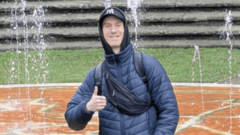
Australian Teen Missing in Bush Rescued Alive After Six Days
When an Australian teen missing in bush country east of Melbourne was found safe on Friday morning, search personnel who had braved six grueling days of dense scrub and dropping temperatures could hardly contain their relief. The 17-year-old camper, identified publicly only as William, went missing during a recreational trip in Victorian bushland roughly 180 kilometers (112 miles) east of the state capital. What began as a routine outdoor excursion quickly morphed into a high-stakes race against the elements, drawing upon deep resources from emergency teams across the region.
A 17-year-old Australian teen missing in bushland 180km east of Melbourne was rescued alive after six days in freezing temperatures. Found uninjured by Victoria Police search teams, his decision to stay in one spot proved decisive, enabling aerial crews to locate and winch him to safety.<\/p>
- Static Position Saved Life: Remaining in a fixed location prevented the teenager from wandering deeper into unreachable gullies.
- Multi-Agency Response: The operation integrated K9 units, police divers, thermal imaging air support, and volunteer searchers.
- Exposure Resilience: Despite freezing overnight temperatures in dense forest, the youth suffered only minor scratches.
- Emotional Relief: Emergency personnel reported tears of joy after finding the youth conscious, coherent, and hungry.
Extremely cold overnight temperatures had severely heightened concerns for the teenager’s physical survival. As the days ticked by, hope fluctuated among volunteer units and specialized tracking teams working the rugged terrain. Yet, against long odds, searchers spotted the young man on Friday, executing a daring winching maneuver to extract him from the dense canopy. His immediate reward upon reaching safety? A bottle of water, a fresh doughnut, and a tearful, emotional reunion with his family.
Australian Teen Missing in Bush Found Alive: Anatomy of a Miracle
Six days in the Australian wilderness can break even experienced outdoorsmen. For a teenager equipped for little more than a short camping trip, the scrublands of eastern Victoria presented an existential crisis. The terrain in this pocket of Victoria features steep gullies, thick underbrush, and unpredictable microclimates. Navigation under thick forest canopies is notoriously treacherous, even for seasoned locals.
William vanished last Friday while camping alongside a friend. When he failed to return to their base site, emergency services triggered a massive deployment. The effort pulled together specialized divisions, combining ground personnel with cutting-edge aerial technology.
“It doesn’t happen all the time,” remarked Victoria Police Acting Inspector Jason Benbow during a press briefing shortly after the recovery. “I’m sure he’s got a story to tell us soon, which we’re very keen to hear. Officers were visibly emotional when word came through that he was alive and walking.”
According to Reuters reporting on regional search ops, terrain complexity remains the primary factor delaying rapid extractions in dense forest tracks. In William’s case, the thick canopy shielded the ground from visual air sweeps, requiring ground teams to work in tandem with specialized heat-seeking sensors overhead.
The Critical Decision: Staying Put in the Wilderness
While luck always plays a role in wilderness survival, human behavior dictates the ultimate outcome. In many search scenarios, lost individuals wander miles away from their initial last-known position, driven by panic or misplaced confidence. This movement expands the search grid exponentially, drastically lowering the statistical odds of a successful recovery.
William made the single decision that saved his life: he stayed in one spot.
By resisting the urge to push through thick, disorienting bushland, he contained the search footprint. This allowed ground crews and K9 tracking units to systematically tighten their perimeter without chasing a moving target.
“He just stayed in one spot and waited to be rescued, and I’m just over the moon he’s alive,” his mother, Elizabeth Barkley, shared with reporters outside the medical facility. “He’s doing fine, everything seems to be fine, he’s in perfect health… He’s never leaving the house again.”
This simple discipline of staying stationary aligns directly with core bushland survival strategies taught by global search and rescue organizations. When an individual remains static, energy expenditure plummets, hydration loss slows, and the probability of search teams intersecting their location rises dramatically.
Evaluating the Operational Parameters: Search & Rescue Operations
The scale of the Victoria Police search and rescue initiative underscores how critical the first 144 hours are in deep-bush operations. Below is a structural analysis of the operational parameters and environmental factors present during the six-day deployment.
| Operational Parameter | Condition / Asset Deployed | Tactical Significance |
|---|---|---|
| Terrain Type | Dense temperate forest & steep gullies | Restricted ground visibility to under 5 meters in dense zones. |
| Overnight Temperatures | Low single-digit Celsius (Near freezing) | Created high risk of severe hypothermia for exposed subjects. |
| Air Support | Police Helicopters with FLIR Imaging | Scanned tree lines for thermal signatures during night and dawn hours. |
| Ground Support | Police K9 Units, Divers, & Foot Patrols | Swept creek beds, drainage basins, and thick brush line-by-line. |
| Subject Behavior | Static position maintained | Prevented expansion of the 180km search radius boundary. |
Inside the Operations of a Gippsland Wilderness Rescue
Executing a Gippsland wilderness rescue in Victorian bushland requires seamless coordination across multiple operational branches. Once a missing person alert is logged, command centers establish an expanding grid based on terrain maps, water sources, and historical movement patterns of lost individuals.
In this case, searchers faced complex atmospheric conditions. Dense morning fog frequently blanketed the canopy, delaying early-morning helicopter launches. Ground teams worked through damp undergrowth, using specialized search dogs trained to pick up human scent trails through high humidity and thick foliage.
Divers were brought in to check nearby water hazards and river systems—a standard protocol when individuals vanish near natural watercourses. Meanwhile, ground sweeps pushed through razor-sharp scrub that routinely caused physical exhaustion among trained rescuers. Yet, despite physical strains, the tactical focus stayed locked on locating the 17-year-old before cold exposure set in permanently.
When aerial crews finally spotted William standing in a clear pocket of bush, the tactical phase transitioned instantly to extraction. A winch operator descended through the trees, securing the teenager before hauling him into the cabin. The immediate administration of basic calories—a simple doughnut and water—helped stabilize his blood sugar levels before emergency medical technicians conducted a full field assessment.
Surviving Exposure: The Physical Realities of the Bush
How does an untrained teenager survive six nights of exposure without specialized cold-weather survival gear? The answer lies in natural shelter selection, metabolic conservation, and a fair degree of biological resilience.
During winter and shoulder seasons, cold weather in Victorian forest zones can drop toward freezing. Without fire or thermal blankets, prolonged exposure leads to progressive stages of hypothermia:
- Mild Hypothermia: Uncontrollable shivering, loss of fine motor skills, and mental fatigue.
- Moderate Hypothermia: Confusion, slurred speech, slow breathing, and apathy regarding self-preservation.
- Severe Hypothermia: Loss of consciousness, muscle rigidity, and cardiac vulnerability.
William avoided these fatal stages largely by finding windbreaks within the bush and minimizing physical exertion during the coldest nocturnal hours. By remaining still, he conserved vital body heat instead of sweating through his clothing—a common pitfall that accelerates hypothermia once physical activity stops.
When emergency crews evaluated him at the local hospital, they found remarkably few physical markers of his ordeal. Outside of minor scratches from navigating scrubland prior to making camp, he was declared in stable, healthy condition.
Essential Bushland Survival Strategies for Outdoor Enthusiasts
While this story yielded an extraordinarily joyful outcome, it serves as a stark reminder of how quickly a recreational outing can turn perilous. Establishing baseline precautions before stepping onto a trail is non-negotiable.
According to global emergency response standards, outdoor enthusiasts entering dense, unmapped, or semi-remote bushland should implement specific safety protocols:
- File a Detailed Trip Plan: Leave exact coordinates, planned routes, and return times with family or trusted contacts.
- Carry Personal Locator Beacons (PLBs): Satellite-based PLBs function independently of cellular networks, transmitting precise GPS coordinates directly to emergency services.
- Master the “STOP” Rule: If lost, Stop, Think, Observe, and Plan. Never continue walking in hopes of “stumbling” onto a road when direction is lost.
- Layer Clothing Correctly: Avoid cotton clothing, which retains moisture and accelerates cooling. Synthetic or merino wool baselayers preserve warmth even when damp.
- Pack Emergency Caloric Density: Keep high-calorie, lightweight rations (such as energy bars or nut butters) in daypacks for unexpected multi-day stays.
Reflections from the Field: A Rare and Welcome Triumph
In search and rescue work, outcomes often lean toward sobering statistics rather than miraculous discoveries. For the officers, volunteers, and helicopter crews who logged sleepless shifts across six days, finding a missing camper found alive provides a profound emotional reward.
The image of a tired, scratch-marked teenager sitting in a rescue helicopter enjoying a doughnut offers a rare moment of levity within a demanding profession. As Victoria Police wrap up their formal debriefing, William’s experience will likely be studied as a case study in how simple survival instincts—chiefly, remaining put—can alter the trajectory of a emergency rescue effort.
For Elizabeth Barkley and her family, the ordeal ends not in tragedy, but with a safe child back at home—and perhaps a somewhat longer curfew for his next camping trip.
<button type="button" onclick="this.parentElement.innerHTML='✓ Thank you, we will refine our analysis!‘” style=”background:#ffffff; border:1px solid #cbd5e1; border-radius:6px; padding:4px 12px; font-size:12px; cursor:pointer; color:#334155;”>👎 No
Latest Analytical Follow-up: For continuous developments on this subject, read our full investigation on AFL Hotel Incident Charges Dropped: Players Face Civil Action.
Latest Analytical Follow-up: For continuous developments on this subject, read our full investigation on FBI Warns of Fake Video Calls Crypto Hack Draining $400 Million.
