
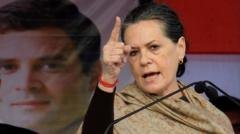
Sonia Gandhi Memoir Unveils Secrets of India’s Dynasty
On the crisp morning of October 31, 1984, Sonia Gandhi’s world violently fractured. As a young wife and mother living inside the high-security prime minister‘s residence in New Delhi, she heard the sharp, deceptive cracks of gunfire echoing from the garden. Moments earlier, her mother-in-law, India’s formidable prime minister Indira Gandhi, had stepped out for work. She would never return.
The new Sonia Gandhi memoir, 'Belonging: A Journey of Love', offers a deeply personal look into one of India's most powerful political dynasties, detailing the tragic assassinations of Indira and Rajiv Gandhi, her reluctant entry into national politics, and her candid critique of modern Indian governance.<\/p>
- Tragic Premonitions: Sonia Gandhi recalls begging Rajiv Gandhi not to become prime minister after Indira Gandhi's assassination, fearing for his life.
- Reluctant Leadership: Despite her initial aversion to politics, she stepped up to prevent the Congress party from splintering amid rising Hindu nationalism.
- Strategic Refusal: In a shocking 2004 political twist, she declined the prime ministership to avoid foreign-birth controversies, choosing Manmohan Singh instead.
- Candid Critiques: The 582-page book does not shy away from addressing the sharp authoritarian drift in modern parliamentary politics under Narendra Modi.
That harrowing morning sets the emotional bedrock for Sonia Gandhi memoir, titled Belonging: A Journey of Love. It is an extraordinary piece of political literature. It strips away the calcified layers of mythology surrounding India’s most influential political family, exposing the raw, bleeding human cost of wielding supreme power in South Asia.
From Italian Roots to the Epicenter of Indian Power
Long before she became the reluctant matriarch of the Indian National Congress, Sonia was a young woman from a quiet Italian town. Meeting a student named Rajiv Gandhi in England set her on an irreversible trajectory. She traded her quiet European anonymity for a life tethered to the crucible of Indian statecraft.
Yet, the transition was drenched in blood. Following Indira’s assassination by her own Sikh bodyguards—a retribution for the storming of the Golden Temple—Sonia faced an immediate nightmare. When Rajiv was summoned from a campaign trail to take the oath of office, Sonia’s reaction was pure, unfiltered terror. “They will kill you too,” she pleaded. Rajiv’s response was stoic and fatalistic: “They will kill me anyway.”
“I’d always disliked politics. It had taken first my mother-in-law, then the love of my life, my children’s father.” — Sonia Gandhi
True to her premonition, Rajiv was assassinated in 1991. The subsequent years were defined by crushing grief, public isolation, and a profound retreat from the spotlight. Industry insiders note that few political figures in global history have been forced to shoulder such repeated generational trauma while remaining in the white-hot glare of public scrutiny.
The Call of Duty and the Bhagavad Gita
As the decades rolled on, the Congress party began to fray at the seams. Senior leaders defected, electoral ground was surrendered, and the chorus demanding Sonia’s intervention grew deafening. Her children, Rahul and Priyanka, extracted tearful promises that she would stay away from the snake pit of national politics.
Yet, the pull of family legacy proved magnetic. Walking past photographs of Indira and Rajiv, she was gripped by guilt, fearing that the pluralistic, secular ethos they fought to protect was being dismantled by rising Hindu nationalism. To resolve her inner turmoil, she turned an unlikely corner: in January 1997, she began private lessons with a Sanskrit scholar to study the Bhagavad Gita.
Absorbing its core message—to perform one’s dharma (duty) without attachment to outcomes—provided the clarity she desperately needed. She stepped out of the shadows, taking the helm of a fractured party.
The 2004 Political Earthquake and Refusal of Power
Perhaps the most fascinating chapter of the memoir details the shocking aftermath of the 2004 general election. Having spearheaded a stunning upset campaign, Sonia traveled to the presidential palace alongside Manmohan Singh to stake her claim to form a government. The assumption across India was absolute: she would be prime minister.
Instead, she engineered a masterstroke of political self-abnegation. Overwhelmed by family pleas and deeply concerned that her foreign birth would spark endless, destabilizing parliamentary warfare, she flatly refused the post. She instead tapped Manmohan Singh—an economist of unquestioned integrity—to run the executive branch.
Key Milestones of the Gandhi Dynasty
| Year | Key Event | Historical Impact |
|---|---|---|
| 1984 | Indira Gandhi Assassination | Brought Rajiv Gandhi to power amidst nationwide turmoil. |
| 1991 | Rajiv Gandhi Assassination | Plunged the family and the Congress party into deep leadership crises. |
| 1998 | Sonia Takes Congress Helm | Stabilized the crumbling party apparatus against rising opposition forces. |
| 2004 | Refusal of Premiership | Appointed Manmohan Singh, neutralizing foreign-origin controversies. |
A Direct Critique of Narendra Modi’s India
In its closing sections, the memoir pivots toward a wider, melancholic assessment of contemporary Indian democracy. Sonia draws a stark line between the parliamentary decorum of yesteryears and the sharp, unforgiving authoritarian drift witnessed today.
Her commentary on Prime Minister Narendra Modi is remarkably unvarnished. Noting they have had virtually zero substantive contact beyond formal greetings, she observes his tendency to avoid eye contact. She diagnoses his worldview as one of strict hierarchy, order, and control anchored in RSS ideology—a direct ideological antithesis to her vision of an inclusive, secular republic.
However, the book avoids total hagiography. In a surprisingly candid concession, Sonia acknowledges her own discomfort with Delhi’s privileged drawing-room elites, noting that she could understand why Modi’s rise resonated with voters who felt alienated by the traditional political establishment.
Ultimately, Belonging leaves readers with an unmistakable sense of sorrow. At 79, looking back across decades of triumph, betrayal, and immense personal sacrifice, Sonia Gandhi offers no triumphant victory lap. Instead, she closes with a haunting reflection on the relentless tides of history: “At this moment it seems to me that, although I tried my best, I didn’t succeed in beating back the forces I’d set out to fight.”
<button type="button" onclick="this.parentElement.innerHTML='✓ Thank you, we will refine our analysis!‘” style=”background:#ffffff; border:1px solid #cbd5e1; border-radius:6px; padding:4px 12px; font-size:12px; cursor:pointer; color:#334155;”>👎 No
Latest Analytical Follow-up: For continuous developments on this subject, read our full investigation on Scott Colom Wins Mississippi Senate Race in Historic Upset.
Latest Analytical Follow-up: For continuous developments on this subject, read our full investigation on New York Building Collapse Triggers Emergency in Brooklyn.
Latest Analytical Follow-up: For continuous developments on this subject, read our full investigation on Tinubu Re-Election Manifesto Launched Amid Economic Hardship.
Latest Analytical Follow-up: For continuous developments on this subject, read our full investigation on Australian Teen Missing in Bush Rescued Alive After Six Days.
