
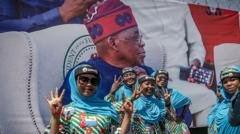
Tinubu Re-Election Manifesto Launched Amid Economic Hardship
When President Bola Ahmed Tinubu stepped up to unveil his Tinubu re-election manifesto on November 10, the political stakes could not have been higher. Titled From Reform to Prosperity, the document represents a high-wire political gamble by the ruling All Progressives Congress (APC). Tinubu is asking 200 million citizens to double down on a painful economic transition as the nation gears up for a pivotal general election in January 2027. His core message is simple yet fraught: the structural medicine was bitter, but the cure is finally taking hold.
The **Tinubu re-election manifesto**, titled *From Reform to Prosperity*, is President Bola Ahmed Tinubu's policy roadmap for Nigeria's 2027 election. It promises 6% annual economic growth by 2031, 78,000 security recruits, and 200,000 homes, attempting to win back voters following painful macroeconomic shock therapy.<\/p>
- Economic Ambitions: The APC manifesto targets 6% annual GDP growth by 2031, alongside a 125 billion naira intervention package for small businesses.
- Macro vs. Micro Reality: Inflation cooled from 34% in 2024 to 14% in late 2026, yet staple food prices remain overwhelmingly high for average households.
- Insecurity Bottleneck: Plans to add 28,000 troops and 50,000 police officers face skepticism over whether sheer manpower can resolve deep-rooted agricultural and regional conflicts.
- Opposition Division: Split opposition figures like Peter Obi and Atiku Abubakar give the incumbent APC a structural electoral advantage despite widespread voter fatigue.
Yet on the streets of Lagos, Kano, and Port Harcourt, abstract macroeconomic indicators matter far less than the daily price of food. After more than three years of aggressive shock therapy—marked by the swift abolition of the long-standing petrol subsidy and the floating of the naira—the average household is exhausted. Can a manifesto built on promises of future prosperity win back an electorate grappling with unprecedented living expenses?
The Macro-Micro Divide: Wall Street Applauds, Main Street Struggles
To understand the political backdrop of the 2027 campaign, one must examine the stark divergence between top-line financial metrics and everyday household budgets. In the eyes of international financial institutions, Tinubu’s early moves were nothing short of courageous. Both the World Bank and the International Monetary Fund praised the administration for eliminating distortionary exchange rate regimes and ending fiscal leakages that had drained state coffers for decades.
By late 2026, those reforms yielded tangible macroeconomic stability. Headline inflation, which had peaked at an agonizing 34% in 2024, cooled to 14% by September 2026. Official and parallel exchange rates converged, ending years of speculative currency arbitrage. Furthermore, official reports indicate that scrapping petrol subsidies saved more than 1 trillion naira ($740 million) in government expenditures in its first two months alone.
However, macroeconomic recalibration carries an immediate human cost. Scrapping the fuel subsidy sent transport and production overheads soaring. The price of essential food items surged dramatically across the country. According to tracking data compiled by the International Centre for Investigative Reporting (ICIR), the price of imported rice jumped by a staggering 184% between May 2023 and late 2025. Other daily staples—garri, beans, and bread—followed a similar upward trajectory.
“Most Nigerian families are saying they cannot survive on 10,000 naira [$7.40] a day. Fuel prices went up, and everything that Nigerians consume skyrocketed.”
— Joshua Osiyemi, Head of Tracka (BudgIT Foundation)
There have been brief flashes of relief. SBM Intelligence, a leading West African security and risk analysis firm, reported that the cost of preparing a standard pot of jollof rice fell by 11.5% between June and September 2026—the sharpest drop recorded in the ten-year history of its Jollof Index. Yet, analysts emphasize that localized price dips have done little to undo years of cumulative erosion in purchasing power.
Dissecting ‘From Reform to Prosperity’: Promises vs. Fiscal Reality
The Tinubu re-election manifesto attempts to bridge this trust gap by pivoting from raw fiscal stabilization to direct economic expansion. The administration has outlined several headline metrics designed to capture voter confidence ahead of the ballots:
- 6% Annual Economic Growth: Targeting sustained GDP growth through 2031, powered by agricultural expansion and industrial revitalization.
- 78,000 Security Recruits: Expanding the state security apparatus with 28,000 military personnel and 50,000 police officers.
- 200,000 Affordable Homes: Launching a public housing initiative to address nation-wide urban shelter deficits.
- 10,000MW Power Generation: Expanding actual operational grid output to break the reliance on expensive diesel generators.
- 125 Billion Naira Intervention: Providing targeted grants for micro-enterprises and low-interest loans for manufacturers.
While these targets look impressive on paper, economic analysts point out significant implementation barriers. Take the housing mandate: a Ministry of Housing technical committee estimated Nigeria’s total housing deficit at 14.9 million units in 2025. Constructing 200,000 units represents a welcome step, but it covers barely 1.3% of the broader structural shortfall.
The Power Sector Bottleneck
Perhaps no issue illustrates the nation’s supply-side crisis better than the electrical grid. Decades of underinvestment, gas supply disputes, and aging transmission infrastructure have left the grid chronically unstable. Data from the Nigerian Electricity Regulatory Commission shows that while installed capacity stood at 13,625MW at the end of 2024, actual delivered energy averaged just 4,223MW.
Because power distribution companies struggle with low profit margins and widespread non-metering, private capital remains hesitant to fund capital upgrades. Raising end-user tariffs to cost-reflective levels risks public anger, leaving the grid trapped in financial insolvency. Without a massive infusion of capital, achieving the manifesto’s 10,000MW target remains an uphill battle.
Comparative Breakdown: Reform Metrics vs. Consumer Impact
To contextualize how the administration’s economic policies have reshaped the landscape, the table below highlights key indicators from the start of the administration through the current election cycle.
| Metric / Area | Baseline (2023) | Peak Crisis (2024–2025) | Current Status (Late 2026) | Manifesto Target (2027–2031) |
|---|---|---|---|---|
| Headline Inflation | 22.4% | 34.0% | 14.0% | Single-digit baseline |
| Imported Rice Price Shift | Baseline Price | +184% Increase | Slightly stabilized | |
| Grid Power Output | ~3,800 MW | ~4,223 MW | ~4,500 MW | 10,000 MW Operational |
| National Housing Deficit | ~12.0M units | 14.9M units | 14.9M units | 200,000 units built |
| Budget Debt Servicing | ~45% of revenue | ~60% of revenue | 15.8tn naira (of 68.3tn) | Fiscal consolidation |
Security and Agriculture: The Northern Frontline
A central tenet of the government’s economic playbook relies on driving down food inflation by boosting domestic farming. Yet, agricultural production remains heavily constrained by ongoing insecurity in the northern and central belts—the nation’s primary breadbaskets. Armed banditry, kidnap-for-ransom syndicates, and clashes between pastoralists and agrarian communities have forced millions of farmers off their land.
The human cost of this disruption is profound. Many rural families are terrified to venture into their fields, creating severe local supply shortages that ripple through urban markets nationwide. Merely announcing thousands of new military and police recruits may not address the underlying tactical challenges.
“The security situation, especially in the north, is more complex than a matter of just recruiting more soldiers. Farmers are not sure whether when they go to their farms, they have the chances of coming back home to meet with their family.”
— Ikenna Okonkwo, Head of Research at SBM Intelligence
Addressing these rural security dynamics is not just a military imperative; it is a vital economic lever. Without safe access to farmland, food supply chains will remain fragile, undermining any progress made on headline inflation numbers.
Political Calculus: A Divided Opposition and the 2027 Field
Despite deep voter frustration over the cost of living in Nigeria, President Tinubu holds significant structural advantages as the 2027 campaign kicks into high gear. Chief among them is the persistent fragmentation of the political opposition.
In the 2023 election, Tinubu secured the presidency with 8.79 million votes. His victory was facilitated in large part by a split opposition vote between Atiku Abubakar of the People’s Democratic Party (PDP) and Peter Obi of the Labour Party (now heading the Nigeria Democratic Congress platform). Combined, the opposition candidates polled far more total votes than the winning tally, but regional divisions kept them from presenting a unified ticket.
Opposition Counter-Strategies
The main challengers are launching distinct campaigns to unseat the incumbent:
- Atiku Abubakar: The veteran politician has taken aim at Tinubu’s signature economic moves, promising to restore energy subsidies to alleviate immediate hardship. However, policy analysts question whether Nigeria’s tight budget—where 15.8 trillion naira out of a 68.32 trillion naira total budget goes directly to debt servicing—can support a return to costly price supports.
- Peter Obi: Unveiling his 2027 Governance Agenda under the banner “A New Nigeria is Possible,” Obi focuses heavily on national unity, institutional transparency, and immediate security interventions. Obi retains a passionate base among young urban voters, pledging uncompromising action against criminal networks in rural regions.
However, unless opposition leaders establish a formal coalition, history could repeat itself. Electoral history across West Africa demonstrates that unseating an incumbent party requires broad geographic alignment and organizational discipline. According to political analysts at Reuters, the APC’s entrenched state-level machinery gives it a decisive advantage in mobilizing voters during low-turnout contests.
The Re-Election Challenge: Can Words Rebuild Public Trust?
Ultimately, the 2027 general election will be a referendum on governance patience. The ruling party’s narrative frames current difficulties as the price of long-overdue modernization. They argue that abandoning these structural reforms midway would undo years of fiscal discipline and sink the nation back into unsustainable debt.
Conversely, voters are assessing these proposals through their personal financial realities. Macroeconomic recalibration, lowered inflation figures, and structural reforms mean little to a family struggling to afford basic groceries. The central challenge facing the administration over the next several months is translating high-level policy wins into daily relief for ordinary citizens.
As campaign rallies pick up momentum across the country, President Tinubu’s political future hinges on one central question: can the promise of tomorrow’s prosperity outweigh the immediate pressures of today?
<button type="button" onclick="this.parentElement.innerHTML='✓ Thank you, we will refine our analysis!‘” style=”background:#ffffff; border:1px solid #cbd5e1; border-radius:6px; padding:4px 12px; font-size:12px; cursor:pointer; color:#334155;”>👎 No
