
New York Building Collapse Triggers Emergency in Brooklyn
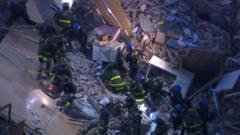
A catastrophic New York building collapse turned a quiet morning in Brooklyn’s Flatbush neighborhood into an active disaster zone on Tuesday. A three-storey residential and commercial structure suddenly crumbled into rubble, leaving two people dead, 12 others injured, and search teams working feverishly to pull potential survivors from pulverized brick and timber.
A sudden New York building collapse in the Flatbush neighborhood of Brooklyn killed two people and injured at least 12 others. Emergency teams are searching through pulverized rubble for trapped survivors while structural engineers inspect adjacent properties damaged during the catastrophic failure.<\/p>
- Casualties Confirmed: Two individuals lost their lives, and 12 others sustained varying degrees of injury during the sudden structural collapse in Brooklyn.
- Active Rescue Mission: Specialized FDNY urban search and rescue units are using canine teams, listening devices, and heavy machinery to sift through debris.
- Regulatory Scrutiny: The NYC Department of Buildings has initiated an immediate forensic investigation into the property's structural records and maintenance history.
- Collateral Impact: Nearby buildings suffered significant exposure, forcing immediate evacuations and leaving interior rooms visible from the street.
Sirens echoed across Nostrand Avenue as dozens of emergency vehicles converged on the site. Heavy clouds of grey dust billowed over the block, blinding onlookers and coating nearby vehicles in fine grit. Within minutes, the Fire Department of the City of New York (FDNY) deployed high-intensity rescue units, turning the immediate vicinity into an operational triage and search compound.
Disaster in Flatbush: A Community Shaken
The collapse occurred with sickening speed. Witnesses described a sudden, deep rumble that felt like a low-magnitude earthquake, immediately followed by the deafening roar of shearing joists and falling masonry.
“It didn’t sound like thunder; it sounded like an explosion of dust and stone,” said one neighbor who lives three doors down. “You looked out the window, and where a building stood ten seconds ago, there was just an empty gap filled with smoke.”
The force of the structural failure sheared away structural supports, peeling back the exterior façade of an adjacent property. Passersby gathered at the perimeter were met with an eerie sight: exposed bedrooms, dangling stairwells, and framed pictures still hanging on interior walls now standing naked against the open sky. Emergency workers quickly established a multi-block perimeter to keep crowds clear of potential falling debris.
“Our primary focus right now is life safety. Every square foot of this rubble pile is being systematically cleared, stabilized, and evaluated,” noted an FDNY incident commander at the scene. “We are using every technological tool and canine unit available to search for void spaces beneath the heavy masonry.”
Emergency Response and the Search for Void Spaces
Urban search and rescue teams faced immediate tactical hurdles. The collapsed three-storey structure compressed into what first responders call a “pancake collapse,” creating heavy, unstable piles of concrete, brick, and wooden joists. Such structural failures leave minimal air pockets, complicating efforts to locate survivors quickly.
Dozens of firefighters, paramedic teams, and urban rescue specialists worked side-by-side using delicate hydraulic tools and hand equipment. Specialized search dogs climbed the debris field, sniffing for signs of human life, while technical teams lowered fiber-optic cameras and sensitive listening equipment into dark gaps beneath the rubble pile.
Field reports from medical staff confirm that twelve individuals received treatment at local hospitals. Their conditions range from minor lacerations and smoke inhalation to severe trauma. Emergency rooms across Brooklyn prepared for potential additional arrivals as heavy equipment arrived to carefully lift large sections of collapsed roof framing.
Adjacent Structures at Risk
The violent collapse did not occur in isolation. Structural integrity experts expressed immediate concern for surrounding masonry buildings, which share party walls and foundational footings common in historic Brooklyn architecture. The exposure of interior staircases in neighboring buildings raised fears of a progressive collapse domino effect.
Inspectors from the Reuters wire service and local press pools reported seeing city engineers taking laser measurements of surrounding walls to detect any micro-shifting. Utilities were severed across the entire block as a safety measure, cutting power and natural gas lines to prevent secondary fires or fuel-air explosions.
Investigating the Cause: Aging Infrastructure and Code Inspections
While search and rescue remains the urgent priority, attention is swiftly turning toward the root cause of this fatal disaster. Municipal investigators from the NYC Department of Buildings (DOB) arrived alongside forensic engineers to review structural filings, active permits, and historical complaint logs for the address.
New York’s aging housing stock presents constant structural challenges. Many buildings in Brooklyn were constructed over a century ago using multi-wythe brick load-bearing walls and timber floor framing. Without meticulous maintenance, water intrusion, mortar degradation, or unpermitted structural alterations can quietly compromise a building’s load-bearing capacity over time.
Industry analysts point out that structural failures rarely happen without subtle warning signs. Moisture infiltration often corrodes anchor ties, while unapproved alterations to lower-level support beams can transfer immense loads onto walls never designed to carry them.
Comparing NYC Structural Incidents and Regulatory Shifts
Major building failures in New York City invariably spark intense policy debates, leading to stricter enforcement standards, mandatory facade inspections, and enhanced structural auditing. The following timeline outlines significant structural events in recent city history and the regulatory updates that followed:
| Year | Incident Location | Primary Structural Cause | Regulatory / Policy Outcome |
|---|---|---|---|
| 2008 | East 51st Street, Manhattan | Tower Crane Rigging Failure | Overhaul of NYC Crane and Rigging Inspection Protocols |
| 2014 | East Harlem, Manhattan | Natural Gas Explosion & Wall Collapse | Mandatory Citywide Gas Line Integrity Checks & Pipe Inspections |
| 2015 | East Village, Manhattan | Unpermitted Gas Main Alteration | Enactment of Building Energy & Safety Enforcement Legislation |
| 2023 | Bronx (1915 Billingsley Pl) | Corner Column Failure / Load Bearing Loss | Targeted DOB Inspections of Aging Brick Structural Corners |
| Current | Flatbush, Brooklyn | Under Investigation | Pending Forensic Audit & Structural Safety Orders |
As highlighted in reports by Bloomberg, city authorities are facing renewed pressure to accelerate proactive inspection cycles for aging mid-rise structures across all five boroughs.
Human Impact and Community Response
Beyond the physical ruin and technical investigations lies a deep human tragedy. Community members gathered at local churches and community centers as relief organizations like the Red Cross provided emergency housing, warm food, and psychological support to displaced families.
Volunteers handed out water bottles to exhausted rescue workers operating under grueling physical conditions. The collective anxiety across Flatbush was palpable as families waited for updates on loved ones who had not yet been accounted for during the morning shift changes.
Local council members called for immediate city assistance for victims while demanding answers regarding the property’s maintenance history. “Our community deserves transparency,” stated one local representative. “We must know whether this was a tragic act of structural deterioration or a preventable breakdown in oversight.”
What Happens Next?
Over the coming hours, search efforts will transition into a heavy debris-clearing and forensic stabilization phase. Hydraulic excavators will carefully pick apart the masonry mound under the watchful eyes of structural engineers looking to preserve evidence for the ongoing investigation.
For the residents of Brooklyn, the event serves as a stark reminder of the fragile nature of urban infrastructure. As city agencies dig into building records and legal ownership files, the immediate focus remains squarely on supporting the victims, securing neighboring homes, and ensuring that no other lives are lost amidst the ruins of Flatbush.
<button type="button" onclick="this.parentElement.innerHTML='✓ Thank you, we will refine our analysis!‘” style=”background:#ffffff; border:1px solid #cbd5e1; border-radius:6px; padding:4px 12px; font-size:12px; cursor:pointer; color:#334155;”>👎 No
