
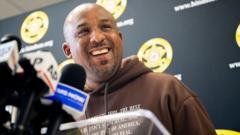
Scott Colom Wins Mississippi Senate Race in Historic Upset
Jackson was electric. Inside the Mississippi headquarters of the National Association for the Advancement of Colored People (NAACP), the air smelled of stale coffee and damp autumn rain until the final precinct tally hit the screens. Then, pure noise. Screams, tears, and long-delayed sighs of relief filled the room. For decades, political analysts treated the Mississippi Senate race as an untouchable Republican fortress—a red wall cemented by decades of hyper-polarized voting patterns. On Wednesday night, that wall shattered.
Democrat Scott Colom won the Mississippi Senate race by fewer than 5,000 votes, defeating Republican incumbent Cindy Hyde-Smith with 49.2% to 48.7%. Colom becomes Mississippi's first Black U.S. Senator in over 140 years, expanding the Senate Democratic majority to 55 seats following widespread voter dissatisfaction over economic tariffs and conflict with Iran.<\/p>
- Historic Milestone: Scott Colom is the first Black U.S. Senator elected from Mississippi since the Reconstruction era over 140 years ago.
- Razor-Thin Margin: The race was decided by under 5,000 votes out of nearly one million cast, flipping a seat Republicans held since 1982.
- National Repercussions: The win elevates Democrats to a 55-seat Senate democratic majority, completing a sweeping midterm realignment.
- Economic Driver: Backlash against administration tariffs and soaring inflation shattered traditional conservative margins across rural counties.
Democrat Scott Colom, a 43-year-old local prosecutor from Columbus, delivered the biggest political shock of the decade. By defeating incumbent Republican Senator Cindy Hyde-Smith, Colom becomes the first Black U.S. Senator from Mississippi in more than 140 years. Not since Blanche K. Bruce walked the halls of Congress during Reconstruction has a Black Mississippian held a seat in the upper chamber of the national legislature.
Inside the Mississippi Senate Race Upset
The numbers tell a story of extraordinary tension. Out of nearly one million votes counted across the state’s pine forests, coastal towns, and Delta farmlands, fewer than 5,000 votes separated the two principal contenders. Official figures revealed Colom captured 49.2% of the total vote, while Hyde-Smith trailed at 48.7%. An independent third-party candidate pulled 2.1%, acting as a decisive spoiler in an already razor-thin contest.
“While this was not the outcome we worked for or hoped for, I respect the decision of Mississippi voters,” Hyde-Smith stated in a understated video posted to X on Wednesday evening, formally conceding the election and wishing her successor well.
The political earthquake in Jackson has sent immediate shockwaves through Washington. Colom’s win formally secures a Senate democratic majority of 55 seats in the 100-member body, even as a knife-edge race in Alaska remains undecided. It caps off a astonishing cycle where Democrats flipped Senate seats in historically red territories including Texas, South Carolina, Kansas, and Iowa.
Macroeconomic Strains and Foreign Policy Backlash
How did a state that Donald Trump carried by more than 22 percentage points in 2024 turn around and elect a Democrat just two years later? The answer lies in a volatile combination of local economic pain and federal policy missteps. Exit polls indicate that severe voter frustration over the national economy played a dominant role in shifting independent and soft-conservative voters away from the incumbent.
Under the current administration, sweeping global tariffs have disproportionately harmed Southern agricultural exporters. Soybean farmers across the Mississippi Delta found their access to foreign markets severely choked off, causing local agricultural revenue to plunge. Simultaneously, foreign conflict involving Iran drove fuel and shipping costs to record highs right before the harvest season.
According to macro analysis published by Reuters, consumer sentiment in deep-south rural corridors reached its lowest point since 2008, driven primarily by energy price spikes and tariff retaliation on timber and agriculture.
Colom recognized this structural vulnerability early in his campaign. Rather than running on national progressive ideology, he leaned heavily into cost-of-living issues. He systematically linked local economic distress directly to Hyde-Smith’s unwavering alignment with executive tariff policy. Throughout the summer and fall, Colom tagged his opponent with a simple, sticky moniker: “Cindy High Prices.” The phrase resonated in working-class communities where household budgets were stretched to the brink.
Ground Game vs. Air War: A Study in Contrasts
The tactical execution of the two campaigns could not have been more divergent. Colom ran a relentless, high-contact campaign, driving his team through all 82 counties in Mississippi. He showed up at county fairs, small-town diners, high school football games, and community forums, directly addressing voters who had not seen a Democratic senate candidate in person for decades.
Hyde-Smith, aged 67, elected to run a traditional, low-exposure defense. Her strategy relied heavily on television advertising blitzes, party brand loyalty, and attacking Colom as a pawn of national liberal networks. Her campaign repeatedly accused Colom of receiving backing from billionaire donor George Soros, whose family had previously funded reform-minded prosecutor initiatives.
However, her decision to avoid public debates and limit unscripted town hall appearances alienated moderates and tired voters seeking answers to local economic troubles. Insiders suggest that her absence created an information vacuum that Colom was all too eager to fill with personalized outreach.
Candidate Strategy Comparison
| Metric / Dimension | Scott Colom (Democrat) | Cindy Hyde-Smith (Republican) |
|---|---|---|
| Final Vote Share | 49.2% (~485,000 votes) | 48.7% (~480,000 votes) |
| County Coverage | Visited all 82 counties personally | Focused on core Republican strongholds & media ad buys |
| Primary Campaign Theme | Economic relief, agricultural support, local prosecutor record | Conservative loyalty, national donor attacks, administration alignment |
| Voter Engagement Strategy | Grassroots rallies, local town halls, non-partisan business meets | Broadcast media blitzes, executive endorsements, high-donor dinners |
| Key Demographic Surges | Historic African American turnout, suburban swing shifts | Rural conservative core (with diminished baseline turnout) |
The Jackson Breakthrough: Grassroots Mobilization
While economic issues created the opening, it was sheer organizational muscle that pushed Colom over the finish line. The emotional epicenter of election night was the NAACP headquarters in Jackson, where organizers wept openly as precinct returns consolidated from Hinds, Madison, and Harrison counties.
“This is an amazing result,” declared Leon Russell, chairman of the national NAACP board of directors, amidst thunderous applause. “This is purely the work of particularly the Black community. There was not a whole lot of money, but there was a whole lot of organising.”
Sitting nearby as supporters embraced, activist Amber Thomas captured the mood of grassroots campaign workers who spent months knocking on doors in unheated neighborhoods and remote rural roads. “When you fight, you win,” Thomas said, wiping tears. “Right now, I am overwhelmed with joy.”
The mobilization effort focused heavily on closing the historical turnout gap in Black-majority counties along the Mississippi River. Non-profit voter registration drives and church-led “Souls to the Polls” initiatives brought tens of thousands of first-time voters into the political process, neutralizing traditional Republican margins in suburban Rankin and DeSoto counties.
Reconstruction’s Echo and Historical Weight
To fully appreciate the gravity of the Cindy Hyde-Smith defeat, one must look at Mississippi’s deep legislative history. During the post-Civil War Reconstruction period, Mississippi was a pioneer in African American political representation. Hiram Revels became the first Black U.S. Senator in American history in 1870, followed quickly by Blanche K. Bruce in 1875.
However, following the end of Reconstruction and the institution of Jim Crow era laws designed to disenfranchise Black citizens, African American representation in federal statewide office was completely wiped out for well over a century. Colom’s election represents a symbolic and practical break from a legacy of voter suppression and entrenched political power structures.
The Timeline of Mississippi’s Black U.S. Senators
- Hiram Rhodes Revels (1870–1871): Appointed by the state legislature to fill an unexpired seat, becoming the first African American to serve in the U.S. Senate.
- Blanche Kelso Bruce (1875–1881): The first African American senator to serve a full six-year term.
- Scott Colom (Elected 2026): The first Black Mississippian elected to the U.S. Senate in 145 years, winning via direct popular vote.
Reassessing the National Map After the 2026 Midterm Election Results
Colom’s victory represents the crown jewel of the 2026 midterm election results for the Democratic Party. Heading into the cycle, political strategists assumed the battle for the Senate majority would be fought exclusively in traditional battlegrounds like Pennsylvania, Nevada, and Wisconsin. Few anticipated that deep-red states across the Sunbelt and Midwest would fall into play.
Extensive tracking by political institutions like Bloomberg confirms that shifting suburban voter demographics combined with severe agricultural economic distress catalyzed shifts in regions once considered unassailable Republican territory.
With 55 seats in hand, Senate Democrats now possess a comfortable cushion that insulates their legislative agenda against individual party defections. This margin grants them absolute committee control, streamlining judicial confirmations and providing robust investigative oversight capacity over executive actions for the remainder of the administration’s term.
Political Realignment or Protest Vote?
As the dust settles in Jackson, political scientists are already debating whether Colom’s victory signifies a permanent Mississippi political realignment or merely an extraordinary protest vote against immediate economic conditions. The reality likely contains elements of both.
Mississippi’s suburban rings around Jackson and the Gulf Coast have grown steadily more diverse and economically varied. Educated professionals who previously voted straight-ticket Republican showed an increased willingness to split their tickets, choosing a moderate, pragmatic prosecutor over an incumbent perceived as unresponsive to regional needs.
Moreover, Colom’s platform as a tough-on-crime, economically focused district attorney offered traditional conservative voters a safe landing zone to register their discontent without endorsing hard-left federal policies. Whether this coalition can hold together when Colom runs for re-election will depend heavily on his legislative record in Washington.
For now, Scott Colom prepares to take the oath of office on Capitol Hill. His victory rewrites the political playbook for Southern politics, demonstrating that even the most entrenched partisan strongholds can fall when ground-level organizing meets an electorate hungry for economic accountability.
<button type="button" onclick="this.parentElement.innerHTML='✓ Thank you, we will refine our analysis!‘” style=”background:#ffffff; border:1px solid #cbd5e1; border-radius:6px; padding:4px 12px; font-size:12px; cursor:pointer; color:#334155;”>👎 No
Latest Analytical Follow-up: For continuous developments on this subject, read our full investigation on Judoka Teddy Riner Shakes Up French Presidential Race.
