
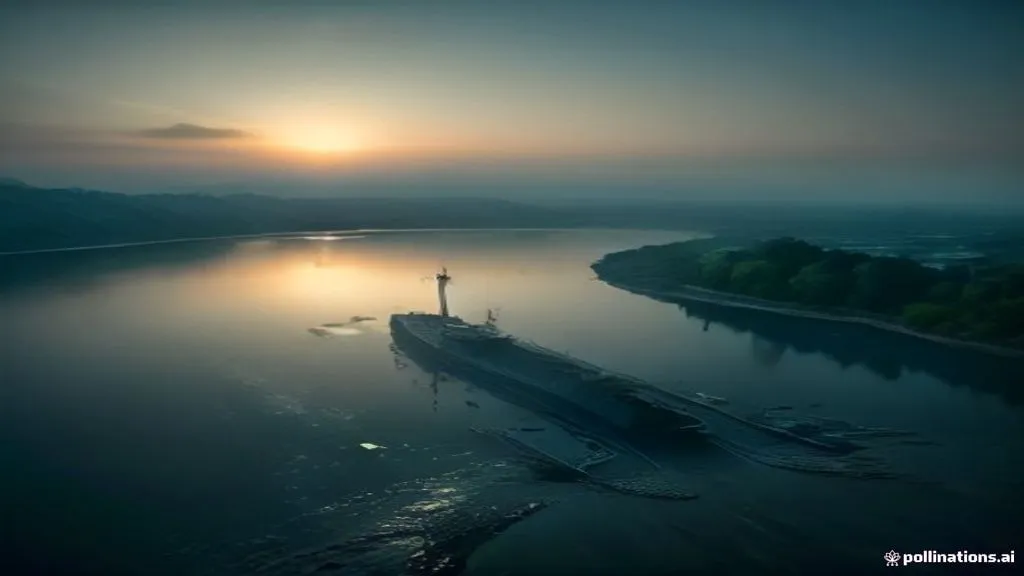
Brisbane 2032 Rowing Venue: Crocs, Bends, and Olympic Politics
When teenagers take to the water for Queensland’s annual school regatta, safety drills cover more than just capsized sculls. On the Fitzroy River, a sighting triggers a three-word chant over the megaphones: ‘Crocodile, crocodile, crocodile.’ Yet this exact stretch of regional water has been endorsed as the primary Brisbane 2032 rowing venue.
The official Brisbane 2032 rowing venue selected by organizers is the Fitzroy River in Rockhampton, Queensland. Approved by World Rowing and the International Olympic Committee, the venue has sparked controversy over fairness, tidal currents, regional logistics, and safety protocols regarding the river's estimated population of 500 saltwater crocodiles.<\/p>
- Primary Concern: International federations worry about tidal currents and natural river bends affecting competition fairness, rather than crocodile encounters.
- Political Friction: Queensland Premier David Crisafulli dismissed opposition to the Rockhampton site as posturing by 'interstate and overseas elites.
- Safety Record: State records span over 40 years without a single crocodile attack on humans on the Fitzroy River.
- Fallback Option: The Sydney 2000 Olympic regatta course at Penrith remains fully operational as an existing alternative.
/
1:05
The announcement surprised international sporting bodies. For decades, the annual head-of-the-river competitions in Rockhampton operated far from global sports media spotlight. That changed when technical assessments greenlit the river for the 2032 Olympic and Paralympic Games. Suddenly, a tranquil provincial waterway became the center of an international debate involving wildlife management, hydrodynamics, and partisan politics.
Hydrodynamics vs. Apex Predators: Inside the Brisbane 2032 Rowing Venue Choice
Five hundred saltwater crocodiles inhabit the Fitzroy River. Some measure up to four meters in length. Naturally, international tabloid headlines focused on the apex predators sharing lanes with elite rowers. However, for elite oarsmen and international technical delegates, the reptiles are a secondary thought.
The real issue is hydrodynamic parity. Rowing at the Olympic level requires still, standardized conditions where no lane offers a mechanical advantage. The Fitzroy is a dynamic, tidal river subject to natural bends, shifting mudbanks, and variable water velocity. When water moves unevenly across eight racing lanes, fairness is compromised.
“Fairness and integrity at the venue remain paramount. Personally, I am not fearful of Australian wildlife, but I have never had a crocodile near me either. I am sure everyone would row faster, but that is not the top priority concern for elite competition.”
— Drew Ginn, Three-time Australian Olympic Gold Medalist
British Rowing Chief Executive Tom Solesbury and German Rowing President Moritz Petri have voiced concerns regarding these water dynamics. In elite rowing, four years of preparation come down to fractions of a second. If lane eight enjoys a trailing current while lane one fights a cross-tidal drag, the integrity of the Olympic final falls apart.
Political Firestorms and the ‘Elites’ Counter-Attack
The push to keep rowing in Rockhampton is deeply intertwined with regional government strategy. Decoupling Olympic infrastructure from South East Queensland to benefit regional hubs is a key political promise for local leaders. Hosting events 600 kilometers north of Brisbane demonstrates a commitment to a Queensland regional Olympics footprint.
When international delegates raised eyebrows at the World Rowing congress in Amsterdam, Queensland Premier David Crisafulli offered a sharp defense. Rather than issuing a diplomatic press release, Crisafulli accused foreign authorities of regional bias.
- The State Premier’s Position: Claims opposition stems from ‘interstate and overseas elites’ unwilling to travel to regional Australia.
- The Federations’ Stance: Maintain that objections center entirely on environmental consistency, athlete fairness, and venue sustainability.
- The Independent Assessment: A 2025 commissioned report previously recommended using Sydney’s 2000 Olympic course, an option state politicians sidelined to prioritize regional investment.
New Zealand Rowing Chief Executive Simon Wickham rejected the political rhetoric, explaining that sporting bodies evaluate venue mechanics rather than urban preferences. For federations, ensuring that athletes compete on equal footing remains the only objective.
Data Comparison: Evaluating Proposed Rowing Venues
To understand why the decision has drawn such scrutiny, it helps to analyze how the Fitzroy River compares against established international standards and alternative options. A comprehensive comparison reported by Reuters highlights stark differences in infrastructure and environmental control.
| Metric / Feature | Fitzroy River (Rockhampton) | Penrith Lakes (Sydney 2000 Venue) | International Rowing Standard |
|---|---|---|---|
| Distance from Host City | 600 km (373 miles) | Already Built (NSW) | < 50 km preferred |
| Water Type & Flow | Tidal, variable river currents | Enclosed freshwater lake | Still water, negligible flow |
| Wildlife Population | ~500 Saltwater Crocodiles | Zero dangerous fauna | Controlled, hazard-free |
| Existing Spectator Capacity | Temporary / Under development | 20,000+ permanent layout | 15,000+ minimum capacity |
| Historical Attack Record | 0 attacks in 40+ years | 0 attacks | N/A |
SEEUY INTELLIGENCE
Brisbane 2032 Rowing Venue – Analytical Overview
Distance from Host City
600 km (373 miles)
Water Type & Flow
Tidal, variable river currents
Wildlife Population
~500 Saltwater Crocodiles
Existing Spectator Capacity
Temporary / Under development
Historical Attack Record
0 attacks in 40+ years
The Reality of Rowing in Saltwater Crocodile Country
Despite public fascination with Fitzroy River crocodiles, local rowers treat the reptiles as an ordinary aspect of river life. The Rockhampton Grammar School and local clubs have launched boats from the riverbanks for generations without a single recorded incident involving human safety.
Safety management documentation for regional regattas outlines routine protocols:
- Continuous Surveillance: Spotters monitor racing lanes from motorized safety launches equipped with radio communications.
- Standardized Evacuation Signals: If a crocodile enters the racing zone, officials broadcast the ‘crocodile, crocodile, crocodile’ alert over PA systems.
- Immediate Banking: Competitors cease rowing immediately and steer to the nearest designated land access point.
Corporate sponsors and regional advocates strongly defend the venue’s safety record. Mining firm Hancock Prospecting, led by Gina Rinehart, has invested heavily in Australian rowing. A company spokesperson labeled safety concerns as misleading, pointing out that generations of local children have rowed the Fitzroy safely.
Logistical Hurdles and the Beef Capital Challenge
Beyond safety and water flow lies a logistical challenge: accommodating thousands of athletes, media members, and international spectators in a regional city. Rockhampton is Australia’s cattle capital. Its peak hospitality footprint centers on ‘Beef Australia,’ a major triennial agricultural exposition that strains regional hotel capacity.
An Olympic regatta requires specialized training facilities, athlete villages, broadcast infrastructure, and high-frequency transport routes. Moving heavy equipment, elite shell boats, and support crews 600 kilometers away from the primary athlete village in Brisbane creates significant logistics planning demands.
Key Infrastructure Requirements for Rockhampton:
- Constructing temporary or permanent Olympic-grade boat houses and pontoon systems.
- Expanding accommodation networks to handle thousands of international visitors.
- Upgrading regional transport links between Rockhampton Airport, accommodation zones, and the riverbank.
- Installing advanced camera systems and fairness-monitoring sensors along a dynamic riverbed.
Official Sanction and the Legacy Question
Despite technical challenges, the International Olympic Committee (IOC) and World Rowing issued formal approval after engineering teams reviewed riverbed topography, flow dynamics, and seasonal weather patterns. World Rowing President Jean-Christophe Rolland confirmed that thorough technical assessments show the site can deliver fair conditions during the competition window.
Simultaneously, Thomas Konietzko, President of Paddle Worldwide, expressed confidence in the location for canoe sprint events. With formal World Rowing venue approval secured, state politicians celebrated the milestone as a victory for regional Queensland.
However, the question of long-term legacy remains open. Transforming a natural river into an Olympic venue requires substantial capital expenditure. Critics argue that spending funds on temporary upgrades for a natural river course carries legacy risks, especially when Sydney’s 2000 Olympic regatta venue sits operational in New South Wales.
For Queensland leadership, abandoning the site would mean surrendering a core promise of the Games: spreading economic benefits across regional communities. The Fitzroy River project represents an ambitious gamble—that engineering, careful timing, and strict safety management can turn an unpredictable tidal river into a stage for global sport.
<button type="button" onclick="this.parentElement.innerHTML='✓ Thank you, we will refine our analysis!‘” style=”background:#ffffff; border:1px solid #cbd5e1; border-radius:6px; padding:4px 12px; font-size:12px; cursor:pointer; color:#334155;”>👎 No
