
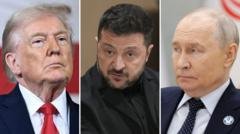
Trump’s Energy Ceasefire Claim Meets Silence
The geopolitical chessboard shifted dramatically on Sunday when US President Donald Trump unilaterally declared an energy ceasefire between warring Russia and Ukraine. The announcement, thrown into the public sphere with characteristic abruptness, claimed the truce was effective immediately. Yet, crucial details were entirely absent.
US President Donald Trump announced an immediate energy ceasefire between Russia and Ukraine, though Moscow has offered no official comment. Ukrainian President Volodymyr Zelensky stated Kyiv would support the move if reciprocated, but reported renewed Russian strikes on energy facilities shortly after the announcement.<\/p>
- Sudden Proclamation: Donald Trump claimed an energy ceasefire was effective immediately without detailing implementation terms.
- Moscow's Silence: Russian officials have yet to confirm or acknowledge the alleged truce, casting doubt on its viability.
- The Diesel Controversy: The ceasefire coincides with a contentious US deal to lift sanctions on Russian diesel imports to lower domestic pump prices.
- Continued Hostilities: Kyiv reported immediate violations, including a drone strike on a power plant in the capital.
As Washington scrambles to defend its controversial diplomatic maneuvering, Moscow has maintained a deafening silence. Meanwhile, Kyiv has expressed cautious willingness to comply, only to report fresh missile and drone attacks on its battered power grid hours later. This jarring disconnect highlights the widening chasm between White House political imperatives and the grim realities on the ground.
A Sudden Proclamation and Immediate Confusion
For months, the global energy landscape has absorbed the shockwaves of continuous strikes on oil refineries, substations, and power plants. Ukraine’s strategy has relied on hitting deep into Russian territory to dry up the financial lifelines of Vladimir Putin’s war machine. Conversely, Moscow has systematically targeted Ukrainian civilian heating and electrical grids to break national morale.
Into this volatile mix stepped Trump, who insisted a halt to the infrastructure war had been struck. The reaction from Kyiv was initially one of bewilderment. Ukrainian President Volodymyr Zelensky admitted to news outlets that the proclamation was entirely new information to his administration.
“Ukraine is ready not to strike at Russian energy and we count on Russia’s similar readiness and on the agreement of the president of the United States of America,” Zelensky noted in a subsequent social media statement, emphasizing that officials are looking forward to clear details.
Despite the rhetorical openness from Kyiv, the reality on the ground told a vastly different story. Barely had the digital ink dried on the president’s social media post when reports surfaced of a devastating drone strike hitting a power plant in Kyiv. Subsequent bombardments struck critical infrastructure in the north-eastern Kharkiv region, plunging residential neighborhoods into darkness.
The Shadow of the Russian Diesel Deal
To understand the sudden urgency behind Washington’s push for an energy truce, one must look toward domestic American politics. Persistent inflation and high fuel costs—exacerbated by broader conflicts in the Middle East—have severely damaged public sentiment and political standing for the administration ahead of upcoming midterm elections.
The pressure valve arrived in the form of a controversial agreement: a temporary rollback of sanctions allowing Russian diesel back into the US and global markets. This pragmatic, albeit explosive, maneuver is designed to force lower prices at the pump for American consumers. However, the fallout has been immediate and fierce.
Critics from both sides of the political aisle have lined up to condemn the measure. A bipartisan group of seven US senators published a blistering rebuke, pointing out that the pact directly violates existing legislative bans on Russian energy imports. Republican Senator Thom Tillis bluntly warned that the arrangement compromises national security.
Internationally, the backlash is equally palpable. Zelensky branded the diesel agreement as an outright gift to Vladimir Putin. European officials, including EU foreign policy chief Kaja Kallas, have echoed these concerns, arguing that easing economic pressure on Moscow undermines the entire Western sanctions regime.
Key Geopolitical Friction Points
- Sanction Relief: Temporary exemptions for Russian diesel imports to combat domestic inflation.
- Infrastructure Targeting: Mutual destruction of refineries, substations, and power plants.
- Diplomatic Divergence: White House pronouncements contrasting sharply with Russian silence.
- Electoral Pressure: Midterm voting motivations driving rapid US policy shifts.
Shifting Dynamics in Leadership
The friction over the energy market has also poisoned personal and diplomatic channels between Washington and Kyiv. Following Zelensky’s vocal condemnation of the diesel deal, Trump accused the Ukrainian leader of actively trying to sabotage global stability by authorizing continued strikes on Russian refineries.
In an escalatory rhetorical move, the US president suggested that it might be time for Ukraine to hold fresh leadership elections. Under the Ukrainian constitution, national ballots are strictly suspended during wartime. Zelensky had previously resisted pressure for a vote, citing insurmountable logistical challenges in active combat zones and Russian-occupied territories.
However, the diplomatic pressure has forced a tactical pivot. Zelensky indicated a willingness to brave the electoral process—provided Russia agrees to a comprehensive 60-day total ceasefire. Whether Moscow has any appetite for such a concession remains highly doubtful.
| Actor | Stance on Ceasefire | Stance on Diesel Deal | Current Action |
|---|---|---|---|
| United States | Advocating immediate truce | Defending imports to lower prices | Pushing domestic economic relief |
| Ukraine | Conditionally supportive | Strongly condemning as a gift to Putin | Reporting ongoing attacks on grid |
| Russia | Completely silent | Benefiting from sanctions relief | Continuing infrastructure strikes |
| European Union | Backing diplomatic efforts | Expressing serious concern | Monitoring energy security |
The Road Ahead: Fragile Hopes and Hard Realities
As the winter months loom, the interplay between frontline warfare and international economic policy grows increasingly dangerous. British Prime Minister Andy Burnham and other Western allies have voiced support for a sustained energy pause, recognizing the catastrophic humanitarian toll of a frozen, lightless Ukraine.
Yet, without active buy-in and verifiable commitments from the Kremlin, Washington’s proclaimed ceasefire remains little more than wishful thinking. Industry insiders note that energy infrastructure will continue to be a primary strategic lever as long as the war drags on.
For now, the sirens continue to wail across Kyiv and Kharkiv. The disconnect between Oval Office declarations and the brutal reality of drone swarms underscores a sobering truth: ending the energy war will require far more than a social media post; it demands a genuine, enforceable peace framework that neither Moscow nor Washington has yet managed to forge.
<button type="button" onclick="this.parentElement.innerHTML='✓ Thank you, we will refine our analysis!‘” style=”background:#ffffff; border:1px solid #cbd5e1; border-radius:6px; padding:4px 12px; font-size:12px; cursor:pointer; color:#334155;”>👎 No
Latest Analytical Follow-up: For continuous developments on this subject, read our full investigation on Saudi Energy Minister Vows Serious Response to Houthi Attacks.
