
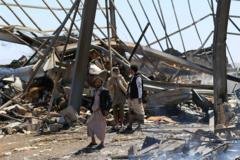
Houthi Advance Global Economy Risks Escalate in Red Sea
The retreat was fast, chaotic, and decisive. In a matter of days, military units aligned with Yemen’s internationally recognized government abandoned key positions along the Red Sea coastline. Their destination? Aden—the fragile interim capital sitting at the southern lip of the Arabian Peninsula. The objective was simple survival: fortify the city before it fell. But by pulling back to defend a single urban stronghold, government forces left one of the planet’s most sensitive maritime arteries entirely unprotected.
The recent Houthi advance threatens the global economy by destabilizing the critical Bab al-Mandab Strait—a maritime chokepoint handling roughly 12% of global trade. With Saudi Arabia's alternative overland crude pipelines compromised, severe energy supply disruptions, escalating shipping freight rates, and systemic global inflation risks have re-emerged across international markets.<\/p>
- Maritime Chokepoint Lost: Houthi forces now exercise de facto control over the Bab al-Mandab Strait, imperiling up to 12% of total worldwide sea-borne trade.
- Saudi Plan B Compromised: Drone attacks on the East-West Pipeline to Yanbu have neutralized Riyadh's primary bypass around Persian Gulf shipping hazards.
- Urban Siege Risks in Aden: A potential assault on Aden risks triggering massive civilian casualties while threatening total regional disintegration.
- Inflationary Pressures: Disrupted transit routes are forcing long reroutes around Africa, driving up insurance premiums, freight costs, and crude oil benchmarks.
This sudden strategic pivot has brought the region to a precarious edge. The Houthi advance global economy implications are no longer abstract risk assessments buried in diplomatic briefings; they are live operational threats. With rebel fighters consolidating their grip on the western seodboard, the world is facing a severe supply chain crisis. The Bab al-Mandab Strait—historically dubbed the ‘Gate of Tears’—is now effectively under the oversight of an aggressive, Iranian-backed armed movement.
The Fall of the Western Coast: A Tactical Disaster
For months, a quiet, freezing truce held Saudi forces and Houthi fighters in a state of uneasy suspense. That equilibrium shattered in July. Houthi battalions launched a rapid multi-axis offensive down the Tihama coastal plain, shattering government lines and forcing a retreat that caught international observers off guard. Counter-offensives mounted by Saudi-backed coalitions collapsed under heavy artillery and precise drone barrages.
The result is a geopolitical disaster. Houthi forces now hold undisputed tactical command over key offshore islands and critical firing positions overlooking the southern exit of the Red Sea. What was once a contested buffer zone has transformed into a fortified staging ground for asymmetric naval warfare.
“The decision by the legitimate government of Yemen to prioritise the military defence of Aden at the expense of withdrawing from other areas suggests that the war is not going well for the Saudi-backed government. And the rest of the world should be worried.”
— Nicholas Hopton, former British Ambassador to Yemen and Iran
The strategic stakes could not be higher. If Aden—a bustling metropolis of 1.25 million people—collapses, the Yemeni state effectively ceases to exist even as a political legal entity. Yet, by clustering forces in Aden, the coalition has surrendered the high ground that safeguarded international shipping lanes for over a decade.
How the Houthi Advance Global Economy Shockwaves Spread
To understand why a territorial shift in a impoverished, war-torn nation sends tremors through financial hubs in London, New York, and Tokyo, one must look at maritime geography. Oceans move the world economy. Container ships, bulk carriers, and supertankers rely on narrow passages to move raw materials and finished goods between continents efficiently. When those passages close, global commerce bogs down rapidly.
The Bab al-Mandab Strait acts as the primary gateway connecting the Indian Ocean to the Mediterranean Sea via the Suez Canal. Under standard operating conditions, the narrow channel handles anywhere from 70 to 150 commercial vessels per day, representing roughly 12% of total global trade. This includes vast shipments of refined petroleum, liquefied natural gas (LNG), industrial machinery, and consumer electronics destined for European and American shelves.
Chokepoints in the Crosshairs: A Maritime Comparison
The table below highlights the comparative strategic significance and risk metrics of key regional maritime chokepoints currently impacted by the Middle Eastern crisis:
| Chokepoint | Daily Trade Volume | Primary Cargo Focus | Current Security Risk Level | Alternative Bypass Route |
|---|---|---|---|---|
| Bab al-Mandab Strait | ~12% of Global Seaborne Trade | Crude Oil, LNG, Consumer Goods | Critical / High Tactical Threat | Cape of Good Hope (~10-14 Days Delay) |
| Strait of Hormuz | ~21% of Global Petroleum | Persian Gulf Crude Oil & Gas | Severe / Active Iranian Interdiction | Saudi East-West Pipeline (Compromised) |
| Suez Canal | ~12-15% of Global Trade | Containerized Trade & Energy | High (Bottlenecked by Bab al-Mandab) | Rail Landbridges / Southern Africa Route |
As the table demonstrates, the simultaneous disruption of both Hormuz and Bab al-Mandab leaves global logistics operators with almost no viable short-term alternatives. Vessels attempting to avoid the Red Sea must clear the southern tip of Africa via the Cape of Good Hope. That detour adds up to 4,000 nautical miles, 14 extra days at sea, millions of dollars in fuel costs, and severe carbon emissions surcharges.
As live reporting from Reuters shipping intelligence indicates, marine insurance syndicates have already inflated war-risk premiums for Red Sea transits to near-prohibitive levels. Many top-tier container lines have opted to suspend operations through the region entirely, choosing expensive rerouting over the risk of missile strikes and vessel seizures.
The Death of Plan B: Saudi Pipelines Under Fire
This crisis did not emerge in a vacuum. It is heavily tied to the broader war involving Iran, Israel, and the United States that erupted earlier this year. When military action flared around the Persian Gulf, Iranian forces effectively choked off transit through the Strait of Hormuz. Tankers risked limpet mines, drone strikes, and direct naval interceptions by the Islamic Revolutionary Guard Corps (IRGC).
At first, Saudi Arabia appeared prepared. Riyadh activated its long-held contingency plan: the Saudi East-West pipeline. Spanning hundreds of miles of desert terrain, this critical infrastructure pumped heavy crude directly from eastern oilfields to the Red Sea port of Yanbu. By loading tankers at Yanbu, the Saudis circumvented the Persian Gulf bottleneck entirely, keeping energy exports flowing smoothly into European and Western markets.
It was an elegant workaround—until the fragile truce in Yemen broke down. Houthi militants targeted the pipeline infrastructure with swarms of low-altitude, long-range attack drones. Combined with ballistic missile strikes aimed at processing facilities deep within Saudi territory, the overland route was crippled.
Now, with the rebels dominating the coastline south of Yanbu, the alternative exit has become just as dangerous as the entry point. The backup plan has collapsed, leaving markets vulnerable to an aggressive oil price spike risk that threatens to derail central bank efforts to contain global inflation.
The Energy Domino Effect
Energy analysts monitoring global supply chains are sounding alarms. According to real-time market data tracked by Bloomberg energy analysis, Brent crude futures spiked noticeably following news of the government retreat to Aden. The market is pricing in a structural structural deficit, not merely a temporary logistical delay.
- Freight Rate Escalation: Spot rates for Suezmax tankers have doubled, pushing transport costs per barrel to historic highs.
- Refinery Bottlenecks: European refineries optimized for Middle Eastern medium-crude grades face immediate inventory drawdowns.
- LNG Supply Squeeze: Qatari natural gas shipments bound for Europe face extended transit times, threatening European energy security ahead of seasonal demand surges.
Aden’s High-Stakes Siege: Human Cost vs. Strategic Stasis
While global financial markets panic over cargo routes, the human drama unfolding inside Yemen is brutal. Aden is a city on the edge. The municipality is crammed with refugees from previous rounds of fighting, its civil infrastructure is battered, and water supply networks are failing.
Military analysts are divided on whether Houthi commanders will order a direct storming of the city. Taking a densely populated, urban combat environment defended by desperate, well-entrenched government forces presents massive military challenges.
“Any attempt to seize a densely populated city like Aden would come at a significant human cost. Advancing across the flat coastal plains would also expose Houthi forces to air power. For now, the Houthis appear to be seeking a negotiated surrender, hoping to exploit infighting and divisions among southern factions to achieve their objectives without a costly urban offensive.”
— Mohammed al-Basha, Founder of the Basha Report
A protracted siege could prove just as destructive as an outright assault. By cutting off landward supply routes into Aden, Houthi forces can strangle the city economically while using low-cost drone threats to deter foreign naval vessels from bringing relief supplies into Aden Port.
Geopolitical Aftershocks: Smuggling and Tehran’s Expanding Reach
The broader implications of this territorial shift extend far beyond maritime logistics and domestic Yemeni politics. By locking down hundreds of kilometers of unpatrolled coastlines, Houthi fighters have created an unrestricted corridor for asymmetric military proliferation.
Former defense officials warn that complete coastal dominance allows the movement to dramatically scale up illegal arms transfers from regional backers and cross-border criminal syndicates. The Horn of Africa—just across the narrow waters of the Gulf of Aden—is particularly exposed.
Key Operational Consequences:
- Advanced Weapons Proliferation: Anti-ship cruise missiles, loitering munitions, and unmanned surface vessels can be imported with minimal risk of naval interception.
- African Horn Instability: Armed groups in Somalia, Sudan, and Ethiopia gain easier access to cheap small arms and tactical equipment smuggled out of Yemeni ports.
- Power Projection: Iran secures an unshakeable military footing along the Red Sea corridor, extending its operational footprint into African trade networks.
Col Iain Smailes, former British defense attaché to Yemen, highlighted the operational risks clearly. He warned that expanding control over the western coastline allows the rebels to scale up covert logistics networks. This structural link creates a persistent threat to Red Sea maritime security that standard naval patrols cannot easily neutralize.
Economic Stasis or Systemic Collapse?
The conflict in Yemen appears destined to settle into a grinding, highly volatile equilibrium. A formal peace agreement is out of reach, yet neither side possesses the capacity to eliminate the other outright. What remains is a divided country: a Houthi-dominated north and west controlling vital economic chokepoints, opposed by a fractured coalition of southern factions holding isolated enclaves.
For global supply networks, this semi-permanent instability is a nightmare scenario. International trade thrives on predictability, transparent legal frameworks, and secure routes. The situation in the Bab al-Mandab Strait offers none of these. Bab al-Mandab Strait shipping operations are moving from a standard commercial risk framework into an unpredictable war-zone dynamic.
As long as rebel batteries hold the heights overlooking the Gate of Tears, global trade will carry a heavy security premium. Central banks fighting persistent domestic inflation may find their efforts undone by missile strikes off the coast of East Africa. The tactical retreat to Aden was intended to save an army, but its true cost is being paid across global trade systems every day.
<button type="button" onclick="this.parentElement.innerHTML='✓ Thank you, we will refine our analysis!‘” style=”background:#ffffff; border:1px solid #cbd5e1; border-radius:6px; padding:4px 12px; font-size:12px; cursor:pointer; color:#334155;”>👎 No
Latest Analytical Follow-up: For continuous developments on this subject, read our full investigation on US Army Officer Arrested for Espionage Handed to US Military.
