
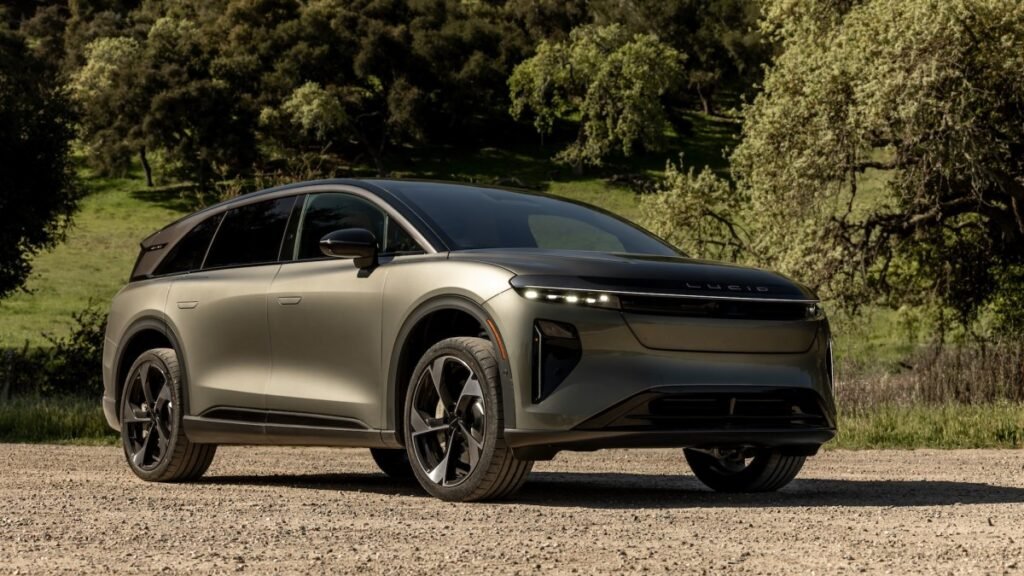
Lucid Motors EV Output Hits Two-Year Low Amid Shifts
The math simply stopped working. When Lucid Motors EV output plummeted once again, it confirmed what industry analysts had whispered for months: the initial blueprint for luxury electrification needed a brutal reality check. Reality has officially arrived in Casa Grande, Arizona.
Lucid Motors EV output plummeted to 2,954 vehicles in the third quarter, marking a 54% year-over-year decline and the third consecutive quarterly drop. The intentional manufacturing slowdown comes as new CEO Silvio Napoli restructures the luxury electric vehicle maker to reduce costs and realign operations with actual market demand.<\/p>
- Production Slump: Lucid built just 2,954 vehicles in the third quarter, representing a severe 54% drop compared to the same period last year.
- Persistent Inventory Gap: For five of the past six quarters, the company has consistently manufactured more luxury EVs than it managed to sell.
- Aggressive Restructuring: Under CEO Silvio Napoli, the automaker has cut roughly 1,500 jobs and eliminated factory shifts to target $1.4 billion in total cost savings.
- Contrast with Rivals: While Lucid pulls back, competitor Rivian just posted its strongest quarter in history driven by surging demand for its new R2 SUV.
Numbers rarely lie. Lucid manufactured a mere 2,954 electric vehicles in the third quarter. That represents an astonishing 54% plunge from the same stretch a year prior. Worse yet, it marks the third consecutive quarter of declining output.
To find production this low, you have to peer all the way back to the first quarter of 2025. That period immediately followed the initial rollout of the Gravity SUV. Back then, the factory was just finding its footing. Today, the slowdown is entirely intentional. Executives are deliberately tapping the brakes.
The Inventory Dilemma and Market Realities
Building high-end machines is one thing. Finding affluent buyers willing to shell out six figures for a startup brand is an entirely different beast. Lucid has run straight into this unforgiving wall.
During the third quarter, the automaker managed to deliver 3,806 vehicles. While that figure stayed roughly flat compared to the previous quarter, it actually dropped slightly from the third quarter of 2025. Look closer at the broader timeline, and a troubling pattern emerges:
- In five of the last six quarters, factory output outpaced actual customer deliveries.
- Inventory began accumulating across distribution centers.
- Capital efficiency stalled as cash burn outpaced top-line revenue growth.
Industry insiders note that consumer appetite for ultra-luxury luxury electric vehicles demand has plateaued faster than anticipated. Traditional luxury buyers remain fiercely loyal to legacy German and domestic nameplates. Meanwhile, tech-forward early adopters already sampled the initial wave.
“While there is no question that Lucid brought leading innovations and outstanding products to the market, we have disappointed on several fronts, and for far too long.”
— Silvio Napoli, Lucid CEO
That candid admission from Napoli during a previous earnings call cut straight to the core. The executive team stopped making excuses. They acknowledged missteps in execution, sluggish responses to early quality hiccups, and a corporate structure bogged down by unnecessary bureaucracy.
The Anatomy of a Corporate Turnaround
Change is rarely gentle. Under Napoli’s watch, the company embarked on a sweeping effort to “simplify the company.” That mission translated into painful headlines and immediate structural surgery.
Lucid has already laid off roughly 1,500 employees. Leadership tiers were streamlined to remove red tape. Crucially, factory operations scaled back by eliminating a second shift at the Arizona manufacturing hub. The explicit goal? Squeeze out an estimated $1.4 billion in critical cost savings.
Financial and Operational Comparison
| Metric | Lucid Motors | Rivian |
|---|---|---|
| Q3 Production Output | 2,954 vehicles | Nearly 20,000 vehicles |
| Quarterly Trend | Third consecutive quarter of decline | Best production quarter in history |
| Primary Growth Catalyst | Luxury Air sedan and Gravity SUV | New, affordable R2 SUV |
| Strategic Focus | Cost reduction and operational simplification | Mass-market scale and volume |
At the same time, the company pulled back on future product timelines. The highly anticipated third EV model, known as the Cosmos, saw its release pushed back. That vehicle carries a vital mission: an accessible starting price tag under $50,000.
The Shadow of Broken Promises
It is impossible to analyze Lucid’s current inventory crunch without recalling the wild optimism of its public debut. Back in 2021, the EV startup merged with a special purpose acquisition company. During that euphoric market boom, management floated projections that sounded like science fiction.
They estimated shipping up to 90,000 EVs in 2024 alone. They secured $4 billion in fresh capital and promised a rapid ascent to automotive stardom. Reality proved far more stubborn than slide decks.
When you contrast Lucid’s current trajectory with competitors, the contrast hurts even more. Rival upstart Rivian just wrapped up the best quarter in its corporate history. Rivian shipped nearly 20,000 vehicles in the third quarter—up from 12,194 in the previous period. That explosion in volume was fueled entirely by the R2, its newly launched, highly affordable SUV.
Rivian captured the mid-tier market segment. Lucid, conversely, remained trapped in a high-priced niche.
Avoiding Past Mistakes on the Road Ahead
Can the Cosmos save the day? In theory, a sub-$50,000 price point unlocks a massive, hungry consumer demographic. Yet, management refuses to repeat historical blunders.
Napoli explicitly warned shareholders that rushing the Cosmos to market would invite disaster. The brand learned the hard way that premature launches destroy consumer trust. Quality control issues and underinvested service networks take years to repair once damage is done.
“We will not repeat the mistakes of the past by bringing a product to market before it is ready,” Napoli emphasized.
For now, Lucid Motors is playing a long, defensive game. The aggressive production cuts, painful layoffs, and deliberate factory slowdowns are bitter pills. But for an engineering-driven company trying to survive a brutal market correction, sometimes you have to shrink before you can finally grow.
<button type="button" onclick="this.parentElement.innerHTML='✓ Thank you, we will refine our analysis!‘” style=”background:#ffffff; border:1px solid #cbd5e1; border-radius:6px; padding:4px 12px; font-size:12px; cursor:pointer; color:#334155;”>👎 No
Latest Analytical Follow-up: For continuous developments on this subject, read our full investigation on Jonathan Blow’s The Order of the Sinking Star.
