
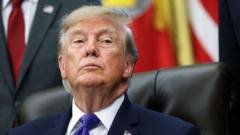
Trump Launches Super Intelligence Force to Lead AI Policy
Washington is rewiring its approach to advanced computing. President Donald Trump has officially unveiled the Super Intelligence Force, an elite federal task force mandated to centralize federal oversight, accelerate military integration, and dictate national policy around cutting-edge algorithms. The initiative signals a sharp departure from previous fragmented administrative approaches, placing national security imperatives squarely at the center of commercial tech expansion.
The Super Intelligence Force is a federal task force established by President Donald Trump to oversee U.S. artificial intelligence policy. Directed by Jay Clayton, the body aligns national security, defense R&D, and regulatory enforcement to maintain American dominance in advanced algorithmic technologies.<\/p>
- High-Level Leadership: Director of National Intelligence Jay Clayton heads the task force alongside FTC Chair Andrew Ferguson and Defense Undersecretary Emil Michael.
- Linguistic Rebrand: A September 30 executive order officially renames artificial intelligence to 'super intelligence' across federal agencies.
- Defense & Commerce Synergy: The body seeks to bridge military application, economic strategy, and public engagement into a single federal apparatus.
- Industry Alignment: Silicon Valley figures are already adapting, with Musk renaming SpaceX's AI unit to SpaceXSI following voluntary industry pacts.
The announcement comes at a pivotal moment. As private tech giants pour hundreds of billions into frontier models, the federal government wants its hand directly on the wheel. Leading this effort is Director of National Intelligence Jay Clayton, a veteran legal strategist and former SEC Chairman whose appointment signals an aggressive shift toward viewing algorithmic dominance through the dual lenses of financial sovereignty and global intelligence control.
A Redefined Mandate: Rebranding Washington’s Tech Lexicon
Language matters in government policy. On September 30, the administration issued a directive officially phasing out the phrase ‘artificial intelligence‘ across executive branch communications. The new mandate formally adopts super intelligence as the standard designation. The reasoning, according to public statements, stems from an insistence that calling these powerful systems ‘artificial’ undermines their structural authority and makes groundbreaking software sound entirely fake.
This linguistic pivot is more than mere semantics. It establishes a broad psychological reframing across federal procurement offices, international diplomacy channels, and defense corridors. Federal agencies must now adjust their long-term planning documents to reflect the brand overhaul, establishing a uniform vocabulary for future legislative requests.
“Words shape institutional posture. By stripping the word ‘artificial’ from our regulatory vocabulary, the administration is treating advanced software as an absolute strategic asset rather than an abstract science project.”
Silicon Valley executives are already adjusting their sails to match Washington’s shifting winds. Billionaire entrepreneur Elon Musk announced on social media that his aerospace firm’s computational division, formerly SpaceXAI, would immediately rebrand to SpaceXSI. This swift alignment from major defense contractors highlights how rapidly corporate branding falls into line when federal procurement budgets are at stake.
The Triad of Power: Defense, Trade, and Intelligence
The operational engine of the Super Intelligence Force rests on three distinct pillars: intelligence collection, antitrust enforcement, and defense research. Joining Clayton on this interagency council are Federal Trade Commission Chair Andrew Ferguson and Undersecretary of Defense for Research and Engineering Emil Michael. Together, this trio holds unprecedented authority over how algorithms are developed, deployed, and monetized in the United States.
Clayton brings a regulatory framework refined during his tenure on Wall Street, giving the team deep insights into capital markets and international corporate structures. Ferguson offers sharp oversight on market concentration, consumer safety, and trade integrity. Michael, sitting atop the Pentagon’s vast research apparatus, bridges the gap between commercial software breakthroughs and warfighting capabilities. Industry watchers tracking global technology coverage note this tri-fold alignment effectively merges economic nationalism with national defense priorities.
Breakdown of Task Force Leadership
| Official | Current Title | Primary Task Force Mandate |
|---|---|---|
| Jay Clayton | Director of National Intelligence | Task Force Chair; Strategic Intelligence Integration & Global Oversight |
| Andrew Ferguson | FTC Chair | Antitrust Alignment, Market Competition & Consumer Protection |
| Emil Michael | Undersecretary of Defense (R&E) | Defense R&D Procurement, Hardware Security & Battlefield Deployment |
This dynamic shifts the balance of power within the executive branch. Historically, technology policy drifted between civil agencies like the Department of Commerce and various white papers produced by academic advisory boards. By establishing a dedicated task force managed by heavy-hitting legal and defense figures, the administration intends to cut through administrative gridlock and implement binding guidelines swiftly.
The ‘Morally Binding’ Corporate Compact
This organizational push follows intense behind-the-scenes negotiations between the White House and chief executives from prominent technology firms. Last week, the administration revealed that major tech leaders signed what was described as a ‘morally binding’ pact. This voluntary agreement binds frontier labs to basic safety protocols, domestic infrastructure investments, and explicit cooperation with military directives.
Critics, however, remain skeptical of non-binding corporate agreements. Legal scholars point out that moral commitments lack statutory teeth without explicit enforcement mechanisms from Congress. Yet, by appointing FTC Chair Andrew Ferguson to the Super Intelligence Force, the White House signals that companies failing to honor their voluntary commitments could swiftly face regulatory scrutiny, trade investigations, or antitrust actions under existing consumer protection laws.
- Infrastructure Guarantees: Big Tech firms commit to building domestic data hubs powered by secure energy grids.
- Export Controls: Strict cooperation on preventing sensitive weight vectors and hardware from reaching foreign adversaries.
- Safety Benchmarks: Standardized pre-deployment red-teaming verified by federal security auditors.
- National Security Priority: Fast-tracked licensing of proprietary models for defense and intelligence workloads.
For Silicon Valley, playing ball with the administration is becoming a prerequisite for commercial success. As federal policy shifts from soft guidelines to hard security dictates, tech giants must balance shareholder demands with escalating compliance costs. Recent updates in federal policy reports underscore how closely technology stock valuations now tie to executive branch contracts.
Geopolitical Stakes: The Race for Algorithmic Sovereignty
The creation of the task force isn’t happening in an isolation chamber. It is a direct response to aggressive, state-backed technology investments from global rivals like China. Beijing’s coordinated push toward civil-military fusion has forced Washington to abandon its long-standing laissez-faire approach to the software sector.
Navigating the Regulatory Horizon
What comes next? Industry insiders expect the task force to issue an initial series of executive actions focused on data center supply chains, semiconductor allocation, and specialized immigration pathways for elite researchers. The administration’s proactive stance aims to prevent regulatory fragmentation across individual US states, establishing a clear, singular federal standard that preempts patchwork state legislation.
The creation of the Super Intelligence Force marks the end of the wild-west era for frontier computing. By placing national intelligence, corporate enforcement, and defense engineering under one umbrella, Washington is sending an unmistakable message to the world: the future of high-level computing is no longer just a private commercial race—it is a matter of state power.
<button type="button" onclick="this.parentElement.innerHTML='✓ Thank you, we will refine our analysis!‘” style=”background:#ffffff; border:1px solid #cbd5e1; border-radius:6px; padding:4px 12px; font-size:12px; cursor:pointer; color:#334155;”>👎 No
Latest Analytical Follow-up: For continuous developments on this subject, read our full investigation on Trump AI Taskforce: Inside the ‘Super Intelligence’ Shift.
