
UK Growth Upgraded Ahead of 2027 Economic Pressures
When international financial institutions revise their outlooks, markets listen. The latest assessments surrounding UK economic growth reveal a complex narrative of short-term resilience shadowed by stubborn, long-term headwinds. According to the International Monetary Fund (IMF), the British economy is poised to expand by 1.3% this year—a welcome tick upward from the sluggish 1% predicted back in July. Yet, seasoned market observers know that optimistic headline figures rarely tell the whole story. Beneath the surface, structural vulnerabilities remain.
The International Monetary Fund (IMF) has upgraded its forecast for UK economic growth to 1.3% this year, citing unexpected global resilience. However, the organization warns that compounding pressures from higher energy prices and elevated interest rates will weigh heavily on household spending and business investment by 2027.<\/p>
- Growth Revision: The IMF lifted the UK's growth projection for the year to 1.3%, marking a notable recovery from earlier pessimistic assessments.
- Upcoming Hurdles: Sustained geopolitical conflicts in the Middle East and Europe continue to threaten global supply chains, pushing inflation higher.
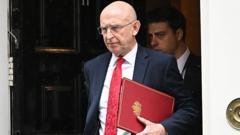
- Fiscal Realities: Chancellor John Healey faces a daunting £35bn shortfall as he prepares his upcoming tax and spending review.
- Deficit Trajectory: Despite immediate borrowing pressures, the UK is projected to boast the lowest annual deficit in the G7 by 2031.
Global markets have absorbed a staggering amount of turbulence over the past half-decade. From the lingering economic scars of the pandemic to sweeping supply chain disruptions, resilience has become the default setting for multinational enterprises. Yet, as energy markets grapple with the ripple effects of the US-Iran conflict, the margin for error has narrowed dramatically. For Britain, the coming years will test whether this newfound momentum can withstand tightening monetary policy.
The 2026 Resurgence vs. The 2027 Squeeze
Growth is a fragile thing. When an economy expands, capital begins to flow more freely. Businesses invest in productive capacity, employment figures tick upward, and consumer confidence generally improves. For now, the UK is experiencing a mild reprieve. The reversal of pessimistic downgrades issued at the onset of Middle East hostilities places Britain alongside Germany as one of the faster-growing economies within the G7.
However, analysts caution against unbridled optimism. The IMF’s latest IMF economic forecast points toward a noticeable cooling effect by 2027. Economic growth is expected to decelerate to roughly 1.2%. Why? The answer lies in the deadly combination of persistently elevated energy prices and sticky interest rates. These factors exert a direct tax on household disposable income and corporate balance sheets alike.
“The challenge of continuing to bring down borrowing must be paired with the pressing need for fresh cost of living support to help families facing a difficult winter ahead.”
Inflation is projected to average 3.3% this year, lingering well above the Bank of England’s 2% target into 2027 at 2.8%. Some internal Bank models suggest price spikes could push past 4% heading into the early months of next year. Naturally, this keeps the door firmly open for further monetary tightening.
The Chancellor’s High-Stakes Balancing Act
Enter Chancellor John Healey. With the autumn fiscal statement fast approaching, Healey finds himself walking a notoriously tight economic tightrope. Government borrowing costs have surged significantly, putting immense pressure on the Treasury to deliver a budget package that satisfies the exacting standards of international bond markets.
At the same time, mounting political and social pressures demand action. Independent think tanks, such as the Resolution Foundation, have urged the Treasury to construct a budget that provides targeted support for households struggling with utility bills. Economists suggest that Healey faces a yawning £35bn fiscal gap just to maintain baseline public services and satisfy newly minted defense spending pledges without resorting to deep, damaging cuts.
Criticism comes from all political flanks. Conservative shadow chancellor Andrew Griffith has warned that any reliance on aggressive tax hikes will actively sabotage future expansion. In a recent statement, Griffith argued that if Healey “reaches for more tax rises” in his upcoming dispatch, he is essentially choosing slower expansion, leaving everyday working people to foot the bill.
Comparative G7 Fiscal Outlook (2026–2031 Projections)
| G7 Nation | Projected Growth (2026) | Inflation Outlook | Borrowing Trajectory (2031 Est.) |
|---|---|---|---|
| United Kingdom | 1.3% | Above Target (3.3%) | Lowest Annual Deficit |
| Germany | 1.3% | Stabilizing | Moderate Deficit |
| United States | 1.8% | Persistent | High Deficit |
Navigating the Deficit Dilemma
Despite the immediate headaches surrounding UK budget borrowing costs, the IMF’s long-term fiscal crystal ball offers a surprising glimmer of hope. Over a five-year horizon, the UK is projected to achieve a remarkably sharp fall in public borrowing. In fact, by 2031, the nation is estimated to maintain the lowest annual deficit of any G7 economy.
This structural improvement suggests that successive governments will likely clamp down heavily on public expenditure over the decade. While this institutional discipline pleases international credit rating agencies, it raises pressing questions for regional development. Prime Minister Andy Burnham has staked his political capital on delivering decentralized prosperity, promising “good growth in every postcode.” Yet, balancing local economic autonomy against aggressive central deficit reduction remains an ongoing ideological battleground.
Looking Ahead: Global Shocks and Local Realities
As financial ministers prepare to convene at international summits in Bangkok, the broader macroeconomic picture remains tethered to geopolitical outcomes. The global economy has demonstrated an almost defiant capacity to absorb systemic shocks—surviving pandemics, regional ground wars, and severe energy crunches. Yet, resilience is not immunity.
For the average British household, the macroeconomic numbers translated into spreadsheets in Whitehall ultimately manifest at the grocery checkout counter and the household thermostat. As the realities of energy prices interest rates 2027 begin to bite, policymakers will need more than optimistic forecasts to secure the nation’s financial future. They will need surgical precision, disciplined fiscal stewardship, and a clear-eyed recognition of the limits of economic endurance.
<button type="button" onclick="this.parentElement.innerHTML='✓ Thank you, we will refine our analysis!‘” style=”background:#ffffff; border:1px solid #cbd5e1; border-radius:6px; padding:4px 12px; font-size:12px; cursor:pointer; color:#334155;”>👎 No
