
Houthi Strike on Riyadh Airport Escalates Regional Crisis
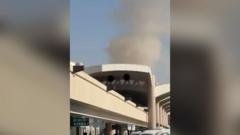
The black smoke rising above King Khalid International Airport on Sunday morning was more than an isolated security incident; it was a stark signal that the Arabian Peninsula’s defense architecture is facing unprecedented pressure. A second Houthi strike on Riyadh airport within forty-eight hours left one Pakistani resident dead and eleven others injured, shattering the illusion of safety inside the kingdom’s primary international gateway. Emergency response teams rushed onto the tarmac as flames swept through Passenger Hall No 4, forcing terminal evacuations and delaying international flights across the region.
A second Houthi strike on Riyadh airport in 48 hours targeted King Khalid International Airport with cruise missiles and drones, killing a Pakistani resident and injuring 11 others. Coming after an attack that killed 13, the event exposes vulnerabilities in regional defense and disrupts commercial aviation across the Gulf.<\/p>
- Escalating Air Strikes: Back-to-back hits on King Khalid International Airport signal a tactical pivot by Houthi forces toward high-value civilian transport hubs deep inside Saudi territory.
- Human and Infrastructure Toll: Recent attacks caused multiple fatalities, hundreds of injuries, and structural fires across major passenger terminals.
- Threat to Global Aviation: Houthi warnings against using Saudi airspace pose unprecedented risks to Middle East aviation security, forcing international carriers to alter flight corridors.
- Geopolitical Countermeasures: Coalition forces initiated retaliatory strikes in Sanaa, while Western powers, including the United States and the United Kingdom, weigh immediate defensive interventions.
The latest strike follows a devastating attack just twenty-four hours earlier that left 13 dead and over 300 injured. With long-range drones, cruise missiles, and ballistic warheads raining down on deep-territory targets, the conflict in Yemen has expanded far beyond its traditional borders. For civilian travelers, air transport personnel, and global energy markets, the bold nature of these aerial bombardments signals a volatile shift in regional dynamics.
An Airport Under Siege: Anatomy of the Riyadh Attacks
Sunday’s incident at King Khalid International Airport occurred amidst an escalating barrage of air strikes targeting the political and economic heart of Saudi Arabia. Military officials reported that while air defenses successfully intercepted an incoming ballistic missile near the perimeter, an unguided projectile bypassed the outer defensive perimeter, impacting the exterior structure of Passenger Hall No 4.
Chaos erupted inside the terminal. Video footage verified from the ground showed travelers fleeing through smoke-filled corridors while emergency services worked to suppress secondary fires. The civil aviation authority confirmed that a Pakistani national succumbed to blast injuries, while eleven others were hospitalized with medium-to-severe wounds. The event underscored the growing precision and frequency of asymmetric warfare weapons used by Houthi forces.
The sequence of operations over the past four days reflects a calculated campaign against crucial infrastructure. Rather than launching sporadic border skirmishes, offensive elements have systematically targeted key transportation hubs across the kingdom, testing the limits of local air defense interceptors.
| Target Location | Date / Timeline | Attack Vectors Used | Reported Casualties | Primary Damage Impact |
|---|---|---|---|---|
| King Khalid Int’l (Riyadh) | Sunday (Latest Strike) | Cruise Missile / Loitering Drone | 1 Killed, 11 Injured | Fire damage to Passenger Hall No 4 |
| King Khalid Int’l (Riyadh) | Saturday | Ballistic Missiles & Drones | 13 Killed, 308 Injured | Severe terminal disruptions, flight delays |
| Dammam & Eastern Facilities | Past 24 Hours | Drone Swarms | Unconfirmed | Precautionary shutdowns near oil infrastructure |
| Abha Regional Airport | Prior 48 Hours | Short-range Ballistic Missiles | Multiple Fatalities | Temporary runway closures and damage |
| Sanaa Int’l Airport (Yemen) | Sunday Counter-Strike | Coalition Jet Bombardment | 1 Child Killed, 6 Injured | Aviation radar and residential damage |
Targeting the Core of Middle East Aviation Security
The strategic intent behind these aerial operations is clear: hit high-profile transportation nodes to destabilize passenger confidence and disrupt commercial logistics. The primary target, King Khalid International Airport, serves tens of millions of passengers annually and acts as a central hub for business transit across Eurasia. Disrupting this node strikes directly at regional connectivity.
Brigadier General Yahya Saree, military spokesman for the Houthis, publicly declared that all Saudi airports—with the explicit exception of facilities in Mecca and Medina—are now considered legitimate military targets. He issued a blunt warning to international commercial carriers, advising them to avoid Saudi airspace entirely. The declaration sent shockwaves through boardrooms, driving up operational risks for commercial airlines traversing the Gulf region.
Aviation risk consultants note that persistent threats to primary commercial hubs present severe operational challenges for legacy carriers. According to market data from Reuters security analysts, war-risk insurance premiums for commercial aircraft operating in the Gulf have surged, compelling some operators to adjust routing schedules and implement emergency fuel contingencies.
Defensive Shield Fractures and Ballistic Realities
For years, Saudi Arabia relied on multi-layered defense installations, including MIM-104 Patriot batteries and high-altitude defensive networks, to safeguard major population centers. However, asymmetric strike tactics—combining low-flying land-attack cruise missiles (LACM) with swarms of low-cost loitering munitions—present inherent defensive complexities. Radar systems designed to trace high-altitude ballistic arcs can experience tracking challenges against low-altitude target vectors that hug the terrain.
Military analysts highlight that while advanced air defenses can achieve high interception rates against incoming threats, saturation tactics aim to overwhelm tracking systems. When dozens of cheap drones precede a fast-moving cruise missile, interceptor batteries risk exhaustion, leaving critical windows exposed.
“The persistent use of low-radar-cross-section drones paired with low-altitude cruise missiles represents a complex tactical problem for localized air defenses. Even a single leaked projectile can inflict significant structural and commercial damage.”
This technical vulnerability was on full display over the weekend. Major General Turki al-Maliki, speaking on behalf of the Saudi-led coalition, confirmed that while air defense batteries successfully engaged high-altitude vectors over northern Riyadh, debris and secondary low-flying munitions managed to penetrate the inner perimeter of Hall No 4. The result was immediate structural damage, emergency evacuations, and local disruption.
A Ticking Clock for International Aviation
The geopolitical impact of the King Khalid International Airport attack extends far beyond regional borders. Foreign nationals were among the victims of Saturday’s deadly strike, including citizens from the United States, Bangladesh, Jordan, Palestine, Syria, Sudan, Egypt, and India. The foreign ministry in New Delhi confirmed that an Indian national died from severe injuries sustained during the initial strike, underscoring the international fallout of the conflict.
Travel advisories issued by Western governments were updated within hours. The UK Foreign, Commonwealth & Development Office (FCDO) expanded its explicit warnings against travel to regions bordering Yemen and advised heightened vigilance across central Riyadh. Concurrently, the US Embassy in Saudi Arabia issued shelter-in-place instructions for diplomatic personnel following missile alerts in the capital region.
Economic Ripple Effects in Energy Markets
Aviation is not the only sector feeling the tension. Houthi military statements confirmed simultaneous strikes targeting industrial oil installations in the Eastern Province, including infrastructure near Dammam. Although Saudi authorities have not disclosed catastrophic damage to processing plants, the vulnerability of energy infrastructure remains a primary concern for energy traders.
Global crude futures jumped during early trading hours following reports of the strikes. According to market trackers at Bloomberg energy markets assessment, persistent strikes on Gulf infrastructure risk adding a permanent geopolitical risk premium to global oil prices. Any prolonged disruption to shipping lanes or processing units could trigger supply shifts across international supply chains.
The Yemeni Front Line and the Collapse of Fragile Truces
To understand this sudden Yemen conflict escalation, one must trace the unraveling of the delicate diplomatic balance established in recent years. A temporary ceasefire negotiated under United Nations auspices in 2022 provided a prolonged period of relative stability along the border. However, that agreement effectively collapsed in July, setting the stage for renewed hostilities.
The catalyst for the current flare-up stems from offensive maneuvers along the Red Sea coast, where armed groups established control over vital coastline corridors. Control over these littoral areas provided tactical platforms for anti-ship missile deployments and long-range drone launches. Subsequent military counter-offensives aimed at retaking coastal positions led directly to direct retaliatory strikes against deep-territory Saudi targets.
- Territorial Footprint: Houthi forces control approximately 25 percent of Yemen’s land mass, encompassing nearly 80 percent of its resident population.
- Strategic Objectives: Securing full domestic dominance, establishing control over Red Sea maritime routes, and pressuring foreign coalitions to withdraw regional support.
- Airspace Strategy: Challenging the regional operational envelope of foreign air forces through long-range strikes against air defense hubs and international airports.
In response to the weekend attacks, coalition aircraft launched retaliatory strikes against infrastructure in Yemen’s capital, Sanaa. Houthi-aligned media reported that an air raid targeted Sanaa International Airport and adjacent districts, resulting in severe damage to civilian homes, one child killed, and several civilian casualties. The exchange of strikes highlights a rapid escalation cycle with limited immediate avenues for diplomatic cooling.
Global Response: Washington and London Weigh Action
The targeted strikes on civilian infrastructure triggered intense reactions across Western capitals. US President Donald Trump announced that Washington is evaluating options and prepared to “move very quickly” regarding military actions targeting Houthi strike locations and storage facilities. The death of an American citizen during Saturday’s primary strike significantly increases domestic political pressure for a military response.
In London, UK Secretary of State for Defence Wes Streeting noted that the United Kingdom remains in close contact with Gulf partners and could potentially offer direct defensive assistance, including enhanced intelligence sharing and air defense integration. British Foreign Secretary Ed Miliband described the strikes as appalling, calling for an immediate end to unguided attacks on civilian zones.
Diplomatic Backchannels Amid Crisis
Despite public statements calling for military responses, diplomatic backchannels remain active. Iranian Foreign Minister Abbas Araghchi communicated with his Saudi counterpart, offering assistance to facilitate dialogue between regional stakeholders. Tehran, long accused by Western powers of providing technological components for ballistic and drone programs, appears interested in managing tensions to prevent a broader regional war.
However, officials in Riyadh remain skeptical of diplomatic gestures that fail to include verifiable demilitarization commitments. Abdullah Al-Alimi Bawazir, vice president of Yemen’s internationally recognized government, urged international coalitions to abandon passive containment strategies in favor of decisive actions to disarm coastal offensive units.
What Lies Ahead for Gulf Security
The double strike on King Khalid International Airport represents a critical turning point in Middle Eastern defense calculus. The strategic assumption that major urban centers and commercial aviation corridors were effectively shielded from asymmetric regional conflicts has been directly tested. As long-range drone technology continues to proliferate, civil transport infrastructure faces recurring threats that require continuous operational adaptation.
For international travelers, commercial airlines, and defense planners, the coming weeks will determine whether localized air defenses can adapt to low-altitude saturation tactics. Without a stable political resolution in Yemen or effective countermeasures against drone swarms, the skies above the Arabian Peninsula remain exposed to persistent operational security risks.
<button type="button" onclick="this.parentElement.innerHTML='✓ Thank you, we will refine our analysis!‘” style=”background:#ffffff; border:1px solid #cbd5e1; border-radius:6px; padding:4px 12px; font-size:12px; cursor:pointer; color:#334155;”>👎 No
