
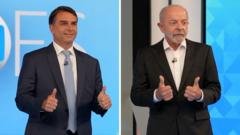
Brazil Presidential Election Candidates: The High-Stakes Runoff
RIO DE JANEIRO — The streets of Copacabana are blanketed in yellow, green, and red as voters prepare to determine their nation’s trajectory. Understanding the Brazil presidential election candidates requires looking beyond standard campaign slogans into two radically divergent visions for Latin America’s largest economy. Sunday’s ballot isn’t just a political contest; it’s a structural crossroads.
The primary Brazil presidential election candidates are incumbent left-wing President Luiz Inácio Lula da Silva and right-wing Senator Flávio Bolsonaro. Following a razor-thin first-round ballot where Flávio pulled ahead, voters now choose between Workers' Party social democracy and conservative market deregulation.<\/p>
- Narrow First-Round Edge: Senator Flávio Bolsonaro outperformed polling expectations on October 4, securing a slim lead over incumbent President Luiz Inácio Lula da Silva.
- Ideological Polarisation: The contest presents two fundamentally opposing economic visions—Lula’s state-led developmentalism versus Flávio’s market deregulation and spending caps.
- Agribusiness and Security Focus: Flávio’s surge relies heavily on strong support from Brazil’s powerful agricultural heartland and urban voters focused on crime control.
- Environmental Policy at a Crossroads: Lula’s preservation efforts in the Amazon face potential reversal if the right-wing coalition captures the executive branch.
Voters face a stark, defining choice. On one side stands incumbent President Luiz Inácio Lula da Silva, the veteran leftist leader seeking to preserve his social welfare legacy. On the other stands Senator Flávio Bolsonaro, a conservative firebrand who carried momentum out of the first round. The atmosphere across major metro areas is tense. Polling stations across the country are prepping for historic turnout as millions decide who takes the helm in Brasília.
The Stakes in Brasília: A Divided Nation Returns to the Booths
Tension has built for months. Following the dramatic results of the October 4 first round, where Senator Flávio Bolsonaro stunned analysts by claiming a narrow lead over Lula, the campaign trail has turned into a high-stakes duel. From the industrial corridors of São Paulo to the rural expansive farms of Mato Grosso, political debates dominate daily life.
As reporting from Rio de Janeiro confirms, electorate sentiment is fractured along regional, economic, and generational lines. The first-round victory by Flávio—the eldest son of former president Jair Bolsonaro—demonstrated the persistent strength of the conservative movement despite years of legal battles surrounding its key figures.
“This isn’t an election about policy tweaks at the margins,” notes Dr. Arnaldo Dumont, a political analyst based in Brasília. “It is a fundamental referendum on the role of the Brazilian state, foreign policy alignments, and how the nation manages its natural resource wealth.”
The campaign strategies have turned aggressive. Both candidates have focused heavily on swing states like Minas Gerais, where economic anxiety and public safety concerns frequently dictate election outcomes. Every rally counts. Every debate clip goes viral within minutes on messaging platforms.
The Incumbent: Luiz Inácio Lula da Silva’s Third-Term Record
At 79, Luiz Inácio Lula da Silva remains the central pillar of the Brazilian left. Having served two terms from 2003 to 2010 before returning to power in the 2022 election, Lula’s political career spans five decades. His platform relies on economic stability coupled with aggressive social intervention.
Social Safety Nets and Economic Statecraft
Lula’s campaign highlights the expansion of legacy programs like Bolsa Família, which provides direct cash transfers to low-income families. His administration claims credit for reducing hunger indices and stabilizing fuel prices during global market volatility. However, fiscal conservatives argue that his high-spending policies threaten long-term budget discipline.
Key achievements highlighted by the Workers’ Party (PT) campaign include:
- Tax Code Reform: Streamlining Brazil’s notoriously complex consumption taxes to spur manufacturing.
- Amazon Protection: Rebuilding environmental enforcement agencies like IBAMA, leading to reduced deforestation rates.
- Infrastructure Spending: Relaunching the Programa de Aceleração do Crescimento (PAC) to modernize ports, railways, and energy grids.
Yet, challenges persist. Elevated inflation in consumer food baskets and rising sovereign debt levels have given his critics ample ammunition. Investors closely monitor whether Lula’s team can maintain primary budget targets without stifling growth.
Foreign Policy and International Alignments
In international relations, Lula has pushed for a multipolar global order. He has actively strengthened Brazil’s position within the BRICS alliance while negotiating balanced terms with the European Union and the United States. According to economic assessments from Bloomberg reports, global trade partners view Lula’s foreign policy as predictable, albeit occasionally friction-prone regarding Western stance on European conflicts.
The Challenger: Flávio Bolsonaro and the Right-Wing Resurgence
Senator Flávio Bolsonaro entered the presidential contest under extraordinary circumstances. Consolidating support across the right, the 45-year-old lawmaker built a campaign that blends his father’s populist appeal with a polished, institutional political style that resonates with middle-class urbanites and corporate boardrooms alike.
Consolidating the Bolsonarista Base
Flávio’s rise reflects the enduring power of the conservative coalition built over the past decade. Known widely as the “BBB caucus”—Beef, Bible, and Bullets—this bloc unites powerful agribusiness leaders, evangelical Christian groups, and pro-gun law enforcement advocates. The candidate has promised to protect agricultural exports while rolling back regulatory burdens on private landholders.
His campaign focuses sharply on three core pillars:
- Fiscal Austerity: Enforcing strict limits on federal spending and privatizing state-owned enterprises.
- Public Safety: Hardline policing strategies, harsher criminal penalties, and expanded firearm rights for civilian self-defense.
- Regulatory Relief: Reducing environmental compliance overhead for mining, timber, and agriculture industries.
Market Sentiment and Corporate Appeal
Financial markets reacted positively when Flávio outperformed early projections in early October. Market analysts at major institutions noted that business leaders favor his proposals for labor deregulation and state asset sales. According to reporting by Reuters, foreign investment flows into Brazilian equities spiked following his first-round lead, reflecting trader appetite for market-friendly reforms.
“Flávio has managed to present a calmer demeanor than his father while retaining the ideological core of the conservative movement,” explains Helena Vance, a Latin American market strategist in São Paulo. “That balance makes him formidable among undecided middle-income voters.”
Comparing the Platforms: Policy Breakdown
To understand the practical choices facing Brazilian citizens, it helps to examine how the two main Brazil presidential election candidates compare across primary governance sectors.
| Policy Area | Luiz Inácio Lula da Silva (PT) | Flávio Bolsonaro (PL) |
|---|---|---|
| Economic Strategy | State-led development, public infrastructure investment, expanded social safety nets. | Market deregulation, broad privatizations, strict fiscal caps, tax cuts for enterprise. |
| Environmental Management | Strict enforcement against illegal clearing, international climate fund partnerships. | Streamlined environmental permitting, expanded land rights for agribusiness and mining. |
| Public Safety & Justice | Focus on social crime prevention, intelligence-led police reform, strict gun control. | Heavy-handed law enforcement tactics, harsher sentencing, expanded citizen access to firearms. |
| Foreign Policy | Active BRICS integration, balanced relations between Western powers and Global South. | Strong alignment with Western conservative governments, bilateral trade prioritization. |
Electoral Dynamics: The First-Round Shockwave
The outcome on October 4 altered the course of the race. Pollsters had broadly predicted Lula would maintain a comfortable buffer entering the runoff. Instead, Flávio Bolsonaro secured a narrow margin of victory, proving that conservative organizing networks remain exceptionally resilient.
Geographic trends highlight the deep regional divisions across Brazil:
- The Northeast: Long a stronghold for Lula and the Workers’ Party, returning solid majorities for the incumbent due to social program expansion.
- The South and Center-West: Heavily dominated by agribusiness and manufacturing hubs, voting decisively for Flávio Bolsonaro.
- The Southeast Battleground: States like Rio de Janeiro and São Paulo remain highly volatile, with suburban districts swinging between candidates based on local crime statistics and personal economic security.
With millions of voters making up their minds in the final days, turnout in urban centers will prove decisive. Both campaigns have invested heavily in ground operations to ensure supporters reach the polling booths on Sunday.
What Lies Ahead for Latin America’s Largest Democracy
The vote will echo far beyond Brazil’s borders. The winner will inherit an economy navigating structural tax updates, delicate fiscal balances, and evolving global supply chains. Furthermore, the election outcome will determine Brazil’s stance on global environmental stewardship ahead of upcoming international climate summits.
Whether voters opt for Lula’s state-guided social framework or Flávio Bolsonaro’s free-market conservative vision, Sunday’s turnout will define the governance of over 215 million people. As polling stations open across five time zones, the world watches to see which path Brazil chooses.
<button type="button" onclick="this.parentElement.innerHTML='✓ Thank you, we will refine our analysis!‘” style=”background:#ffffff; border:1px solid #cbd5e1; border-radius:6px; padding:4px 12px; font-size:12px; cursor:pointer; color:#334155;”>👎 No
