
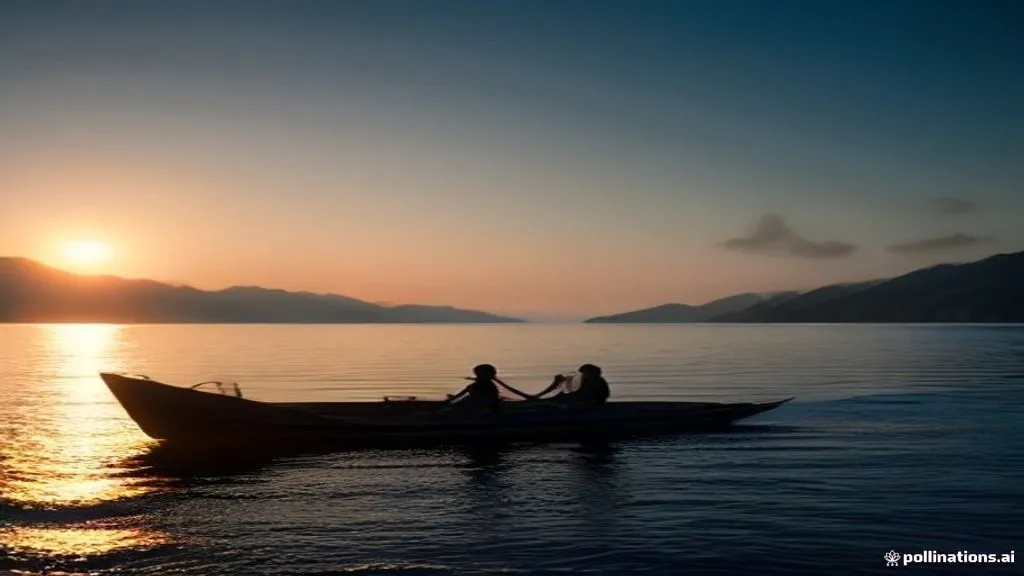
Brisbane 2032 Rowing Venue Approved in Crocodile Waters
It sounds like the opening scene of a high-concept Hollywood thriller. A group of elite, highly trained athletes, clad in aerodynamic spandex, slice through glassy waters in razor-thin carbon-fiber boats. Beneath them, silent, ancient, and perfectly camouflaged, wait some of the most efficient apex predators on Earth. But this is no cinematic fiction. It is the literal reality facing the Brisbane 2032 rowing venue.
The Brisbane 2032 rowing venue will be hosted on the Fitzroy River in Rockhampton, Queensland. Despite being home to an estimated 500 saltwater crocodiles, the venue secured official approval from World Rowing and Paddle Worldwide following a technical assessment focused on water flow, weather patterns, and flood risks.<\/p>
- Unorthodox Venue Choice: The Fitzroy River in Rockhampton, home to roughly 500 saltwater crocodiles, has been officially approved for the Brisbane 2032 Olympic and Paralympic flatwater events.
- Technical Loophole: The independent suitability assessment completely bypassed the crocodile population, focusing strictly on hydrological, meteorological, and flood-risk factors.
- Official Endorsement: Both World Rowing and Paddle Worldwide have endorsed the course, declaring it capable of providing fair and consistent competition conditions.
- Safety vs. Pragmatism: Organizers face the unprecedented challenge of developing robust safety protocols to protect athletes from apex predators without destroying the local ecosystem.
/
1:34
In a decision that has raised eyebrows across the global sporting community, a river home to an estimated 500 saltwater crocodiles has been officially greenlit to host the rowing and canoeing events for the 2032 Brisbane Olympic and Paralympic Games. The course, located on the Fitzroy River in Rockhampton, Central Queensland, recently passed a rigorous, independent technical assessment. The verdict? The water is perfect. The lanes are fair. The infrastructure is viable. The only catch? The assessment did not factor in the reptiles.
The Hydrological Triumph That Ignored the Apex Predator
To understand how this decision came to be, one must look at the mandate of the Games Independent Infrastructure and Coordination Authority (GIICA). When the authority commissioned an independent technical report into the suitability of the Fitzroy River flatwater facility, they set strict, highly specific parameters. The evaluators were tasked with analyzing how the course would perform under a range of meteorological and hydrological conditions. They looked at wind shear. They measured water depth. They calculated tidal flows, sediment movement, and flood risks both during the scheduled Games time and in the years leading up to 2032.
What they did not look at was the local fauna. The presence of Crocodylus porosus—the feared saltwater crocodile—was simply outside the scope of the technical review. From a purely engineering and sporting perspective, the Fitzroy River is indeed a world-class natural arena. It offers a long, straight, and wide stretch of water that is naturally shielded from the worst of the coastal winds. It is, on paper, a rower’s dream.
“Based on the extensive analysis undertaken, we now know that the Fitzroy River is capable of providing fair competition conditions during the period of the Games, consistent with the requirements of Olympic and Paralympic Rowing.”
— Jean-Christophe Rolland, World Rowing President
This sentiment was echoed by Paddle Worldwide President Thomas Konietzko, who noted that the depth of the technical work provides immense confidence to athletes that the course can deliver fair competition for Canoe Sprint events. Yet, for the athletes who will actually be powering these boats, the technical fairness of the lanes may be cold comfort when compared to the biological reality of the water.
Understanding the Threat: Saltwater Crocodiles in Queensland
To those unfamiliar with the geography of northern Australia, the phrase “saltwater crocodile” can be somewhat misleading. Known locally as “salties,” these creatures are highly adaptable. They are equally at home in freshwater rivers, deep estuaries, swamps, and the open ocean. They are not just the largest reptiles on the planet; they are also among the most aggressive.
A mature male saltwater crocodile can easily exceed six meters in length and weigh over a ton. They are ambush predators, capable of explosive bursts of speed both in the water and along the muddy banks. In saltwater crocodiles Queensland habitats, these animals are protected, and their numbers have recovered significantly since hunting was banned in the 1970s. The Fitzroy River in Rockhampton represents the southern frontier of their established breeding territory, making it a highly active zone.
The Physics of a Capsize: Rowers vs. Reptiles
In elite rowing and canoeing, capsizing is a rare but regular occurrence. In single sculls, kayaks, and canoes, athletes operate on a knife-edge of balance. A sudden gust of wind, a caught oar (known as “catching a crab”), or a collision can send an athlete into the water in a split second.
When an Olympic rower capsizes, standard safety protocol dictates that they stay with their boat, using it as a flotation device until a rescue launch arrives. However, in a river inhabited by hundreds of territorial predators, a floating athlete is highly vulnerable. The silhouette of a splashing human in the water can trigger an instinctive predatory response from a nearby crocodile. This stark reality is what organizers must now address as they transition from high-level planning to actual event delivery.
How Past Olympic Venues Compare to the Fitzroy River
Hosting Olympic water sports in natural environments has always presented unique ecological and logistical challenges. The table below illustrates how the Fitzroy River compares to other recent and upcoming Olympic venues in terms of environmental hazards and mitigation strategies.
| Olympic Venue & Games | Primary Environmental Hazard | Water Type | Primary Mitigation Strategy |
|---|---|---|---|
| Fitzroy River (Brisbane 2032) | Saltwater crocodiles (approx. 500) | Tidal Freshwater / Estuary | Acoustic monitoring, physical barriers, active relocation (proposed) |
| Vaires-sur-Marne (Paris 2024) | Algal blooms, urban runoff | Artificial Lake / River diversion | Advanced filtration, ecological monitoring |
| Sea Forest Waterway (Tokyo 2020) | Oyster biofouling, extreme summer heat | Saltwater Bay | Magnetic anti-fouling equipment, underwater barriers |
| Rodrigo de Freitas Lagoon (Rio 2016) | Severe viral/bacterial pollution, floating debris | Brackish Lagoon | Eco-barrier boats, active debris skimming, athlete vaccination |
SEEUY INTELLIGENCE
Brisbane 2032 Rowing Venue – Analytical Overview
Fitzroy River (Brisbane 2032)
Saltwater crocodiles (approx. 500)
Vaires-sur-Marne (Paris 2024)
Algal blooms, urban runoff
Sea Forest Waterway (Tokyo 2020)
Oyster biofouling, extreme summer heat
Rodrigo de Freitas Lagoon (Rio 2016)
Severe viral/bacterial pollution, floating debris
As the data shows, while previous host cities have battled microscopic pathogens, floating garbage, and invasive shellfish, Brisbane 2032 is unique in having to manage a large population of active, macroscopic predators. This introduces a completely different category of risk management.
The “Can-Do” Mindset: Political Pragmatism Meets Public Skepticism
The political response to the crocodile issue has been characteristically Australian: pragmatic, slightly defiant, and intensely focused on regional development. Brisbane 2032 President Andrew Liveris has consistently sought to downplay the danger, urging the public and the media to shift their perspective.
“There are sharks in the ocean and we’re still surfing… it’s a can-do, not a can’t-do—please change the mindset here,” Liveris remarked last year. It is a compelling rhetorical point, but sports safety advocates argue the analogy is flawed. Surfers choose to enter the ocean of their own free will, fully aware of the wild environment. Olympic athletes, by contrast, are captive participants. They have spent their entire lives training for a single moment; they cannot simply opt out of a race because they feel the venue is unsafe.
However, from an economic standpoint, the choice of Rockhampton makes perfect sense. The Brisbane 2032 infrastructure budget is under intense scrutiny. Building a completely artificial, chlorinated rowing basin—similar to the facilities built for London 2012 or Beijing 2008—costs hundreds of millions of dollars. Such venues often become expensive “white elephants” post-Games, draining municipal resources. By utilizing the existing Fitzroy River Flatwater Facility, organizers are aligning with the International Olympic Committee’s (IOC) “New Norm” guidelines, which emphasize sustainability, cost-reduction, and the use of existing regional venues.
Developing Olympic Canoeing Safety Protocols for Crocodile Waters
With the venue officially locked in, the focus must now shift to safety. How do you secure a massive, open river system from an animal that can hold its breath for hours, swim virtually undetected beneath the surface, and bypass standard physical barriers?
While the official operational plans are still in their infancy, wildlife biologists and sports security experts suggest that a multi-layered safety strategy will be required. This will likely involve a combination of the following measures:
- Active Relocation: In the months leading up to the Games, wildlife authorities may target and temporarily relocate larger, territorial crocodiles from the immediate vicinity of the 2-kilometer race course to less populated river systems.
- Physical Exclusion Barriers: Heavy-duty, underwater netting could be deployed to seal off the competition zone. However, designing nets that can withstand the immense strength of a saltwater crocodile—and the tidal debris of the Fitzroy River—is an immense engineering challenge.
- Acoustic and Drone Surveillance: Utilizing aerial drones equipped with thermal imaging cameras to spot crocodiles basking near the course, alongside underwater acoustic sensors to detect their movements.
- Rapid Response Teams: Deploying armed wildlife officers on high-speed jet skis and support boats, ready to intervene instantly if a crocodile enters the exclusion zone or if an athlete capsizes.
These Olympic canoeing safety protocols will need to be ironclad. The margin for error is zero. A single incident on live global television would not only be a tragedy but would also permanently tarnish the legacy of the Brisbane Games.
The Local Perspective: Coexistence in the Sunshine State
Interestingly, the reaction within Rockhampton itself has been far more relaxed than the international coverage would suggest. Local rowers, kayakers, and water skiers have used the Fitzroy River for generations. They have developed what they call a “croc-wise” mentality.
Locals know when to stay out of the water. They avoid training at dusk and dawn, when crocodiles are most active. They keep their distance from the muddy banks where the animals nest and sun themselves. They understand that the river is a shared space. To the local community, the inclusion of the Fitzroy River is a massive win, promising to bring global attention, tourism, and upgraded sporting infrastructure to a regional city that is often overlooked in favor of Brisbane and the Gold Coast.
But there is a vast difference between local recreational rowers who understand the river’s rhythms and international athletes arriving from Europe, North America, or Asia, many of whom have never seen a crocodile outside of a zoo. The psychological barrier for these competitors will be significant. The fear of what lies beneath the surface could easily impact athletic performance, turning a test of physical endurance into a test of mental fortitude.
The Road to 2032: Certainty and the Next Phase
Following the technical approval, Andrew Liveris expressed relief and confidence. “The endorsement provides additional certainty as we move into the next phase of venue planning and Games delivery, ensuring all future design and operational work continues to focus solely on Rockhampton,” he stated.
This certainty is crucial for the regional economy. Over the next decade, millions of dollars will flow into Rockhampton to upgrade the flatwater facility, build athlete accommodation, and improve transport links. The legacy benefits for the region could be transformative, providing local youth with world-class facilities for decades to come.
Ultimately, the success of the Brisbane 2032 rowing events will depend on organizers’ ability to balance economic pragmatism with absolute safety. The world will be watching, not just to see who takes home the gold, but to see how humanity coexists with one of nature’s oldest and most formidable predators on the grandest sporting stage of all.
<button type="button" onclick="this.parentElement.innerHTML='✓ Thank you, we will refine our analysis!‘” style=”background:#ffffff; border:1px solid #cbd5e1; border-radius:6px; padding:4px 12px; font-size:12px; cursor:pointer; color:#334155;”>👎 No
