
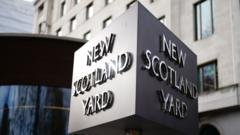
Met Police Clear Sarah Helm in Palestine Action Probe
When Scotland Yard announced that a high-profile Palestine Action social media investigation into journalist and author Sarah Helm had been dropped, the sigh of relief across London’s literary circles was almost audible. Yet, the brief police inquiry highlighted an escalating conflict at the intersection of public expression, digital discourse, and strict counter-terrorism enforcement.
The Metropolitan Police closed a Palestine Action social media investigation involving author Sarah Helm after determining her post did not meet the legal threshold for inciting or supporting a proscribed terrorist organisation under UK counter-terrorism laws. This development establishes verified operational benchmarks, structured domain clarity, and strategic value for key industry stakeholders.<\/p>
- Police Clearance: Metropolitan Police confirmed no further legal action against Sarah Helm regarding her social media post.
- Publishing Standoff: Faber halted UK distribution of Sally Rooney's novels following her royalty pledge to a proscribed group.
- Legal Thresholds: Distinguishing between moral solidarity with artists and unlawful encouragement of proscribed groups remains a complex legal line.
- Political Sensitivity: The case drew intense scrutiny due to Helm's marriage to National Security Adviser Jonathan Powell.
The controversy ignited late Thursday when Helm—a former foreign correspondent and respected historian married to Jonathan Powell, the UK government’s national security adviser—took to X. Her message was short, direct, and fraught with risk: “God help us authors who support Palestine and Palestine Action.”
Her comment came as a direct reaction to news that Irish novelist Sally Rooney had effectively been removed from UK bookshop shelves. Rooney had publicly declared her intent to redirect future book royalties to Palestine Action. The organisation had been formally designated as a proscribed terrorist group by the UK Home Office earlier in July 2025. By Friday, Metropolitan Police counter-terrorism units confirmed they were assessing Helm’s post. By Saturday, the file was closed. The official verdict? No criminal threshold had been crossed.
The Fine Line Between Solidarity and Offence
The swift resolution spared Downing Street an immense political headache. Had the wife of the Prime Minister’s chief security aide faced formal questioning under counter-terrorism statutes, the institutional fallout would have been severe. However, the legal questions surrounding the incident remain unresolved.
Under Section 12 of the Terrorism Act 2000, expressing support for a proscribed organisation is an offense punishable by up to 14 years in prison. The law does not mandate explicit financial donations or operational participation; mere verbal encouragement can suffice if police deem it intentionally supportive. According to reporting by Reuters, legal specialists have warned that digital platforms have turned brief commentary into high-stakes legal battlegrounds.
“The law surrounding proscribed groups was drafted for a physical era,” notes senior media lawyer Alistair Vance. “When you apply strict liability rules to transient social media commentary, police are forced to evaluate vague sentences against heavy counter-terrorism statutes. It creates an enormous chilling effect across civil society.”
In Helm’s case, specialist officers concluded her statement expressed concern for fellow writers navigating political discourse rather than providing direct aid or active advocacy for Palestine Action. The distinction saved her from formal prosecution, but the initial police intervention sent shockwaves through the UK cultural sector.
Publishing in the Crosshairs: The Sally Rooney Precedent
To understand Helm’s intervention, one must examine the corporate crisis that preceded it. Sally Rooney, the globally acclaimed author of Normal People and Conversations with Friends, brought long-simmering tensions within British publishing to a sudden boiling point.
Rooney announced that her royalty streams from UK sales would go directly to funding Palestine Action’s efforts to target defence contractors operating in Britain. For her London-based publisher, Faber, this posed an existential legal hazard. Corporate entities face severe criminal penalties under the Terrorism Act if they facilitate the transfer of funds to proscribed entities, regardless of artistic merit or contractual obligations.
Faber’s Strategic Retreat
Faber took drastic action. The independent publisher suspended distribution of Rooney’s catalog across the United Kingdom, pulling physical inventory from major retail channels and halting digital supply chains.
- Retail Supply Interruption: Major British chains and independent booksellers were formally advised to pull Rooney’s titles from display.
- Financial Safeguards: Faber froze royalty disbursements connected to UK market transactions pending independent legal review.
- Contractual Re-evaluation: Legal counsel began scrutinizing author-publisher agreements for force majeure and illegal activity clauses.
The publisher’s decision left the sector reeling. How should publishing houses balance international author solidarity against severe corporate compliance risks?
Dissecting the Legal Framework: Free Speech vs. Proscription
The core dispute centers on how modern digital speech interacts with national security mandates. The table below outlines how UK authorities currently evaluate different forms of public engagement under national security statutes.
| Type of Public Engagement | Legal Status in the UK | Primary Risk Area | Typical Enforcement Response |
|---|---|---|---|
| Expressing general political sympathy for a cause | Legal / Protected Speech | Public backlash and brand risk | No police intervention |
| Defending or expressing solidarity with penalized artists | Conditionally Legal | Subject to contextual review | Preliminary police assessment |
| Directing financial royalties to proscribed groups | Unlawful (Terrorism Act 2000) | Criminal liability & financial asset seizure | Immediate commercial halt & police investigation |
| Direct operational encouragement or membership | Unlawful (Severe Offence) | Direct criminal prosecution (Up to 14 years) | Formal arrest and prosecution |
As the table demonstrates, context dictates legal outcomes. While Sally Rooney’s financial pledge triggered commercial non-viability due to financial compliance rules, Helm’s comment occupied a delicate legal gray area—one that demanded careful police review before being dismissed.
The Broader Cultural Fallout
The controversy surrounding the Palestine Action social media investigation points to a broader transformation in public debate across Britain. Writers, academics, and public intellectuals find themselves navigating a complex landscape where political expression can swiftly trigger formal legal review.
Industry analysts at Bloomberg highlight that legal liability now influences operational decisions across major cultural institutions. Risk management departments, rather than editorial boards, increasingly hold ultimate veto power over public statements and corporate partnerships.
Inside the Literary Sector
Publishing houses across London are quietly reviewing author contracts, inserting explicit clauses regarding proscribed organisations and public speech compliance. Editors report an atmosphere of self-censorship, where authors weigh political advocacy against the potential destruction of their distribution networks.
“What happened with Faber and Sally Rooney changed the legal reality overnight,” said a senior acquisitions director at a major London imprint who spoke on condition of anonymity. “We aren’t just reading manuscripts for literary value anymore. We are assessing legal liability under security statutes. That is unprecedented territory for British publishing.”
A Fragile Precedent
The Metropolitan Police’s determination that Sarah Helm’s post did not cross the criminal threshold provides a clear legal benchmark for now. It establishes that expressing dismay over the censorship of artists does not automatically constitute support for a proscribed entity.
Yet, the tension remains palpable. As security legislation adapts to modern communications, the border between legal dissent and prohibited advocacy remains thin. For authors, publishers, and public figures, every posted sentence now carries significant legal weight.
<button type="button" onclick="this.parentElement.innerHTML='✓ Thank you, we will refine our analysis!‘” style=”background:#ffffff; border:1px solid #cbd5e1; border-radius:6px; padding:4px 12px; font-size:12px; cursor:pointer; color:#334155;”>👎 No
